 0
0
 0
0

Story at a glance…
-
The Japanese yen is trading within a few basis points of a recent-record low against the US dollar.
-
The decline caps off years of low interest rates and debt financing in the one-party government.
-
The Bank of Japan has a very delicate job recovering strength in the yen that may involve selling off US treasuries
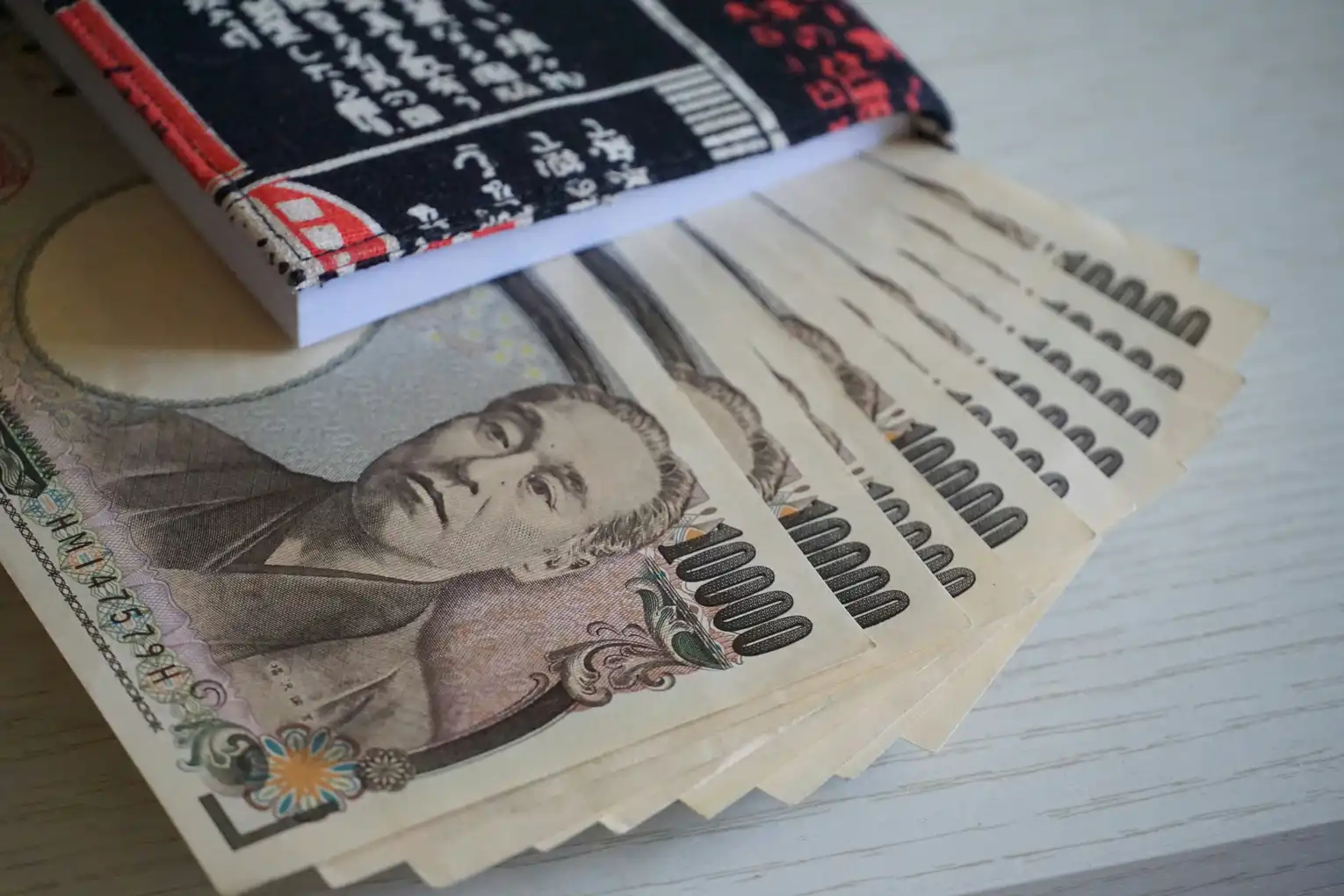
The Japanese yen is wallowing in “intervention territory” as The Japan Times called and would have hit a 40-year low on Thursday had it not been for a few basis points of single yen. ¥161.95 would mark the largest amount of yen per dollar since 1986, and at publishing time the cost of a dollar is ¥161.78.
¥160 to the dollar has previously been called a red line, and climbing above it would in practice demand of the central bank some kind of intervention. In May, the Bank of Japan (BoJ) expended some $35 billion in an effort to keep the currency from crossing this red line. Less than 2 months later it’s not only approached it again, but passed it. It has now traded for a whole week above the red line, and investors, traders, and economists are wondering where the floor might be, and what is supporting it.
In 2012, the exchange rate with the US stood at ¥80 to the dollar. Since then, it has lost nothing less than 100% of its value in this trading relationship.
Some analysts are now advising clients that risks of ¥180 or ¥200 to the dollar are not unrealistic. Neither fiscal nor monetary policy decisions are offering any suggestions that things should improve, and concerns about the underlying economic strength in the country are fueling the speculation that the yen will weaken.
Current-quarter expectations for real GDP growth rose from an anemic 0.32% to 0.5%, less than half of US projections for Q2.
“Japan has shifted from a nation that earns by exporting goods to one that earns by investing overseas. With capital continuing to flow outward, it’s difficult to see a clear path to a stronger yen,” Maki Ogawa, chief analyst at Sony Financial Group, told the Japan Times.
A weaker yen should allow for better export sales, since it allows foreigners to buy the currency and the products priced in it more cheaply. Energy price increases have resulted in significant declines in the yen, both in 2022 following Russia’s invasion of Ukraine, and in March with the launch of Trump and Netanyahu’s sneak attack on Iran. Since 2022, price inflation has been much higher on an annualized basis, as energy is a key component to manufacturing, and Japan relies more on imported energy than almost any other large economy.
These geopolitical uncertainties have also fueled demand for dollars and US Treasuries perceived as safe-haven assets. The negative synergy of higher energy prices and a stronger dollar has proven substantially detrimental to the yen’s long-term strength, but fiscal policy has placed a large role as well.

A rate gap
“The primary driver of yen weakness historically has been the interest rate differential between the US and Japan,” said Derek Izuel, Chief Investment Officer and Portfolio Manager for Int’l & Emerging Markets at Shelton Capital Management. “This has broken down over the past year. While the conflict in Iran and Fed activity are important drivers of this spread, they have been dominated by concerns over the credibility of the actions of the Japanese government”.
Having only just brought interest rates up to 1% for the first time since 2012, the BoJ has sustained a rate gap with the US and EU that has sat as high as 4% at times, creating more pressure on the yen than might otherwise be expected. The government’s response has been at times, and not unlike during the Biden Administration, to work at crossed purposes with the central bank.
The BoJ’s goal is to normalize the interest rate. Hard to say where that is, but they have mentioned 2%,” Izuel told WaL in an email. The portfolio manager believed that although it’s too early to say concretely if the economic strategy of Sanae Takaichi has failed, her largely-unfunded fiscal spending is raising eyebrows among investors and even some internal advisory bodies within the Japanese government.
“These are large expenditures for only temporary relief. However, the markets are holding. The threat of intervention is holding the yen around 160, and the yields in JGBs have been stabilizing, even with the rate hike on June 16th”.
Although they sit behind the world’s largest net-debtor nations like Italy, Greece, and the USA, Japan in terms of gross debt to GDP leads the world substantially, with the fiscal burden standing at 240% the productive value of the economy. This level of indebtedness makes everything harder and costs the government more than 20% of its annual tax revenue just to pay the interest.
This question came to a head in January when BoJ long-bond yields hit multi-decade highs after Takaichi announced new, unfunded spending commitments. The 10-year JGB crossed the 3% mark, while the 40-year bond, a rather new debt instrument in Japan, topped 4%. Japanese financial media described it as the moment when, for the first time in over a decade, the markets finally pushed back on LDP economic policy by demanding higher rates for lending to the government while they knew the new commitments would be covered by money printing.
The government’s spending has also alerted overseas investors in Japan, Ogawa said. “Prior to that, the yen was weakening because of low interest rates, but we’ve seen a different dynamic now where long-term yields rise in tandem with a weaker yen, which is typically flagged as a ‘bad’ rate increase”.
Ogawa said there might be room in Takaichi’s rhetoric for mentioning how a weakening yen makes household costs go up, even though as mentioned before, it can help exporters to shift more product. It may be that there is a perception, with such a prolonged period of record yen weakness, that the government is tolerating the depreciation, which itself might act in a feedback loop to weaken the yen further.
A break glass moment
When asked about what the BoJ can do to manage the debt and Takaichi’s policies, Izuel said that most of the country’s debt is held domestically, which offers it some flexibility and an advantage compared to other hyper indebted nations.
“They need to manage growth and keep it above the interest on the debt. The reverse could create big problems for the economy and the government”.
“Falling oil however, may help. Oil has been a secondary driver of the yen FX rate. As oil dropped on renewed Hormuz shipping traffic, the dollar fell on expectations of lower short term US rates. Lower oil directly affects Japan’s trade balance by reducing energy input costs. The effect is limited, but definitely there,” he added.
One thing the BoJ could do is offload its considerable share of US Treasuries, the largest such foreign holding in the world marked at over $1 trillion.
It could work, but along with putting the US-Japan relationship under considerable strain, Izuel argues it would be fighting against underlying economic fundamentals. “Japan also benefits from a stable US market, so it could be a double-edged sword”.
“The Fed has lost control of the long end of the yield curve, and Japanese liquidation would make this worse, but such an action would draw attention from the US government and considerable pressure to cease and desist. More likely is a gradual liquidation that does not attract attention nor destabilize the markets”.
Even this has its limits. The US bond market is also rather “yippy,” as the President put it, at the moment. It’s unclear whether there would be interest among bond investors for multi-billion dollar sales of US treasuries that were almost certainly purchased at sub-3% interest rates. If that demand isn’t met, further sales would have to involve the Fed, which as Izuel pointed out would draw the ire of the US Treasury Department and by extension Donald Trump.
A mark-to-market loss on long-term bonds would do the BoJ no favors either, and may destabilize US markets at a time when the new Fed Chairman Kevin Warsh seemed to just get yields under control and falling downward. The US Treasury has to roll over one-third of the entire $39 trillion national debt this year, and every basis point lower will help that financing job. WaL
Considering Following the link here to see all the ways, monetary and non-monetary, you can support this work and more like it.