 0
0
 0
0

A Chinese bank that’s the world’s largest measured by total assets informed its customers that on July 24th, buying and selling of paper claims to gold would end.
In doing so, the Industrial and Commercial Bank of China (ICBC) joined Postal Savings Bank of China, Ping An Bank, China Construction Bank, and China Guangfa Bank in announcing the suspension of activity this month, while advising clients to close their positions, settle up their margin requirements, or take physical delivery of the gold claims they had outstanding.
The move is being described by Chinese and financial media in various ways. Gold-focused publications seem to identify it as an attempt to use the outstanding physical positions of Chinese citizens, institutions, and the government to exert more influence over the spot price of gold, as not only is the Bank of China one of the largest gold purchasers by weight in the world, but the Shanghai Gold Exchange is the largest in the world which restricts its business entirely to the physical market.
General news and financial media have speculated the decision by the Chinese banks represents an attempt to calm some of the volatility in the market. Typically an involatile asset, gold has moved dramatically since its all-time-record-high of $5,600 per ounce set earlier in the year. Twice in two weeks the spot price closed at under $3,900, representing a greater than 20% loss for those who bought at the highs.
“Chinese banks are tightening retail precious metals trading as a risk-control response to heightened price volatility,” Robin Tsui, gold strategist for the Asia-Pacific region at State Street Investment Management, told SCMP adding it was primarily to curb speculative activity. By exposing retail investment customers to margin-financed speculation of gold through worldwide paper markets, those customers who may simply be seeking diversification without the need to organize vault storage risked greater losses than physical holders.
China hasn’t ended margin-powered speculation of gold, however, and indeed nothing reflective of the 5 above banks’ decisions has been released as a notice from China’s financial regulators, the Shanghai Gold Exchange, or the central bank according to Finance Feeds.
Bank of China and Guangfa Bank had, prior to the July 24th date, announced increased margin requirements for leveraged trading to gold. In laymen’s terms this addresses the amount of money one has to deposit as collateral for a broker to buy on your behalf. Bank of China set them at 120% while Guangfa set them at 140%. This would mean that for an account to order $10,000 in purchases of gold they didn’t intend for delivery, they’d half to deposit $12,000 and $14,000 of liquidity respectively.
This is a drastic difference to Western markets, which may allow individuals substantial margin leverage, requiring just $5,000, or even $1,000 of liquidity to purchase $10,000 in gold on paper.
Fear or greed
Others, however, are slightly more extreme in their interpretation of the Chinese banks’ new policy, and there is at least one empirical reason for doing so. Paper claims on gold allow for multiple “owners” of the same ounce of gold. Prior to 2025, some researchers suggested that the market has 100 claims to gold for every ounce of gold for sale in world vaults.
“If there are 10 paper claims for every real ounce of gold, the market sees 10 times more gold than actually exists,” said Jay Martin, founder of VRIC Media (Vancouver Resources Investment Conference). “The official explanation is that this protects ordinary people from gold’s wild price swings. That explanation is convenient, but I don’t believe it. I think that July 24th is the day that China starts finding out what gold is actually worth”.
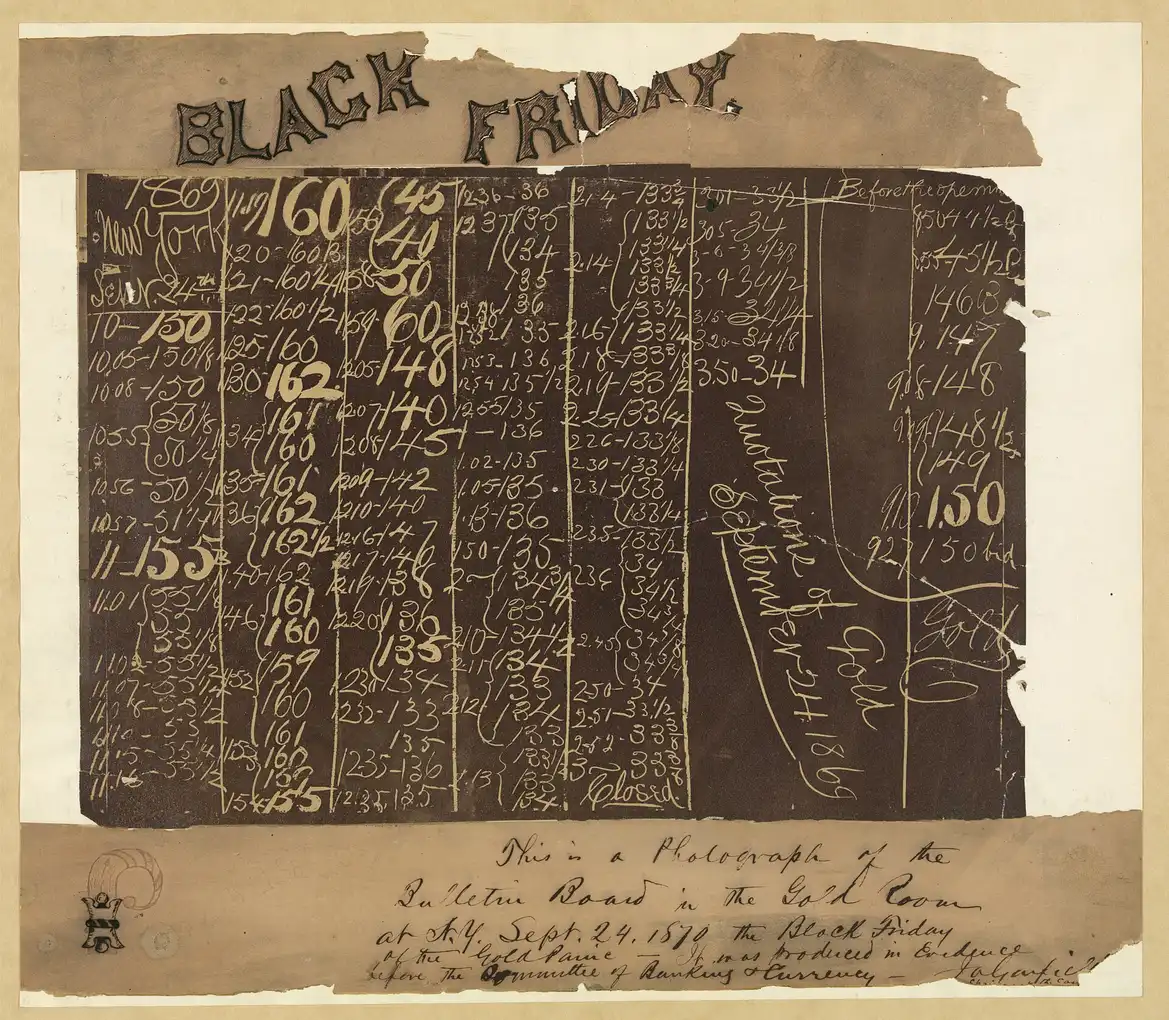
Another reason to suggest that the decision to suspend paper gold claims is that the Chinese market does, in fact, already exert pricing power over other metals, including rare earths, and several industrial metals. Furthermore, the gold price has been tinkered with before—famously in the lead up to the 1869 “Black Friday” stock market crash, which Jim Fisk and Jay Gould attempted to artificially inflate the price of gold by using political connections in Washington, DC, through President Ulysses S. Grant’s sister to persuade the Treasury Department to stop its selling of gold which kept the price depressed.
Martin—originally from England, offered another example of this on a recent episode of his podcast involving the London Gold Exchange called the 1968 London Gold Pool crisis, which involved 5 Western central banks working in concert. In other words, manipulation has occurred before; there is precedence.
It’s known that China wishes to better capitalize on its position as a physical gold hub vis-a-vis the Western paper-gold-dominant exchanges in London and New York City.
An 18-item report presented by Lu Lei, deputy governor of the People’s Bank of China, during a briefing in April of 2025, revealed that the central bank was exploring the internationalization of specific product deliveries at the Shanghai Gold Exchange through the establishment of overseas delivery warehouses, as well as expanding the application of RMB benchmark prices in international mainstream markets. The report didn’t say where these warehouses would be located, but the London exchange uses hundreds of partner warehouses around the world to lend reality to the contract pricing available on their website.
Warehousing would make international purchases of physical gold and other metals much more real, and help merit the effort of pricing things in Chinese RMB and paying at Shanghai quoted prices. Above all, it, and perhaps the decision from the five banks itself, aids in satisfying the country’s large demand across income brackets for physical metals.
“What got switched off is retail leverage, not China’s appetite for metal,” said John Ohanesian, who has since 2017 been President and CEO of Lear Capital, the precious metals dealer that specialize in gold and silver-backed IRAs. “The banks stopped acting as agents for individual clients bidding on the Shanghai Gold Exchange”.
Ohanesian added that he has seen first hand how demand in China doesn’t always reflect the on-screen trading price on Wall Street. “At one point in late January, we watched physical silver packed and shipped from a US supplier to China on an order settled at $120 an ounce, after the price had already fallen below $90 here. I think it’s manipulation, [what the banks are doing] or an attempt at manipulation at least, but Chinese buyers are gobbling it up, more and more of the physical stuff”. WaL
We Humbly Ask For Your Support—Follow the link here to see all the ways, monetary and non-monetary.
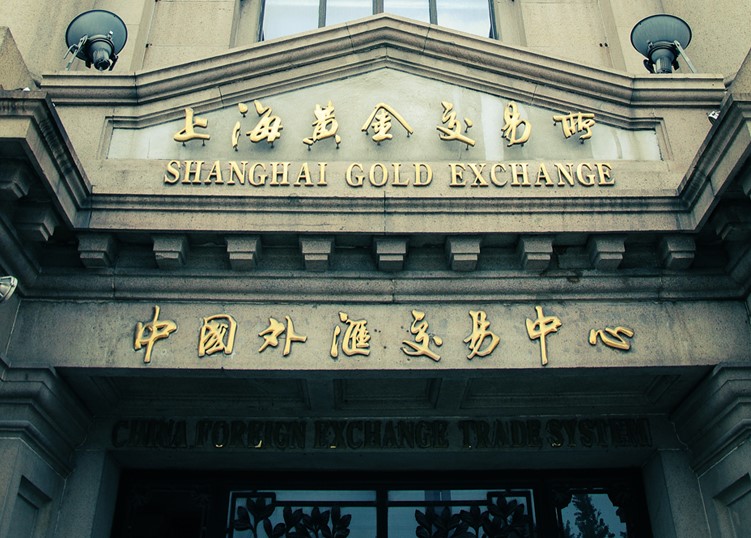
PICTURED ABOVE: The Shanghai Gold Exchange Building. PC: John Pain, CC 2.0. via Flickr
Editor’s Note: Nothing in this story should be construed as investment advice. Due diligence should always be performed when making any investment decisions. This story contains affiliate links, which may contain offers for financial products and services.




[…] WaL reported at the time that one reason to suspend paper gold claims is that the Chinese market does, in fact, already exert pricing power over other metals, including rare earths, and several industrial metals, and that they want to extend this power to gold as well. […]
The distinction between five banks suspending retail paper-gold trading and China ending it nationwide seems important, especially since the article notes no corresponding regulator notice. Reducing retail leverage could limit forced selling, but that alone doesn’t establish greater control over global gold prices. I’d be interested to see whether physical delivery volumes and Shanghai premiums change after July 24.