 0
0
 0
0

Analysts around the world are remarking how Italy has passed the ball as the Eurozone’s most troubled large economy to France, for a variety of structural and novel reasons that have seen the climate for outside investment substantially shift towards the south.
It’s quite a turnaround for one of the nations ungraciously included among the group of PIGS (Portugal, Italy, Greece, Spain) which needed bailouts during the 2012 European Debt Crisis, and which has been gestated through a variety of economic and political factors.
Even under the pressure of the COVID-19 lockdowns which were expansive in Italy as compared to the rest of Europe, the country has enjoyed a primary surplus which has seen the debt-to-GDP ratio fall from a high of 154% in 2020 to 139% this year. Head of state Giorgia Meloni recently became the longest continually-acting leader since Benito Mussolini, and the political stability has been reflected in a gradual strengthening of the principal Italian 10-year bond, the BTP, with yields falling and prices rising such that it has spent the vast majority of the summer in a stronger position than the French equivalent.
“Italy is by now the flower in the eye of the G7 bond market,” wrote Adam Posed, President of the Peterson Institute, and an ex-member of the political economics committee for the Bank of England.
Political economy isn’t all that Italy has going for it. Despite her reputation as one of the PIGS, or as a “fading museum,” the country has made significant advancements in strengthening its manufacturing and export sectors such that in the 3rd quarter of 2025, data from the Organization for Economic Cooperation and Development and the World Trade Organization showed that Italy had surpassed Japan to become the world’s 4th largest exporter. This is in contrast to 2015, when the country ranked 7th, behind France no less. The country’s balance trade finished 2024 in a €54.9 billion surplus.
Data from Ireland’s Office of Government Procurement shows that the top 100 Italian exports make up just 40% of total export value, underlying the diversification of products the country sells around the world from premium pasta brands to large ships. That same metric is 10% higher for France, suggesting more concentrated sectors. As of 2023, Italy was the world’s #1 exporter of 201 distinct products, and since 2015, no other country in Western World, the US included, has managed to grow its manufacturing and export sectors as strongly, with its value in current dollars increasing 48% over the time period—4-times as much as the UK, and at least 18% more than France.
This has an interesting effect on private sector data. When viewed from the top, France’s economy seems to be much larger—with a GDP roughly 33% larger and a meaningful GDP-per-capita advantage on its southern neighbor. However, by looking into data figures from the European Central Bank (ECB) and by subtracting gross value added by the general-government institutional sector, the gross-value added from private sector activity on a per-capita basis narrows the difference between the countries considerably.
In basic terms, looking at how much the private sector contributes to the economy, the value of the two economies’ productive arms—the ones not financed by the state—is actually quite close. That’s an important detail in Europe’s current political climate, because while Rome has enjoyed the best stability in 80 years, Paris looks poised for turmoil.
Paralysis and default
French presidential elections are scheduled for next year. Emmanuel Macron’s long tenure at the head of the French Republic has culminated in a hung National Assembly without a clear majority to advance any legislation, turning any proposal into a opportunity for political posturing. What the parliament is unanimous on, though, is the unwillingness to reach any sort of agreement on reducing the republic’s budget deficit, which currently runs at 5.2% of GDP—some €124 billion.
Over the same period that Italy reduced its outstanding debt by 15%, France’s increased 3%, and despite Paris’ meaningfully higher tax revenue, the government’s deficit as a percentage of GDP is 200 points higher than Rome’s.
Of France’s more than €3 trillion of outstanding debt, €600 billion is held by the Banque de France, and this 18% slice recently made headlines when a presidential hopeful named Jean-Luc Mélenchon from the far-left France Unbowed party suggested the state simply default on what it owes itself.
“All we have to do is take the 18% held by the Bank of France and chuck it in the fire,” he said during a campaign rally. His suggestion was supported by an economist named Matthieu Pigasse, who according to Euronews helped Greece and Venezuela restructure state debts during their respective crises.
“Public debt can be cancelled, as Jean-Luc said, without any economic or financial impact,” he said at the same rally.
While the Bank of France cannot legally, according to EU law, buy government bonds outrightly, it can enter the secondary market and buy them off private investors. In this way, the BoF accumulated €600 billion through quantitative easing, and by doing so, relieved the French treasury’s burden of paying out interest to bond holders. It’s true that the treasury still pays interest to the BoF, but as is standard practice around the world in central banking, the BoF eventually deposits that interest back into the treasury after costs. This goes-around-comes-around accounting trickery is central to Mélenchon’s proposal for debt cancellation.
If the average interest on that pile of bonds is 3%, than the treasury would pay the bank €18 billion per year, and then receive some of it back after costs from the bank. If, however, the central bank’s balance sheet generates a loss, than the cancellation of the debt would impact public finance even as Mélenchon plans to use the fiscal wiggle room to support public finance.
This is somewhat secondary to the major question of how viable mass debt cancellation would be for France. History shows us that no country has opted for this decision since the Second World War, with almost all choosing to inflate away the wartime obligations they accumulated during the conflagration, or during any time afterward.
Debt cancellation removes an existing stock of debt but does nothing, by itself, to eliminate the structural deficit that created the need for borrowing which amounts to 5.2% of GDP per annum—substantially more than what it would save from the interest costs on the €600 billion in bonds. In a world where Mélenchon takes power and does cancel that debt, the government would immediately return to the bond market to finance new deficits. If cancellation undermines investors’ confidence in the government’s willingness to honor future debt, the resulting increase in demanded interest rates could offset much of the initial benefit and lay the groundwork for a much larger problem down the road.
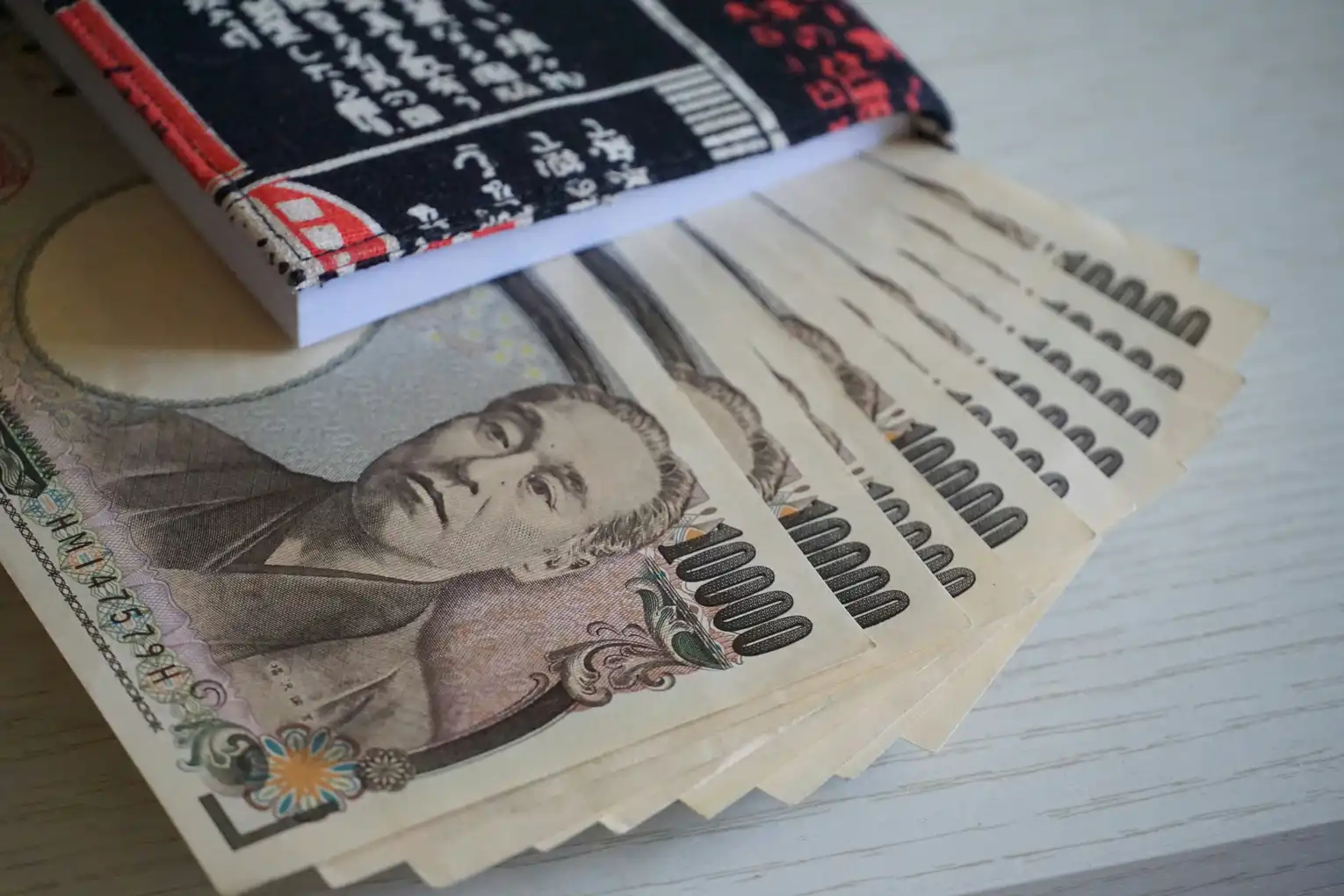
It would also be plausible that with a full 18% of the debt lifted, private investors view the French balance sheet as stronger, and the country therefore more investable. However, clean debt defaults are so rare presumably because of this risk of undermining the investment climate. Complicating matters further, 60% of France’s debt is held by foreigners. They’re not holding French bonds for matters of patriotism. They expect a return on that investment, and indeed the change in France’s investment outlook is affecting even stalwart purchasers Japan, who according to the Bloomberg, have been reducing their exposure from a high of 12% of the total French debt.
Complicating matters of government finance, and in contrast to Italy, French unemployment is higher and growing, sitting presently around 8%. The size of the government as a percentage of GDP is 7% higher, and also growing.
Evelyne Gomez-Liechti of Mizuho Financial Group put it succinctly when she said just recently, according to Milano Finanza, “France is the new Italy”. WaL
We Humbly Ask For Your Support—Follow the link here to see all the ways, monetary and non-monetary.
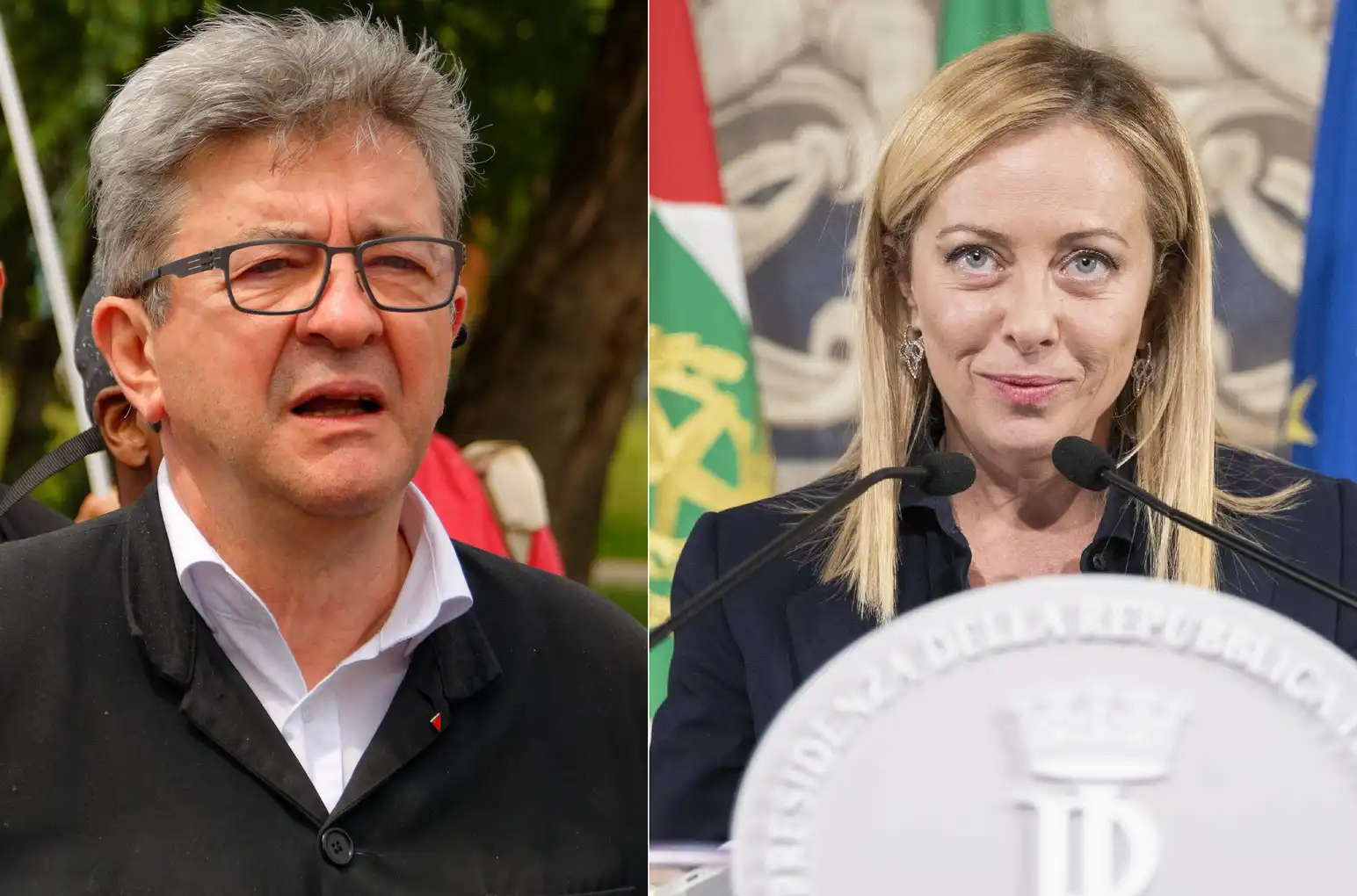
PICTURED ABOVE: (left) President of France Unbowed party, Jean-Luc Melenchon (right) Pre Minister Giorgia Meloni. PC (left) Thomas Bresson CC 4.0. (right) Quirinale.it (Copy)