 0
0
 0
0

Two notable surges in the price of gold last week were attributed at the open to falling oil prices and murmurings of a deal to reopen the Strait of Hormuz, together with a fall in the likelihood of a Fed rate hike in September following job losses in the non-farm payroll report from July.
Though no doubt serving to boost the case for gold from a retail and mainstream investment perspective, neither the overall case for gold nor its meteoric rise starting last year relied on month-to-month swings in economic data. Rather, they were driven upward by sustained macro trends and forces, into which the previous week’s bailout of the Japanese yen slides perfectly as a narrative timestamp.
Timestamp is also a perfect way to describe it, as it coincided with a 1-week rise in the price of gold so large as to be rivaled by only 7 other instances in the past 40 years, with each of those 7 coming during a crisis moment, such as the bankruptcy of Lehman Brothers in 2007.
Beyond creating direct monetary inflation, what the move signaled to the market, and those within who are willing to consider gold as a trade, was that the Fed and the Treasury Department prefer not to risk witnessing what would happen to the US bond market should the Bank of Japan dump $60 billion in bonds. Ipso facto, the Fed and the Treasury must have therefore also considered the market too weak, and yields too high.
That in and of itself makes Federal Reserve Chairman Kevin Warsh and the FOMC’s decision to keep rates anchored at 3.50-3.75% the week before even stranger.
Diverting back to Hormuz and the jobs data, they do bear some responsibility for the over 7% rise in gold. On Wednesday, ADP reported 44,000 private-sector jobs added in July, the weakest since January, and short of forecasts near 70,000. That was followed by Friday when the Bureau of Labor Statistics posted a drop of 23,000 jobs against expectations for gains totaling 83,000. May and June were also revised down by 103,000 combined, leading to a suddenly gloomier picture of the economy, and the softening of the chance for a Fed rate hike in September.
The CME’s FedWatch tool now predicts a 44% chance the Fed will hike rates in September, down from over 60% following the last FOMC meeting.
On Monday, reports that an agreement was struck between Oman and Iran to reopen the Strait of Hormuz sent oil, a non-insubstantial economic factor in gold mining valuations, crumbling 7%. Major indices rallied, as did stocks, and gold posted a 0.7% rise. On Wednesday, the day of the ADP report, gold climbed up 4% past key resistance levels of $4,200, before notching another 2.4% gain on Friday with the final jobs report.
With the Fed’s credibility of inflation fighting on the line, the combination of lower price inflation from energy and a weaker labor market seemed to greatly diminish the chance of a rate hike, signifying that bond yields would likely resume their march towards, and perhaps beyond, the multi-decade highs seen in late July. This is where common financial media diverges from gold-focused financial media.
Hands tied
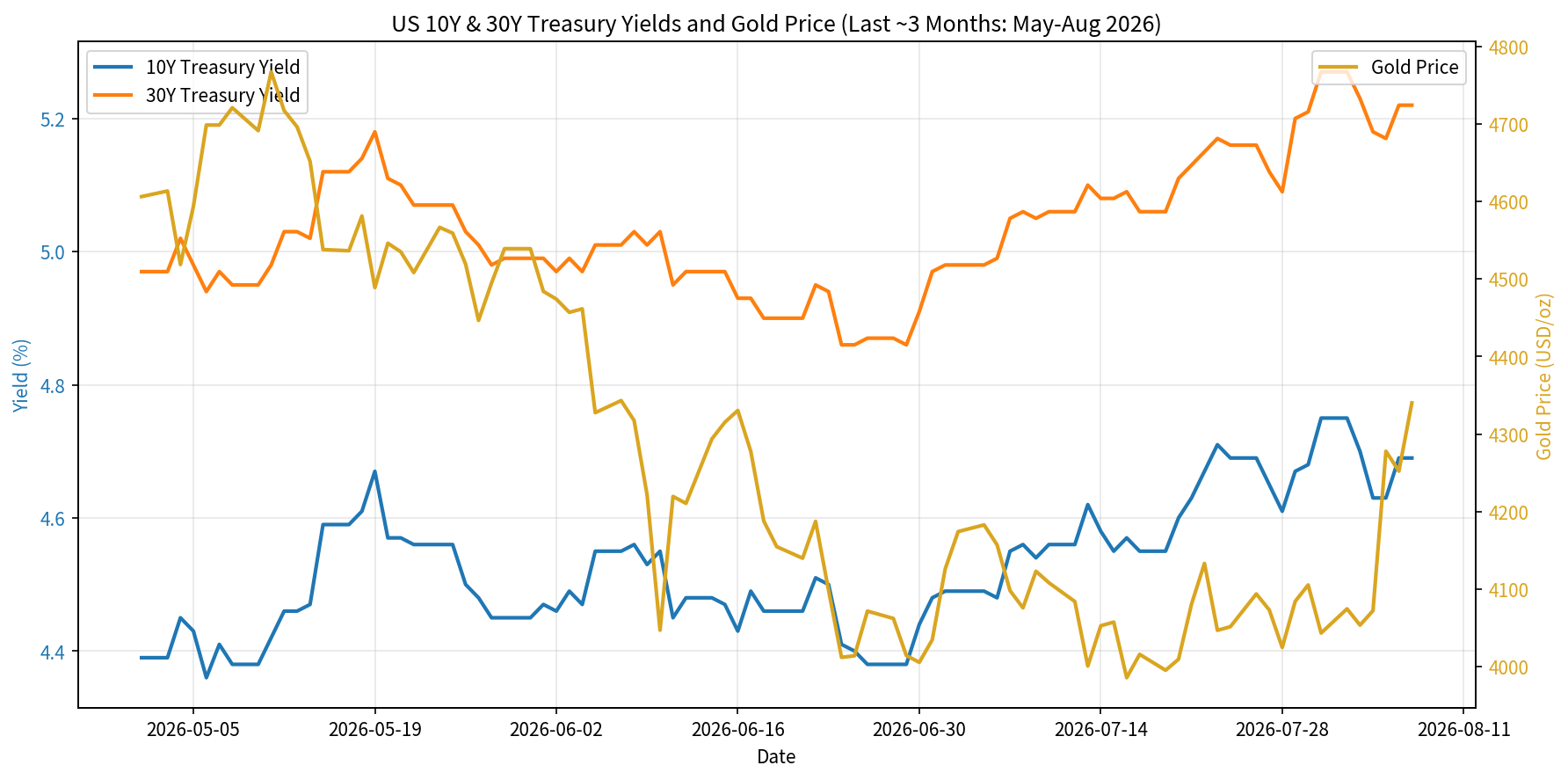
Those rising bond yields have previously kept gold tamped down to its price support at $4,000 per troy ounce since May. Contrastingly, perception of the new Fed Chair Warsh as a hawkish figure have all been bearish for gold and bullish for bonds (note that bullish means falling bond yields). There is a very real sense where both bullish and bearish moves in the US bond market are bearish for gold, depending on data from the economy and the war in Iran.
That’s because a ‘stronger’ bond market means, for the uninitiated, lower bond yields, signifying lower price inflation, usually because rates have gone higher. In contrast a ‘weaker’ bond market is characterized by higher yields, as buyers demand bigger payouts to take bonds off the hands of sellers. Given that traditionally, bonds and gold compete for safe haven portfolio allocations, higher yields tend to out perform gold, which itself doesn’t yield interest.
If the Fed’s hands are tied from fighting price inflation with rate hikes for fear that tightening credit conditions would exacerbate the poor job market, bond yields would likely rise through pricing in future inflation, potentially pushing gold down. This happened on May 15th, when oil was over $105 per barrel, suggesting higher future price inflation, on June 8th, when the 10-year bond broke above 4.5%, and on the last Friday of July, when the US Treasury bought Japanese Yen in a bid to support the depreciated currency for the first time since the late 1990s.
This played on warnings long issuing from gold-focused financial media, that US debt levels would become unsustainable and that investors would either abandon the US Treasury market or drive rates so high that it becomes impossible to finance the government without mass money printing.
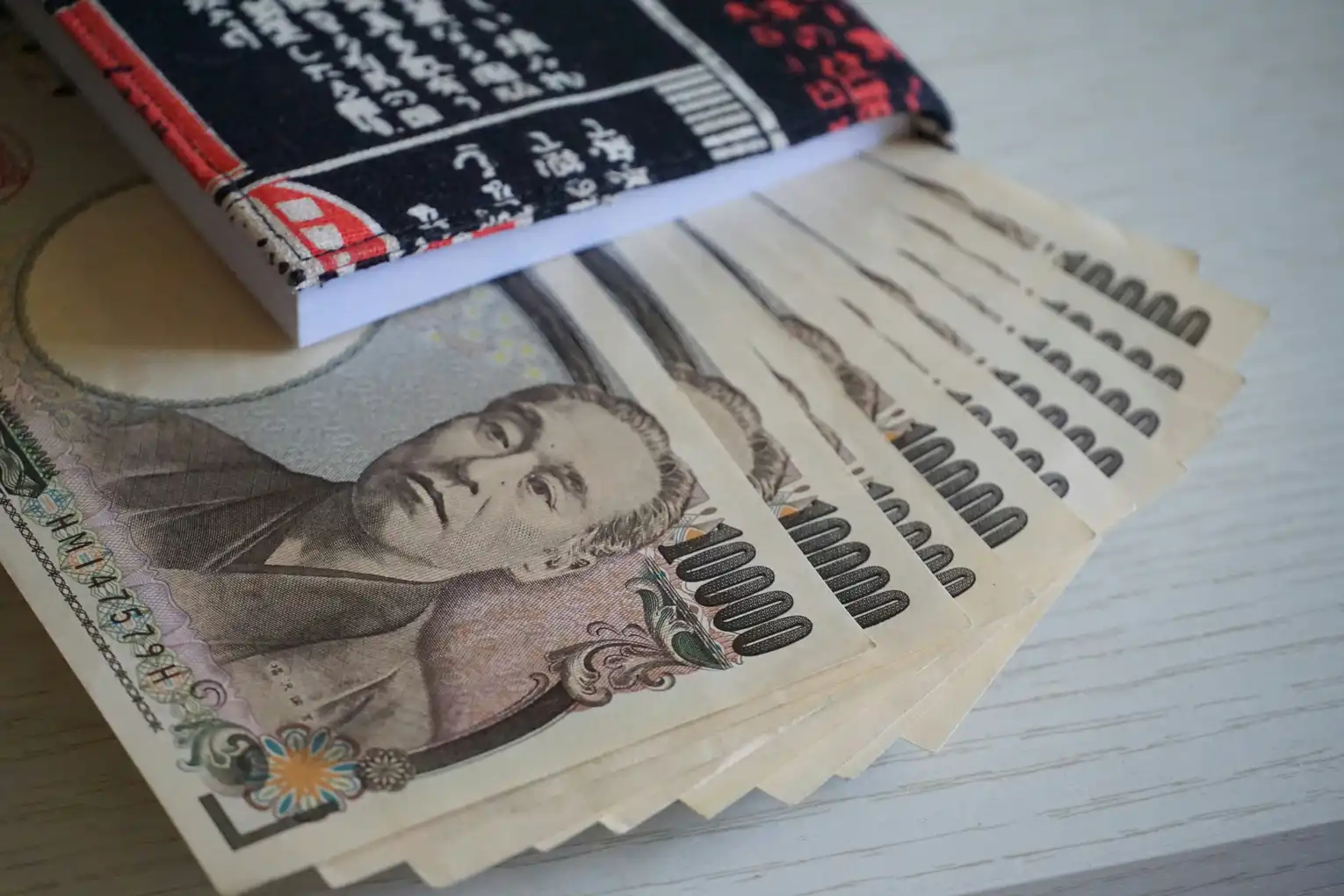
Key to that warning has for years been Japan, the world’s largest foreign holder of US debt. Yet Japan is also the world’s most indebted nation with a debt-to-GDP ratio far in excess of 200%. Earlier in June, the yen fell to a 40-year low against the dollar, the result of unprecedented easy money policy and zero-percent interest rates by the Bank of Japan extending back over a decade. The BoJ seemed to promise an intervention when the yen crossed a key “red line” of 160 to the dollar. The markets called the BoJ’s bluff, and bid the price down further, to the point where it was spending whole weeks above that line, going so far as to touch 164 to the dollar.
Japan was preparing to offload $60 billion of US Treasuries, and take the dollars to buy yen and strengthen the exchange rate to restore confidence in both the Japanese Government Bond (JGB) market which has also been struggling this year with multi-decade highs in yields, and the currency markets. That’s when a Reuters photographer took a picture of a notepad in front of Treasury Secretary Scott Bessent’s chair at a cabinet meeting at Camp David, Maryland, which read “To Do: Buy Japanese Yen $5-10 bil”.
In order to execute the bailout, Bessent used something called FIMA, which is a credit swap facility creating during COVID-19 to allow countries to access dollar liquidity without selling their Treasuries. Japan may have used as much as $59.7 billion through the credit swap to buy yen, using their Treasuries as collateral. The markets were somewhat confused by Bessent opting to sell the Department’s euro holdings to provide the liquidity.
“This kind of twist in my opinion undercuts the efficacy of US participation, because it invariably will have markets wondering why the US didn’t just fund Yen buying out of dollars,” wrote Robin Brooks, a senior fellow at the Brookings Institute.
A second leg
The monetary inflation this FIMA intervention would cause—creating new money to prevent the selling of previous debt-based US government financing—might have led Bessent to determine using euro would be less inflationary. Japan’s Finance Ministry said Monday it plans to use the FIMA repo facility for future interventions to avoid having to sell US Treasuries. In that case, the Fed will eventually have to create more new money to bailout the yen again, since it cannot print euro.
There are other reasons why a weak yen is unhelpful to America’s precarious credit situation. In January, it was seen that dumping of Japanese Government Bonds (JGBs) had a direct and negative effect on the US Treasury market. Should a weaker yen return, renewed pressure to sell JGBs to hedge against future yen debasement could fuel the ongoing fire in the US bond market for the same reasons, especially because the FIMA repo facility essentially allows the BoJ to put the American consumer on the hook for the inflation it needs to support the yen and hold onto its Treasuries. But these interventions will need to continue one after the other until the underlying problems in both currencies are solved.
“As long as Japan’s government bond yields are artificially capped,” Brooks wrote, “the yen is overvalued and needs to fall”.
This is clearly the start of a second leg in the gold bull market that started last year. Driven by inflation expectations and the inflexibility of central banks to tighten with the current debt levels, gold is more than ever being seen as a safer bet than US Treasuries. The fact that the substantial rise in bond yields last week didn’t stop gold from having a crisis-moment breakout suggests that the promise of higher yields is unable to dampen fears of long-term inflation—not from oil or tariffs or wars, but from uncontrolled Fed money printing.
A key test of this hypothesis will be Wednesday’s CPI print. Though not the Fed’s preferred measure of inflation, expectations are for sub-3% core price inflation. June’s gentler-than-expected CPI print resulted in a rally in gold as bond yields fell. If it surprises to the upside, that is, inflation is lower than expected, gold may climb again.
What will be interesting is if it surprises to the downside, and bond yields rise as traders demand greater real returns to make up for future price inflation. If gold doesn’t reverse, or if it climbs still, than investors can be sure that the yellow metal has lost any illusion that between the Japanese and US bond markets, price inflation and higher bond yields will ever come under control. WaL
We Humbly Ask For Your Support—Follow the link here to see all the ways, monetary and non-monetary.