 0
0
 0
0

Many modern lifestyle interventions purported to improve health outcomes like fasting and exercise can be somewhat summarized within the single aim of trying to make as many aspects of our modern life as familiar to our ancient biology as possible.
On that track, avoiding any food more than 3 hours before bedtime and dimming or switching off lights in the house at sunset, fit right in, and were actually the subject of a rather interesting new study.
Patterns of eating and sleeping would naturally be inflexible for our ancestors, who were limited in the amount of time they could spend hunting and gathering and by the natural light of the Sun. Waking at dawn, it’s not unrealistic to find hunter-gatherers today who embark on food collecting for the first 3+ hours of the day, eating little if anything, before consuming a meal consisting of the first things they caught/found an hour either side of noon.
These activities would have to stop in the late afternoon, since falling light would make spotting prey or wild edibles more challenging.
Obviously this scenario would vary, but conserved within our biology is some indication that it was common enough for humans to adapt to it.
A recent paper published in the journal Arteriosclerosis, Thrombosis, and Vascular Biology, found that compared with controls, obese adults who both stopped eating at least 3 hours before sleep and dimmed the lights in their house at the same time, showed a slate of better biomarkers associated with cardiometabolic health, including improved nighttime autonomic function, lower nighttime heart-rate and cortisol levels, and improved heart-rate variability.
Not only were these changes observed, but some of them were quite acute. For the case group—those who averaged 4-hours between their last meal and sleep—had a reduction in their heart rate of 3 beats per minute, a 12% reduction in nighttime cortisol (stress) levels, and a reduction in nighttime diastolic blood pressure.
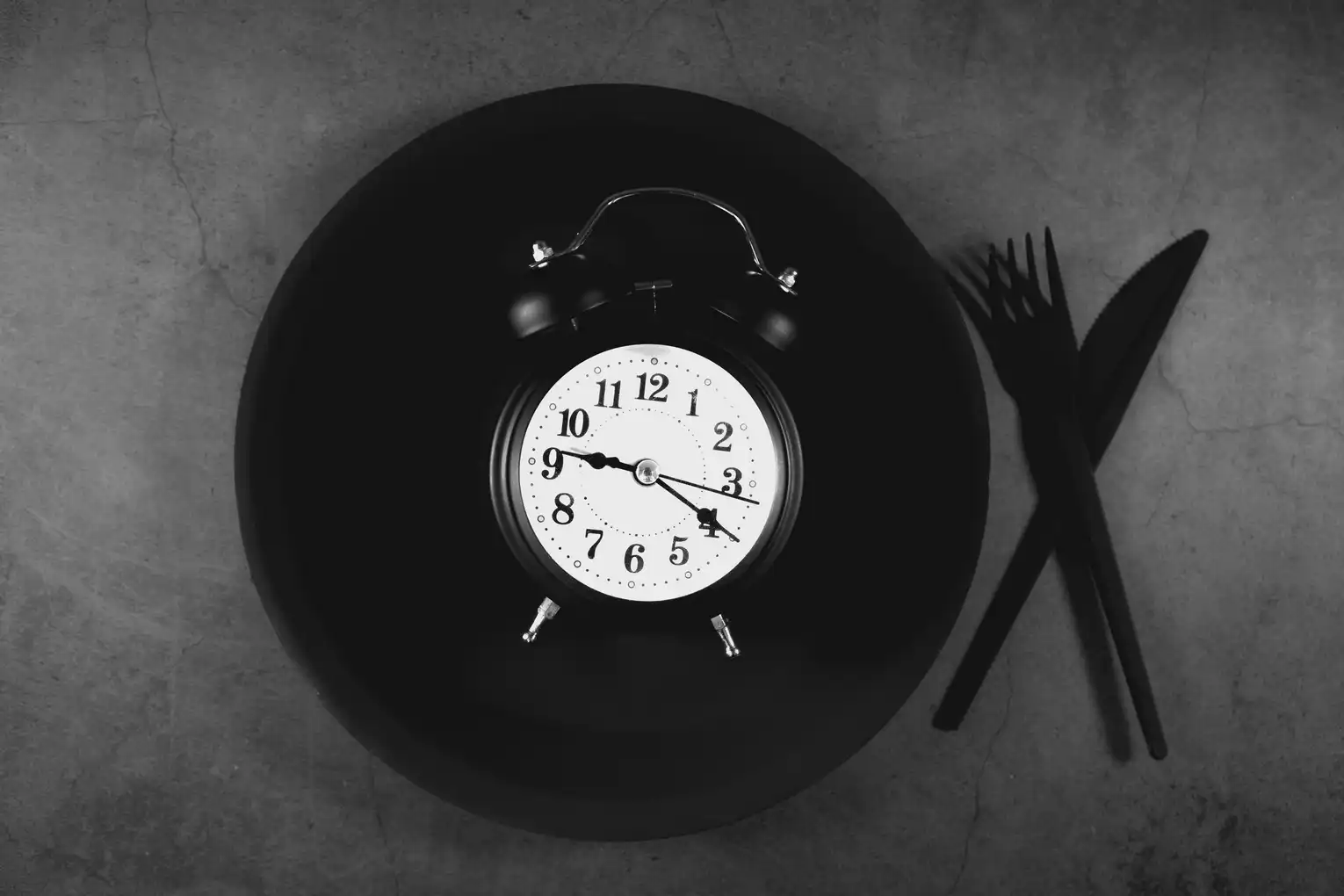
The study is an outgrowth of the tremendous interest into time-restricted eating as a lifestyle intervention that’s easy to implement and maintain for anyone of any age. Within the basic framework—that you should spend more hours in a 24-hour day-night cycle in a fasted state—many variations exist. Two individuals might each compress their eating window to 9 hours of the day, but if one finishes their last meal 1 hour before sleep, and the other 3, they will experience strongly different metabolic stimulus at the moment they go to sleep.
Sleep itself being the process of cellular rejuvenation, understanding how these paradigms impact sleep is valuable.
The study divided 39 overweight/obese participants between the ages of 36 and 75 years into 2 groups that completed either an extended overnight fasting intervention (13–16-hour fasting) or a control condition (habitual fast of 11–13 hours). Both groups dimmed lights 3 hours before bedtime, and the intervention duration was 7.5 weeks.
The study had several strengths, first being that it was randomized and controlled. The second was that total calories were close to the same between the two groups. The results add to the strengths in that neither group in any significant way experienced changes to their sleep, either quality, depth, or duration, nor did either group’s body composition change.
In effect, the observed impacts were solely a result of elongating the pre-sleep fasting period.
That elongation significantly improved nighttime dipping of diastolic blood pressure, and morning oral glucose tolerance during a 30-minute glucose response test in addition to the other observed effects. Whole body insulin sensitivity remained unchanged, as did average diastolic and systolic blood pressure, or fasting blood sugar levels, indicating that the intervention has its limits. WaL
Consider Following the link here to see all the ways, monetary and non-monetary, you can support this work and more like it.