 0
0
 0
0

Oil loads into the East-West pipeline at the Saudi port city of Yanbu have fallen 40% since strikes on the country were launched from Yemen days ago. The Kingdom is now rerouting some of this crude to Egypt and on to the Cape of Good Hope, but it’s adding some $9.00 per barrel to the export cost.
From a peak of 5.16 million barrels per day before July 19th, loading volumes had fallen to approximately 3.09 million barrels per day just after.
Yemen’s acting government and armed forces, Ansar Allah (AA), announced a blockade of Saudi Arabia’s Red Sea coast on July 20th, calling it a “blockade for a blockade” referring to the Saudi’s blockade of Yemen’s ports and airways since 2015. It followed that up with strikes using “ballistic missiles, cruise missiles, and drones” on oil refining facilities belonging to Saudi Aramco in Jazan and Yanbu on July 25th.
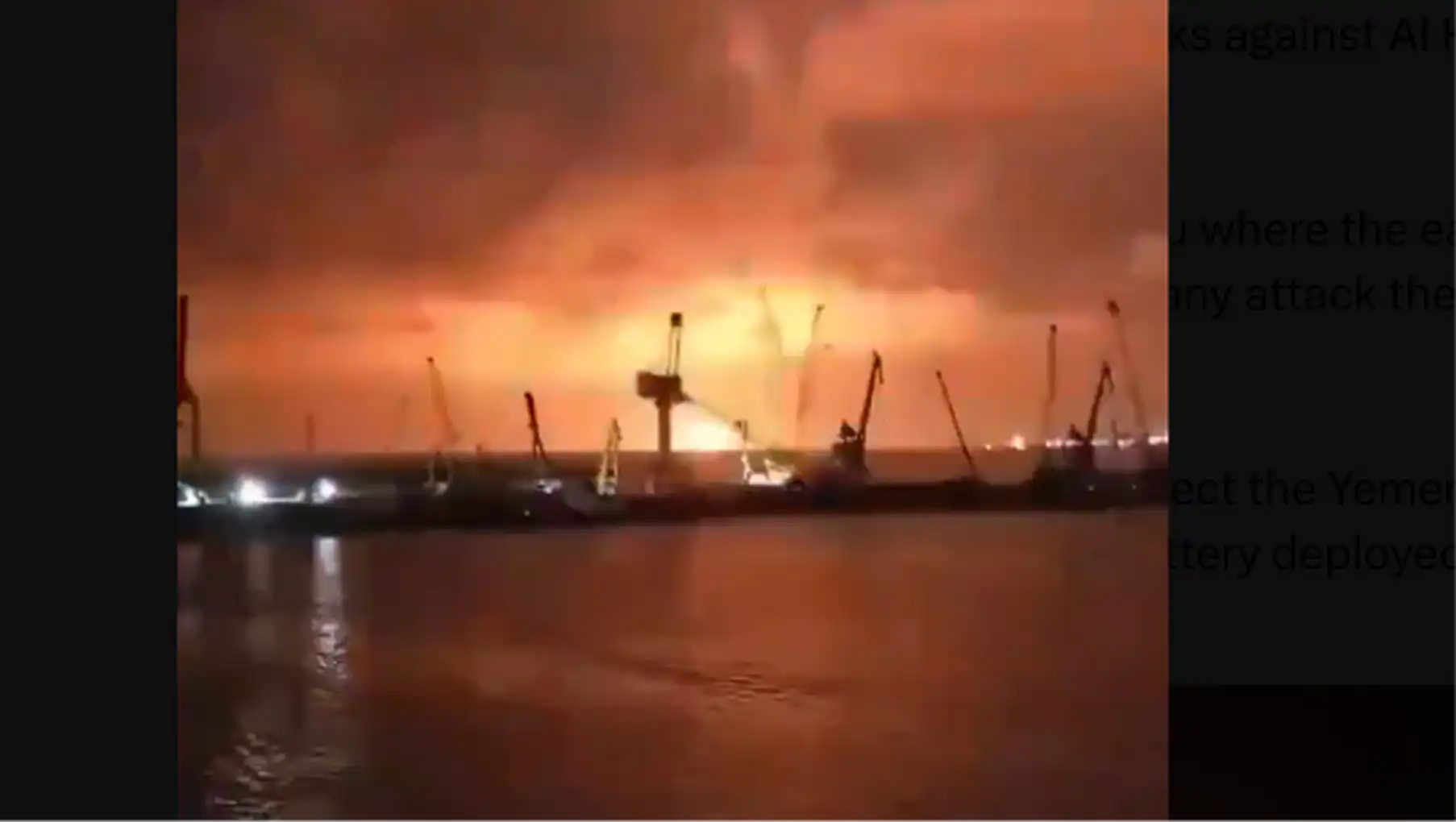
The Jazan oil refinery is a $12 billion installation, and multiple satellite feeds recorded images of thick black smoke billowing up from the area for days, while social media footage recorded the smoke, fires, and some of the impact explosions.
Yemen bombed ARAMCO
Few hours ago, Yemen’s AnsarAllah struck the ARAMCO refinery in Jazan, Saudi Arabia in retaliation for their attacks against Al Hodeidah port.
Sirens were also additionally activated at Yanbu where the east-west pipeline goes through but there’s no visuals… pic.twitter.com/TNjtNN1XGd
— Arya Yadegaar (@AryJeayBackup) July 25, 2026
AA’s attacks on Yanbu may have been intercepted. Both came as a result of Saudi Arabian strikes on Hodeidah, one of two key Yemen seaports, and the only one controlled by the de-facto government.
“In response to this blatant criminal aggression, the YAF carried out two specialized military operations. The first operation targeted sensitive facilities belonging to Saudi Aramco in Jazan, using dozens of ballistic missiles and drones,” the Ansar Allah-led Yemeni army said.
“The second operation targeted sensitive Saudi Aramco facilities in Yanbu, using a number of ballistic missiles, cruise missiles, and drones,” it added.
Additionally, according to maritime intelligence firm Windward, 5 Saudi vessels were hit or at least targeted by AA, causing more than 40 vessels to switch off their automatic identification systems and convert overnight into a “dark” tanker fleet in order to avoid targeting by Yemen. This perhaps contributed to tanker traffic in the Red Sea falling to a multi-month low.
AA hasn’t had it all their own way, and there is a limit to their power projection into the Red Sea, as seen by a container ship transiting with its identification system on along its entire route to Aden, the second Red Sea port of Yemen, controlled by Saudi-backed rebels. There was no targeting of the ship on course, perhaps because it was a container ship, rather than a tanker.
The wider war
After US Central Command halted its bombing of Iran and reports emerged that the theater commander had warned the White House of an oncoming dearth of munitions, crude prices, which had reached $90 a barrel last week, fell more than 7% during Monday’s trading. At publishing time WTI crude was listed at $81.80, down another 0.9% and Brent was posting $87.20 per barrel, down another 1.5%.
Separate from Yanbu, Jazan, and the Red Sea, another Aramco facility was bombed and set aflame by what Saudi officials called a drone attack originating in Iraq. The attack occurred in the Eastern Province and in Riyadh Province, with a facility in Abqaiq photographed by satellites emanating smoke indicative of an oil fire.
“These terrorist attempts were launched from Iraqi territory and executed by Iranian-affiliated terrorist militias,” the Saudi defense ministry said. The incident occurred as drones were reportedly shot down in both Jordan and Israel. Iraqi officials have denied that its territory was used to launch the attack, and AA, normally quick to claim responsibility for attacks, also remained silent.
“The Saudi fabrications are an attempt to justify its inability to respond to the painful Yemeni strikes that reached deep into their infrastructure, out of fear of the nature of the impending Yemeni response,” said the Islamic Resistance in Iraq, a coalition of Shia militias nominally on the side of Iran, according to Yemen’s Al Masirah TV.
The incidents are threatening to pull Saudi Arabia further into the regional war and beyond simply sustaining strikes on US military bases in the country, which despite entering a lull following Central Command’s cessation of attacks on Iran, simmers on in Yemen and the Red Sea.
“Unfortunately, there are no good military options for neutralizing the [AA] threat to shipping, just like there is little the US can do to deny Iran the capabilities to attack the Persian Gulf,” writes Rosemary Kelanic, Director of the Middle East Program at Defense Priorities at the DC think tank the Quincy Institute for Responsible Statecraft.
“In early 2025, the US spent an estimated $7 billion bombing AA with little to show for it. The US burned through munitions but never even established air superiority, and AA continued to fire at vessels in the Red Sea”. WaL
We Humbly Ask For Your Support—Follow the link here to see all the ways, monetary and non-monetary.
PICTURED ABOVE: The moment when a projectile from Yemen detonated on a Saudi Aramco refinery at Jazan. PC: @AryJeaybackup via X, screenshot.