 0
0
 0
0

Story at a glance…
-
The war on Iran has coalesced almost entirely into a battle for control over the Strait of Hormuz.
-
Concern over the economic fallout of the Strait’s closure has made achieving any other war aim unreachable for the Trump Administration.
-
Iran too is fixated on the Strait as an exceptional deterrence to future aggression.
Stopping an imminent threat, eliminating the possibility of Iran to enrich uranium or possess a nuclear weapon, achieving sustained regime change, protecting Iranian people from their government: these, among others, have flitted in and out of statements as the United States’ official war aims in the Gulf Region, but none—even the nuclear issue—compare to the now all-consuming issue of the Strait of Hormuz.
Having once had the gall to dismiss Iran’s closure of the key waterway as something that would resolve itself “on its own,” as if by magic, nothing short of magic can extricate President Trump from the Hormuz quicksand he’s bound up in.
The period of Sunday night to Monday morning saw yet another attempt by the President to scare the Iranian’s into submission, only for the last minute announcement that a deal to open the Strait would be agreed to in the intervening days, sending oil prices plummeting just in time for markets to open. It’s a scene that has now became ever so familiar to Americans wondering how they’ve yet again become embroiled in a Middle Eastern conflict, especially as this one impacts the prices paid at the pump more than in the past.
The Memorandum of Understanding signed between Iran and the US to end the conflict in the near term included a provision that Iran and Oman would collaborate to manage the waterway, in part because of the extensive naval mining of the central shipping lanes through the narrow channel.
“The current understanding appears to be focused on reopening the Strait of Hormuz rather than reviving the entire memorandum,” Tehran-based Geopolitical Analyst Peiman Salehi, told WaL in an extensive email exchange. “I still believe that Iran and the United States will not enter into another long war like the recent forty day conflict. I also continue to believe that they will not reach a final comprehensive agreement”.
“I think Washington’s objective is to restore the previous situation. It wants the Strait of Hormuz reopened and it wants Iran back in another endless cycle of negotiations just like what existed from 2003 until 2025. But Iran’s control over the Strait of Hormuz and its ability to manage it have made it much harder for the United States to recreate those previous conditions and Tehran understands this very well”.
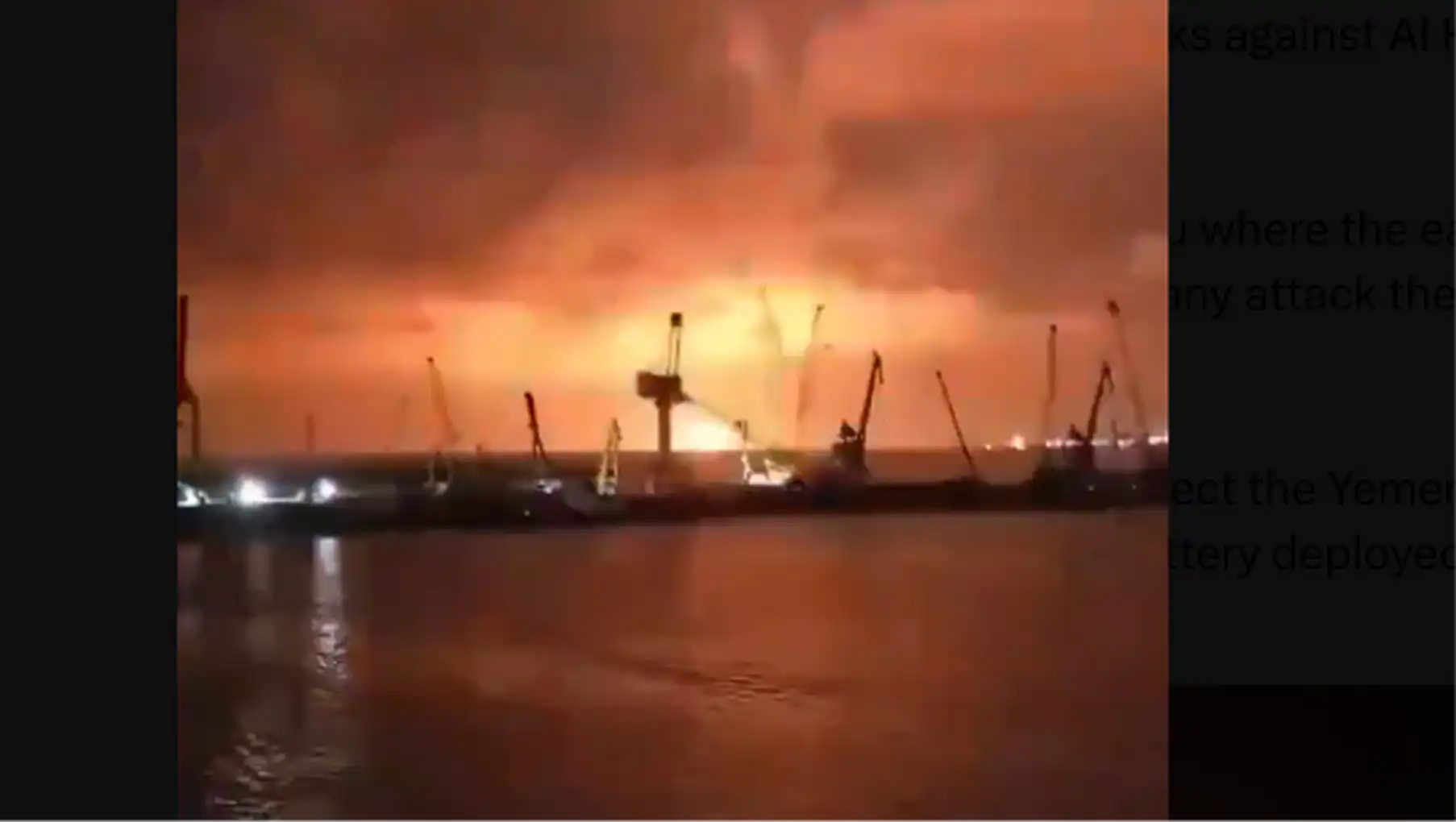
Though Iran’s Foreign Ministry have officially stated that the only ongoing negotiations are with Oman, Al Jazeera reported on Tuesday that talks also include Washington, DC. Combined with Trump’s statements promising an imminent deal yet again, US oil price benchmarks fell as much as 10% between Monday and Tuesday. This is despite the fact that traffic through the Strait remains incredibly restricted, and Yemen’s attacks in the Red Sea have seen rerouted oil through Saudi Arabia’s Yanbu port reduced 40%.
US Secretary of State Marco Rubio has even said as much that the Strait deal is separate from the broader negotiations with Iran. In order for the US to pursue wider war aims and security interests in the region, it simply must see to the resumption of the one-fifth of the global energy trade that moves through the Strait. With shipping closed, there is simply too much pressure from allied nations and the domestic population to focus on anything else.
More about deterrence
In much the same way that the economic consequences of keeping the Strait closed seems a focus of Trump, as one can infer by the focus on it at the White House and the repeated attempts to tamp down oil prices by announcing imminent deal after imminent deal, the focus is equally strong from Tehran, who see in the waterway the ultimate deterrent to future American aggression; now lately proven to be enormously effective.
The Iranian Foreign Ministry spokesman has said the talks with Oman are focused on “establishing safe inbound and outbound shipping lanes” that “uphold sovereign rights while also addressing the national security considerations of both Iran and Oman,” Al Jazeera quoted him as saying.
“Contrary to what many people in the West believe I don’t think Iran’s main objective is simply to collect transit fees from ships passing through the Strait,” said Salehi. “I think that assessment is inaccurate. Iran wants to use the Strait of Hormuz as a strategic deterrent against future American actions whether diplomatic or military. It is much more about deterrence than about economics”.
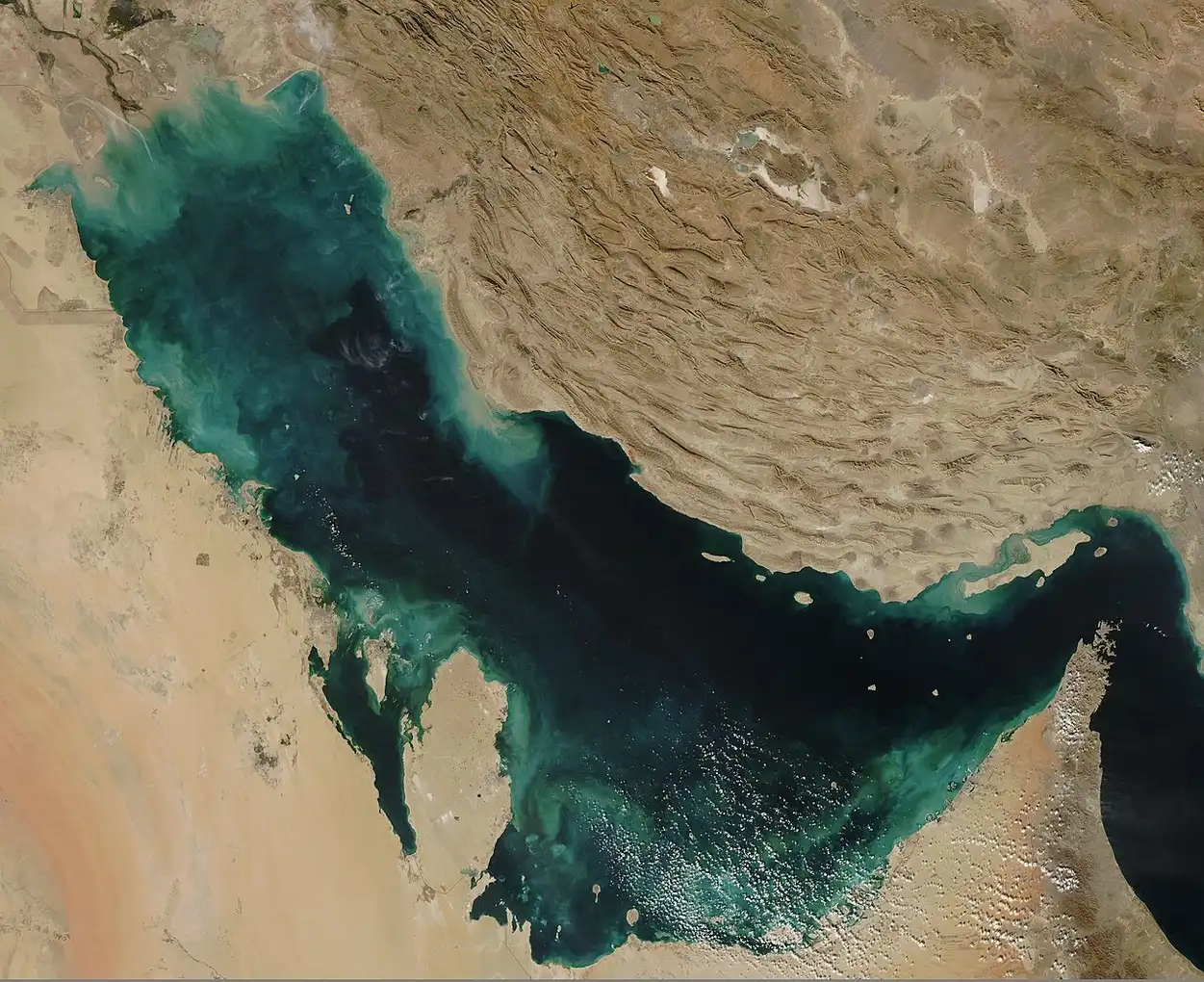
AJ and Salehi both report that the current negotiations in Oman focus on opening a corridor through the center of the 24-mile-wide Strait, with inbound traffic coming in through the north, nearer to Iran, and outbound navigation going to the south—but not along the coast of Oman as was the case before hostilities resumed in late June.
“This is different from the previous corridor along the Omani side where both incoming and outgoing traffic were effectively managed through Oman which naturally encouraged ships to sail closer to Omani waters,” said Salehi, noting that the details of the agreement had not been released. “The new corridor in the middle of the Strait would therefore operate under a different management model and that is the main difference between the two arrangements”.
Different news outlets relying on different sources suggest a variety of different arrangements are taking place, but with the US military now so depleted in the region, it would be difficult to enforce what the Trump Administration’s official line is: that there be no transit fees charged by Iran.
The ‘imminent threat’
“Imminent” events have characterized this war, which could rightly be called the Hormuz War. It’s something the Trump Admin. has been guilty of in the past—invoking imminent future events to justify past executive overreaches.
When Israeli and American forces attacked Iran on February 28th, President Trump’s address to the nation was simple and familiar: there was an “imminent threat”. That was the same justification he used to assassinate another Iranian leader, Major General Qassim Soleimani, in 2020 during his first term.
Then, as now, Congress and the national media mobilized to try and understand what threat there was which was imminent in its arrival. Then, as now, both quickly learned that this was either a lie, or an incorrect hunch.
A month after the assassination of Soleimani, in a report provided to Congress by the White House, Trump and his cabinet changed the legal justification for carrying out the hit by arguing that “the President directed this action in response to an escalating series of attacks in the preceding months by Iran and Iran-backed militias”.
“This official report directly contradicts the President’s false assertion that he attacked Iran to prevent an imminent attack against United States personnel and embassies,” said House Foreign Affairs Committee Chair, former Congressman Eliot Engel (D – NY) in a statement. “The administration’s explanation in this report makes no mention of any imminent threat and shows that the justification the President offered to the American people was false, plain and simple”.
“We heard the strike went forward because Soleimani did so many bad things in the past and was plotting for the future, but when that didn’t work they went back to an imminent threat, but we don’t know where or when it would take place, in fact we don’t even know if it was imminent,” Charmain Engel said in his opening remarks.
“Next an embassy was going to be attacked, then 4 embassies were going to be attacked, then maybe it wasn’t 4 embassies…”
Trump’s second administration couldn’t do any better in defending the launch of this most recent attack. Within the first 48 hours, Trump, Vice President J.D. Vance, and Secretary Rubio, all independently offered different justifications for the attack and ultimate war aims, before a March 4th press conference saw Press Secretary Karoline Leavitt state that Trump had “a feeling,” that Iran was going to attack American forces in the Middle-East.
That conference was preceded by the Pentagon, on March 2nd, briefing conference that there was no indication of an imminent threat posed to US forces. WaL
Consider Following the link here to see all the ways, monetary and non-monetary, you can support this work and more like it.
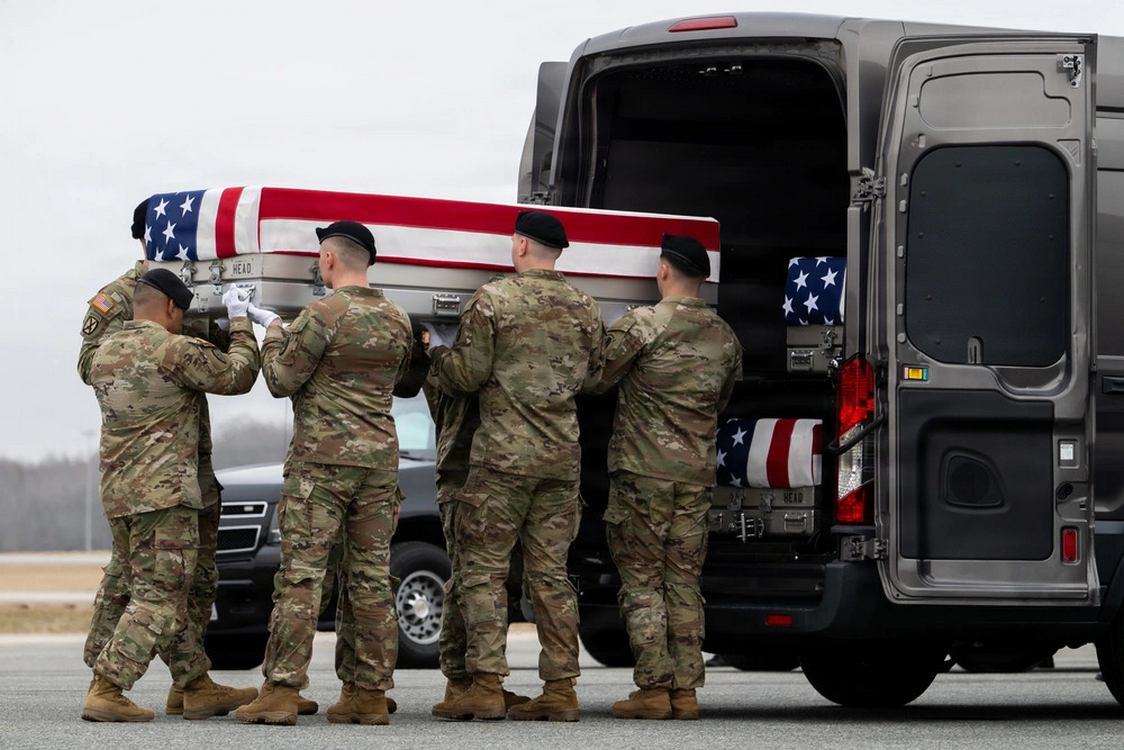
PICTURED ABOVE: The body of a soldier killed in an Iranian strike is brought back to the US. PC: US Army Photo.