 0
0
 0
0

Attempts by the Trump Administration to restart peace negotiations between Kyiv and Moscow have come up short in producing anything that might slow the pace of combat going into the war’s 5th winter.
Meanwhile, reports from Ukraine-controlled positions in Donetsk Oblast outline an environment of constant air and drone strikes, while the 1st city in a chain of 4 that makes up the backbone of the domestic defense has fallen to Russian advances.
Its gradual fall, though originally dismissed as false by national media and the office of President Volodymyr Zelenskyy, was confirmed more from the lack of further denials.
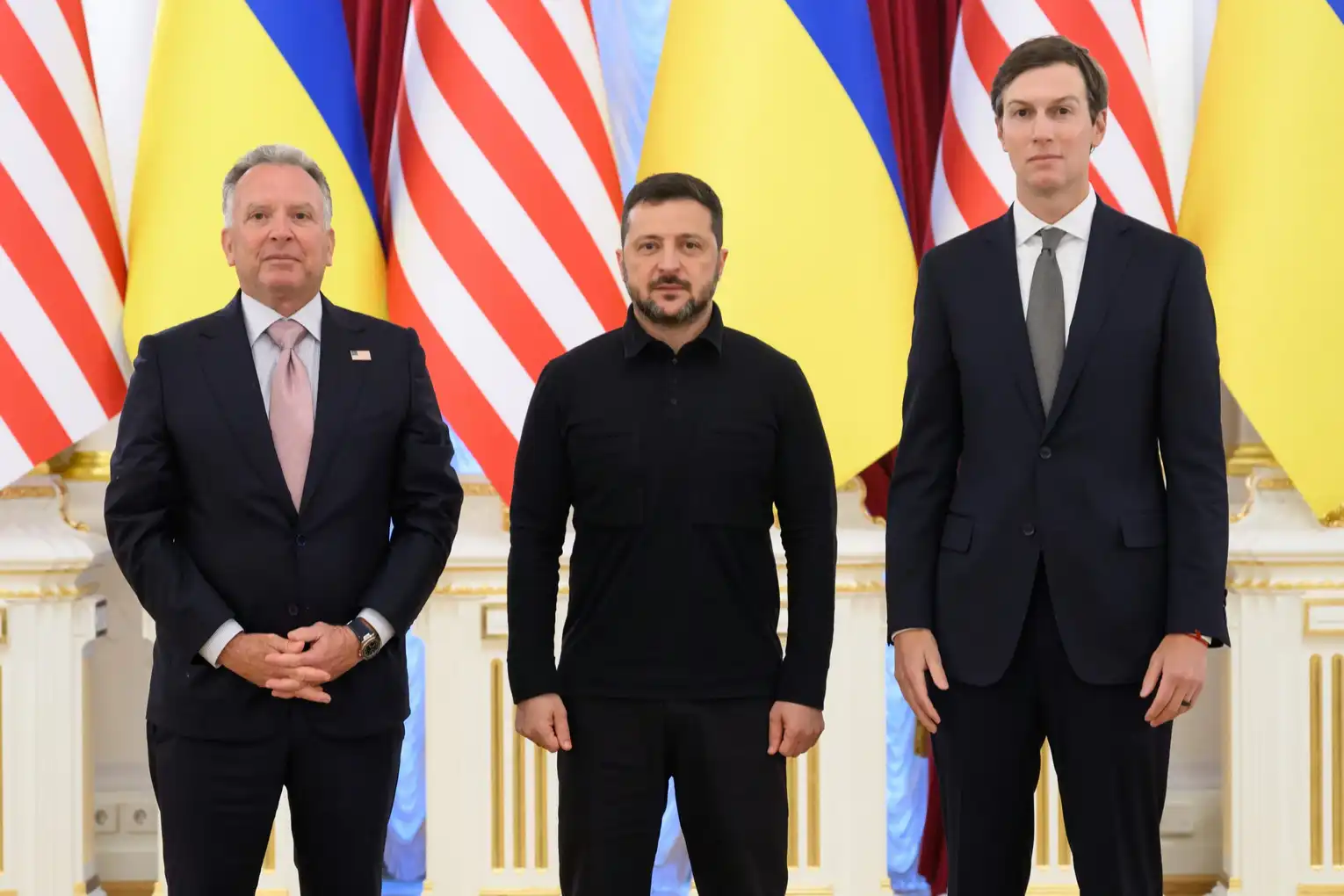
On September 5th, Trump’s catch-all envoys Steve Witkoff and Jared Kushner arrived in Moscow for face to face discussions with Russian President Vladimir Putin, which preceded a visit in Kyiv to speak with his counterpart. The heads of state agreed to halt attacks on each other’s capital cities to facilitate the discussions, which despite being described as “substantive,” “meaningful,” and as having led to “encouraging” progress, there are no indications from anyone involved that actions or change had been secured.
On September 7th, the American envoys arrived in Kyiv, where they discussed Ukraine’s plans going into a winter in which the general staff and President Zelenskyy expect Russian forces to heavily target the country’s energy sector.
“I’m grateful that, despite the long hiatus in any format of negotiations, we may find some form of negotiations acceptable, but it’s still worse when there are none at all,” Zelenskyy said in a press conference following a 3-hour discussion with the Americans. He said he and his generals believe “the war will continue”.
He also sounded a gloomy note when asked about the potential for Patriot missile air defense systems.
“(T)he American side will increase the production volumes of anti-ballistic missiles, Patriot systems next year … we were counting on such systems to protect our state, so we will increase the volume next year,” he said. “If the war continues — and we expect the war will continue — we are counting heavily on the winter aid package … on support for both air defense and the energy sector”.
“One thing Steve and I really thought would be productive is to go back to the trilateral format, which we were able to do about six months ago,” Kushner said at the same briefing. “And we’ve spoken with both parties, and so hopefully we’ll have progress on that very soon”.
Progress, perhaps, though the Kremlin has long-remained adamant that it will achieve its goals in Ukraine, including the resolution of the “root causes” of the conflict.
At the front
On Sunday, Trump shared a phone call with President Putin.
“During his conversation with Putin, Trump emphasized the need to bring the conflict in Ukraine to an end, which would open the door to a major restoration of relations between Russia and the United States,” Kremlin aide Yuri Ushakov told reporters. When the 3 day pause ended that day, Russian air forces unleashed heavy missile fire on Kyiv, wounding 35, killed 5, and starting fires.
It’s almost entirely the air domain that characterizes the fighting in the east of the country. In the city of Kramatorsk, a Ukrainian servicemember told CNN that bombing is a daily reality that’s making the city not only difficult for civilians to live in, but for Ukrainian armed forces to even use as the fortress it was fortified to be.
“There’s shelling here every day. Guided bombs, a massive barrage, 8 at a time,” Iryna Rybakova said, whom CNN described as “horribly aware” the front line is getting closer every day. “The attacks happen dozens of times a day. Dozens of cars, utility buildings, residential buildings, administrative buildings, and garages have been hit; they’re just setting everything on fire”.
Kostyantynivka has been lost, leaving just the major positions of Druzhkivka, Kramatorsk, and Sloviansk. CNN couldn’t report on Ukraine’s precarious position without mentioning that it’s costing 40,000 Russian troops a month—a piece of utter nonsense provided via “Western intelligence agencies”. The Ukrainian armed forces have no substantial artillery forces or air power, and rely almost entirely on First-Person View (FPV) drones, which have only limited explosive force.
What ballistic missile capabilities the Ukrainians do have they’ve primarily reserved for use on more strategic targets, even infrastructure, and do not fire them at Russian troop fortifications—as the Russians do every day to the Ukrainians. Nevertheless, it is true that the Russian advance has slowed considerably, corresponding to the advent of mass drone warfare. Encountering this new weapon, both sides have sought to alter their field equipment, technology, and tactics.
Russian forces, however, have the luxury of doing so under the cover of long-range air and missile fire, and open source data-based maps demonstrate that the Russian advance is speeding up ever so slightly compared to the near stalemate which existed in spring, perhaps reflecting a successful adaption to the drone problem. WaL
We Humbly Ask For Your Support—Follow the link here to see all the ways, monetary and non-monetary.
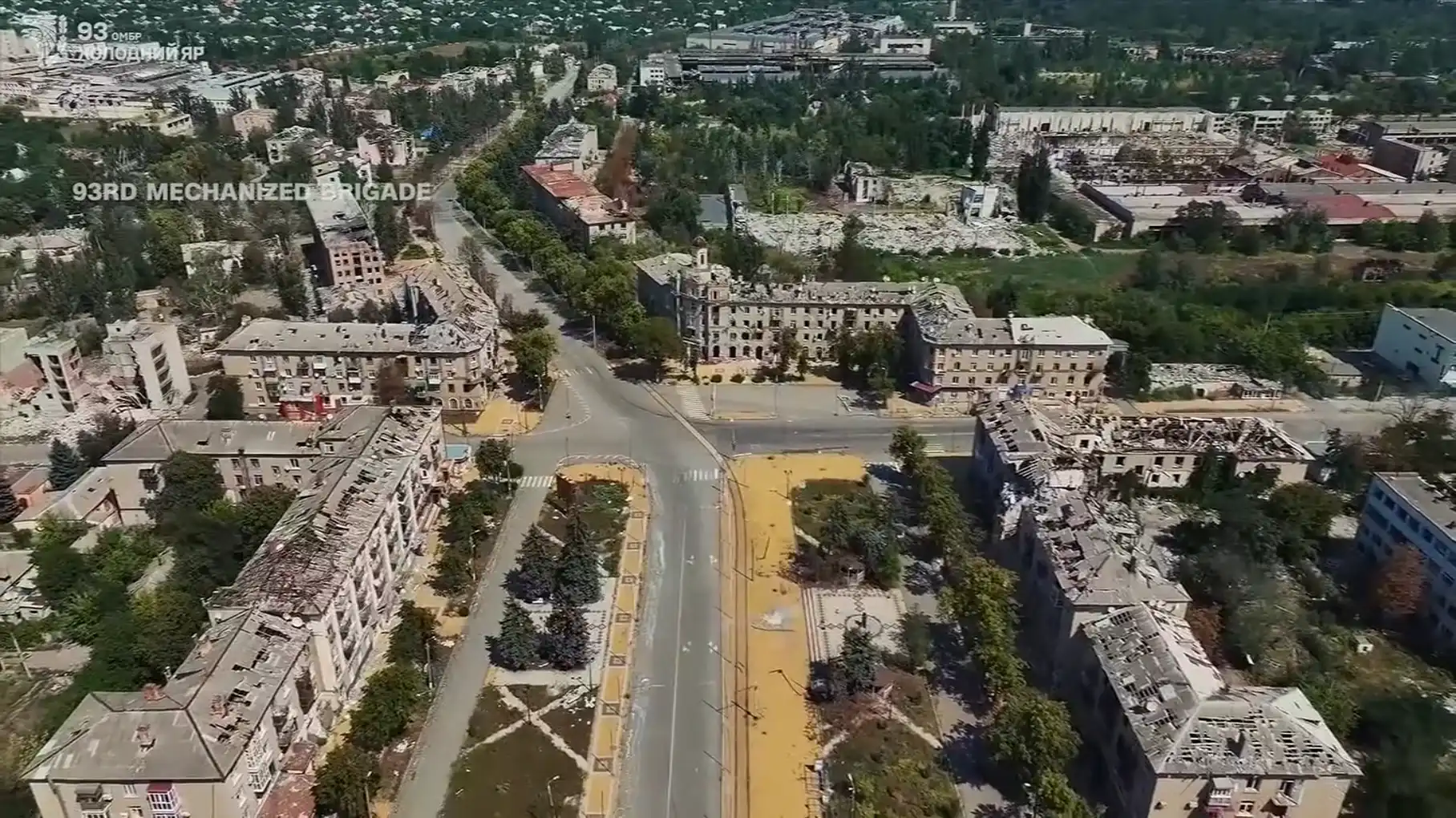
PICTURED ABOVE: An image of the city of Druzhkivka in the Donetsk region. PC: Ukraine 93rd Mechanized Brigade, released.