 0
0
 0
0

On June 19th, WaL sat down with Tehran-based Geopolitical Analyst Peiman Salehi to get a sense of the feelings inside the country, the national sphere of geopolitical analysis, and official state language as the first 24 hours since presidents Donald Trump and Masoud Pezeshkian signed the Memorandum of Understanding to conclude, or so they hope, war in the region.
As WaL reported on Thursday, it would be harder to imagine a greater string of diplomatic victories for Iran than what were contained between articles 1 and 14 of the MoU, and in the same vein and perhaps even for the same reason, it would be difficult to imagine a worse start to the MoU’s 60-days prescribed negotiations on a comprehensive peace framework slated to begin in Switzerland today.
Slated, but terminated; as both Vice President J. D. Vance and Iranian negotiators canceled their trips to Geneva after Israeli Prime Minister Benjamin Netanyahu publicly declared that he would not bring his country into compliance with Article 1 which states there must be a cessation of hostilities including Lebanon and Israel, and concordantly, would not withdraw the IDF from southern Lebanon.
Fierce fighting that left both Hezbollah fighters and IDF soldiers dead brought condemnation from Tehran that Israel was in blatant violation of the newly-inked agreement, and thus the MoU seems at risk of being stillborn.
Peiman Salehi says that understanding the present and future dynamics of foreign and military policy during the existence of the MoU requires casting the net back 11 years ago.
On how the MoU is being viewed by the Iranian public and political sphere…
The mood inside Iran is not triumphant. It is watchful, and for many people, already vindicated in its skepticism.
The first thing worth understanding is that opposition to the ceasefire inside Iran was never about wanting the war to continue. Nobody here wants that. The concern was about the terms and, more fundamentally, about whether the United States can be trusted to honor them.
That skepticism has a specific history. In 2015 Iran fulfilled every obligation under the JCPOA. The IAEA confirmed compliance 18 times. In 2018 the United States walked away anyway. That experience is not abstract for Iranians. It is the reference point for every negotiation since.
Against that backdrop, those who opposed the ceasefire, and I was among them, were not opposing peace. We were arguing that Iran was giving up its most significant leverage at precisely the moment that leverage was working. The Strait of Hormuz had been closed for months. According to the Financial Times, had it remained closed through the end of June, energy prices in the US and Europe would have risen sharply. That kind of pressure on Western publics was, in my view, the most credible deterrent Iran had available.
The reason many Iranians remain uneasy is straightforward. Article 1 of the MoU required a comprehensive ceasefire across all fronts, including Lebanon. Beirut is still being bombed. The Iranian negotiating team suspended its travel to Geneva today. The first commitment Washington was supposed to enforce hasn’t been enforced, and we are not yet 24 hours past the signing.
On how the Supreme Leader Motjaba Khamenei views the MoU…
Now consider what the Supreme Leader said last night. He stated explicitly that he held a different view on the ceasefire, that President Pezeshkian personally guaranteed that the US would honor its commitments, and that responsibility for the agreement rests with the President. That statement is not a formality. It is a very deliberate repositioning. If the deal holds, Pezeshkian gets credit. If it fails, the accountability has already been assigned.
On whether economic benefits could convince Iran to maintain compliance despite Lebanon…
The terms themselves are genuinely good for Iran. On paper, this is a significant achievement, and importantly, last night’s statement from the Supreme Leader contained no criticism of the specific provisions. What Khamenei said was that Pezeshkian personally guaranteed to him that the United States would honor its commitments, and that Iran would be waiting to see those commitments fulfilled. The objection was not to the content of the deal. It was to the question of whether it would actually be implemented. That distinction matters enormously for how to read the current moment.
Whether the economic gains are lucrative enough to soften Tehran’s position on Article 1 assumes that the gains are real and imminent. Inside Iran, most serious observers don’t see it that way. The $300 billion reconstruction framework, the sanctions relief, the unfreezing of assets, these are all contingent on a process that hasn’t started yet and that requires sustained American follow-through over months or years. Given the history, that is precisely where skepticism concentrates.
On where the Iranian’s see the biggest threat…
I don’t think the economic incentives are sufficient to make Tehran look past an immediate violation of Article 1. Not because the economic gains aren’t significant on paper, but because the gap between what is written and what Washington is actually willing to enforce on Israel is visible right now, before the ink is dry. If the US cannot or will not deliver on the most straightforward commitment in the agreement, the one that simply requires Israel to stop bombing Lebanon, then the $300 billion and the sanctions relief exist only as text.
Iran waited a long time after 2018 before abandoning the agreement, and what it got for that patience was a snapback mechanism, additional sanctions, and eventually a military confrontation. The lesson many Iranian policymakers drew from that experience was not that strategic patience pays off. It was that good-faith compliance without enforcement guarantees is a losing posture.
There is a broader point here that I think Western analysis consistently misses. The core conflict in this region is not between Iran and the United States. It is being driven by Israel’s strategic objective of regional hegemony. Israel is the only state in the region with nuclear weapons. It has systematically dismantled Iran’s allied network, weakened Hezbollah, contributed to the fall of Assad, and pushed Gulf states toward the Abraham Accords. The US is not an independent actor in this dynamic. It is enforcing an Israeli strategic agenda.
For as long as Iran’s deterrence rests on American goodwill rather than costs that are painful enough to change American political calculations, it will remain fragile. WaL
Mr. Salehi is an Iranian political analyst specializing in global order, emerging power structures, and non-Western alliances. His work has appeared in international outlets including South China Morning Post, Responsible Statecraft, The New Arab, and Middle East Monitor, reflecting a range of Western, Global South, and independent perspectives.
Consider Following the link here to see all the ways, monetary and non-monetary, you can support this work and more like it.
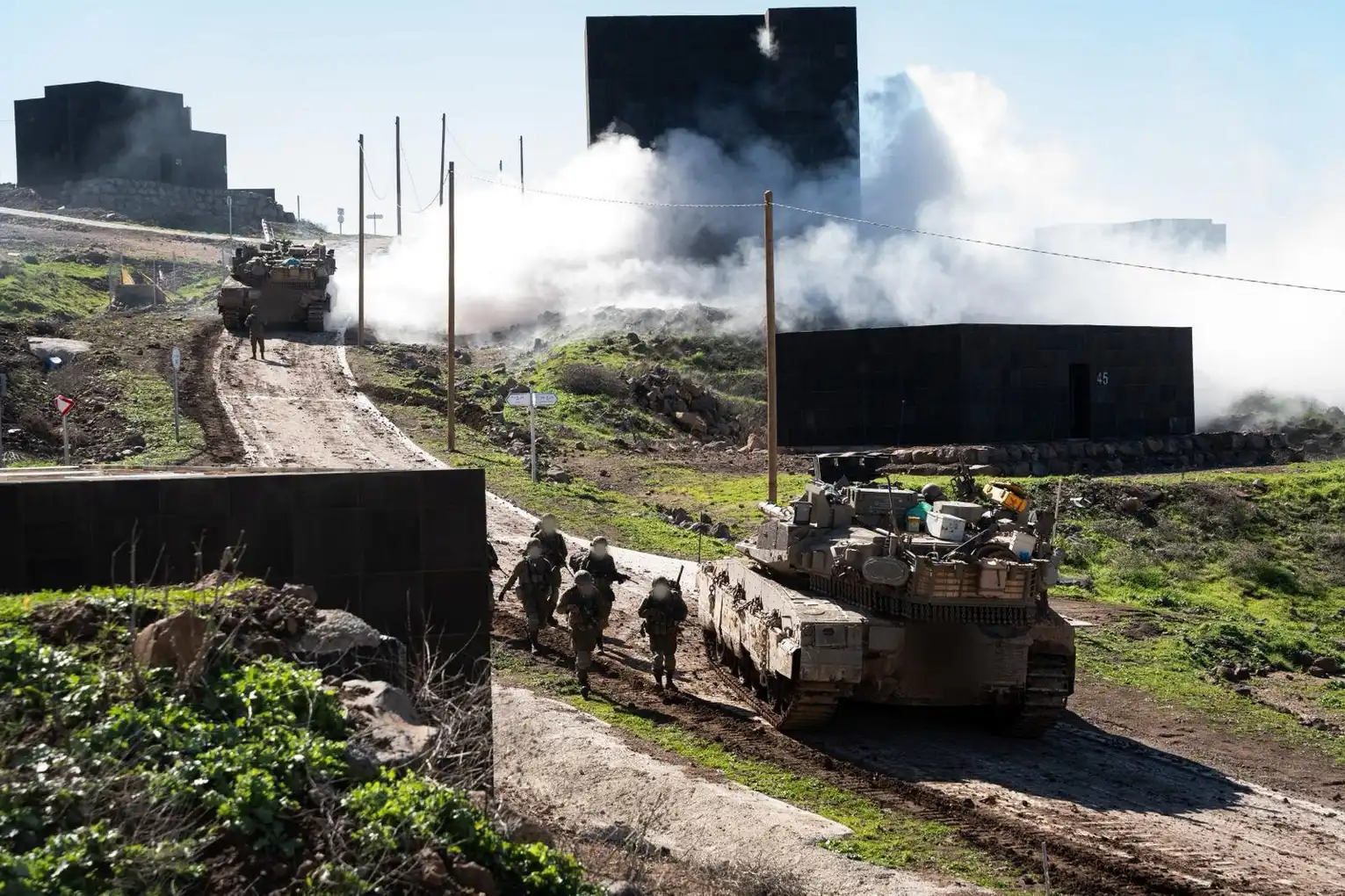
PICTURED ABOVE: IDF Troops advancing on Lebanese border. PC: released by the IDF on CC license.