 0
0
 0
0

Americans have a funny way of relegating certain ingredients to specific functions that don’t always serve the overall purpose of health or flavor.
A perfect example of this is lettuce. Total lettuce production in the US in 2015 totaled 8,087 million pounds, while the average consumption per head was around 25 pounds per person per year.
When compared with other greens like spinach, arugula, and kale, lettuce is mostly inferior in terms of taste and nutrient profile. It’s virtual monopoly as a salad green, therefore, seems cultural rather than anything else.
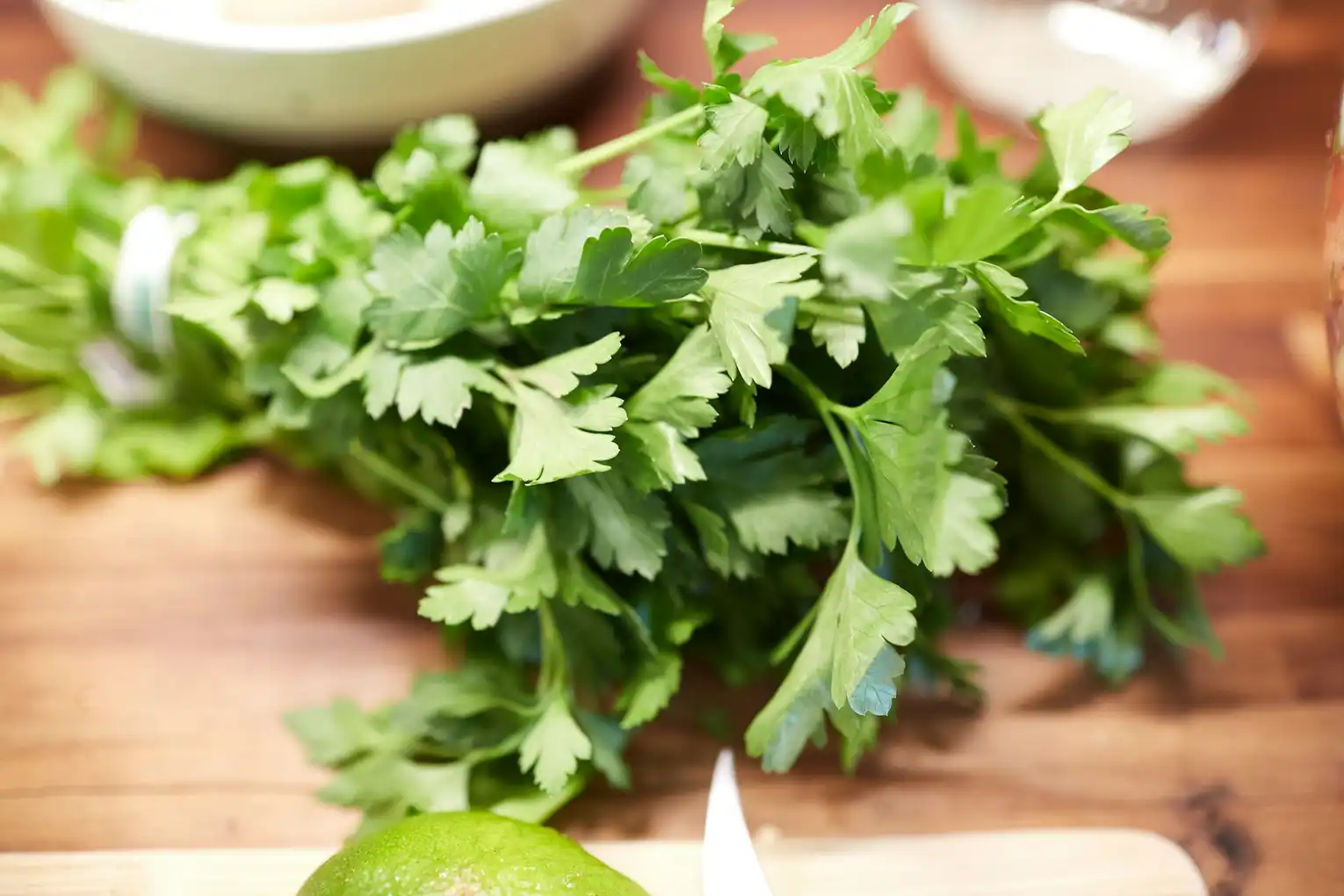
So what’s to be put in a salad? If you’re bored of spinach, kale, and arugula, what about parsley?
You would have to eat between 3-6 cups of lettuce a day, depending on the variety, to get the same nutrients you would find in one cup of parsley; and you’d still be missing out on the pharmacological effects of parsley, arising from its panoply of polyphenols.
A 2013 research paper published in the Journal of Traditional Chinese Medicine concluded a meta-analysis in which the authors said they “expected to improve the tendencies to (view) parsley as a useful and important medicinal plant with wide range of proven medicinal activity”.
This conclusion came after analyzing the medical databases for studies focusing on the ethnomedicinal use, phytochemical compounds, and the biological and pharmacological activities of parsley to determine if it possessed enough potency to act as a medicinal plant.
Parsley can act as everything from a simple anti-oxidant and anti-diabetic, to diuretic, antibacterial and antifungal compound, cytoprotector, gastroprotector, and even a tool to help menstrual dysfunction. Indeed the paper seems to encourage the sufferer, no matter the ailment, to chow down on some parsley.
This is just one food, however, that’s been sent to the back of the bus in modern American cooking. Chopped, often dried, and left in the cupboard to be sprinkled on fish, parsley deserves better.
Broad-leaf parsley is cheap, comes in bunches, is available year-round, and unlike the stems of kale and collards, are very easily chewable. They taste good, and are a perfect lettuce-replacement.
And there’s every reason to believe that other green herbs, dried and put in jars for the pantry, contain similar levels of nutrients. Strong, bitter, aromatic, and grassy flavors are almost certain indicators that a particular plant is nutrient-dense.
This is certainly the case for the greens marking the hairline of commonly-consumed tubers like turnips, radishes, and beats, as well as herbs like oregano, mint, and cilantro. WaL