 0
0
 0
0

What has long been foreseen as the most important raison d’être of the BRICS organization may finally make its debut on the world stage when the hodgepodge of regional powers meet in New Delhi in September for the 18th annual BRICS Summit—the new international payment system.
The Brazilian news outlet Mix Vale reported matter-of-factly that the new bloc on the block will introduce BRICS Pay which will allow member states, financial institutions, and even individuals to transact in their own national currencies without having to first convert into dollars.
According to BRICS data, the group with their new members coalesced as BRICS+, represent 41% of global economy in terms of GDP, and 45% of the world’s population.
WaL has covered previous BRICS summits, and the takeaways are always fairly insubstantial, with significant questions left unanswered. In 2018, BRICS proposed a cross-border clearing and bank communication system called BCBPI, often simply called BRICS Pay shorthand. In 2022 and in 2024, the value and importance of developing this potential-alternative to the SWIFT international payment system were reiterated, and China, a previously tentative supporter of BRICS Pay, came out in full support, yet the initiative still hasn’t been advanced.
There’s long been speculation that at any time the BRICS countries will announce the creation of a new trading currency, backed by a basket of commodities, as a challenge to the dollar’s status as the world reserve currency. On this above all, the largest share of BRICS-related speculation falls, but besides a bizarrely direct quote from the Russian embassy in the non-BRICS member Kenya in 2023, no proposal of such a currency had ever been introduced.
Now however, this trend of disappointment may finally be bucked. BRICS Pay will link the central bank payment messaging system used by Russia (SPFS), China (CIPS), India (UPI), and Brazil (Pix), to allow this massive slice of the world economy to bypass the Western-controlled, dollar-denominated SWIFT system which the government has used to enforce Washington’s unilateral sanctions regime on dozens of countries including Russia and China.
According to the report in Mix Vale, the system is being led by India’s central bank, and will focus on cost reductions in international transfers, lowering exposure to US and EU sanctions, and stimulating trade between countries. The report went on to say that it would come down to the levels of the average person—the tourist, for example, who would be able to use QR code payments in accredited hotels to instantly exchange rupees for reals, rubles for RMB, rand for rupees, or whatever the combination may be.
The Unit
According to the Rio Times, the BRICS Summit in New Delhi will have another surprise: “The Unit”.
“On October 31st, 2025, BRICS quietly piloted a new digital trade settlement token backed 40% by gold and 60% by a basket of BRICS currencies,” The Times wrote. “[New Development Bank] President Dilma Rousseff confirmed ‘agreement in principle’ to use the Unit as a settlement currency”.
The Times didn’t cite their source, and the claim will join many made in the past that never manifested in the real world. The challenge for the BRICS+ nations in adding gold to the mix is it complicates the ability of these countries to create new money to fund government spending without taxation—the single most common trend in political economy today.
Turkiye has reportedly received help from China in preparing a bid for its ascension to BRICS+ as a full member. The country under Erdogan has consistently ranked as one of the most hyperinflationary economies in the world, against which gold is continually used by the citizenry as a hedge, as it is in India. The world has been off the gold standard for over 50 years, and there’s no indication that will be reversed, and would in fact be catastrophic to centralized state power across BRICS+.
The Summit, and the potential debut of BRICS Pay, comes as China’s own international RMB-denominated clearing system saw record usage in the wake of the war on BRICS+ member Iran. On April 2nd, CIPS saw a greater-than 100% rise in transaction volume compared to February averages. 1.22 trillion yuan or US$180.3 billion, changed hands on that day alone. This scale and architecture will grant China key insights and experience it can use to support India as she works to finish the technical and regulator issues around BRICS Pay. WaL
Consider Following the link here to see all the ways, monetary and non-monetary, you can support this work and more like it.
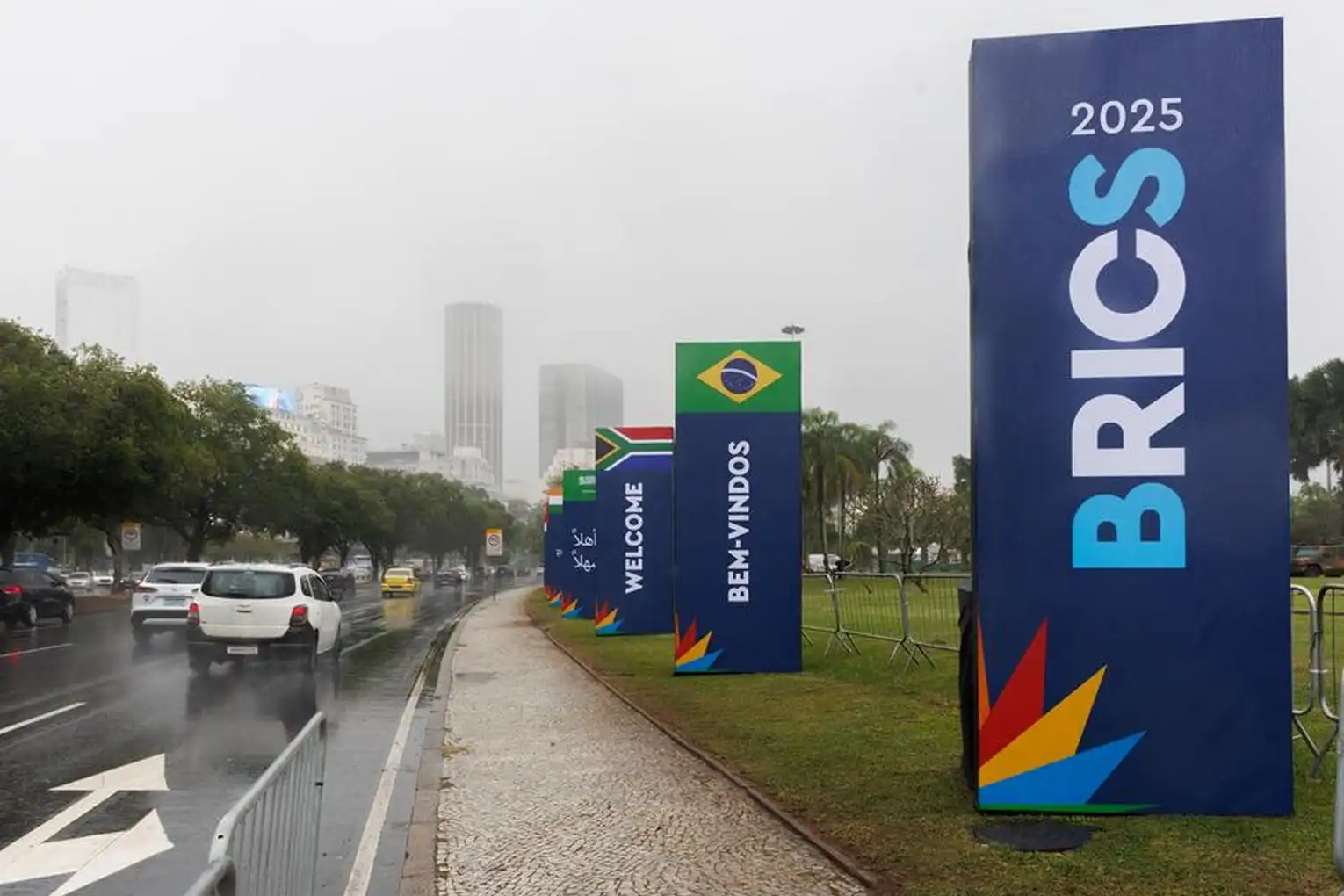
PICTURED ABOVE: The BRICS Summit in Rio in 2025. PC: Retrieved from the Rio Times.




[…] that’s independent of the US-controlled SWIFT system is called, is not ready yet despite the strong showing of support it received during last year’s summit in Rio di […]