 1
1
 0
0

On June 4th, the US House of Representatives voted 226-195 to approve $1 billion in Ukraine aid money and military support, and another $8 billion in direct loans to Ukraine and other NATO allies.
The Ukraine Support Act was introduced by the Democrats—who just days earlier had, as a body, passed a War Powers Act resolution in the House to restrain President Trump’s war-making in Iran, arguing the war’s cost of $29 billion had increased the cost of living for Americans.
“The bill also includes $250 million for Radio Free Europe/Radio Liberty,” wrote Antiwar, “a US state-funded media outlet, and authorizes it to open ‘new bureaus to help expand its ability to reach audiences on the periphery of the Russian Federation'”.
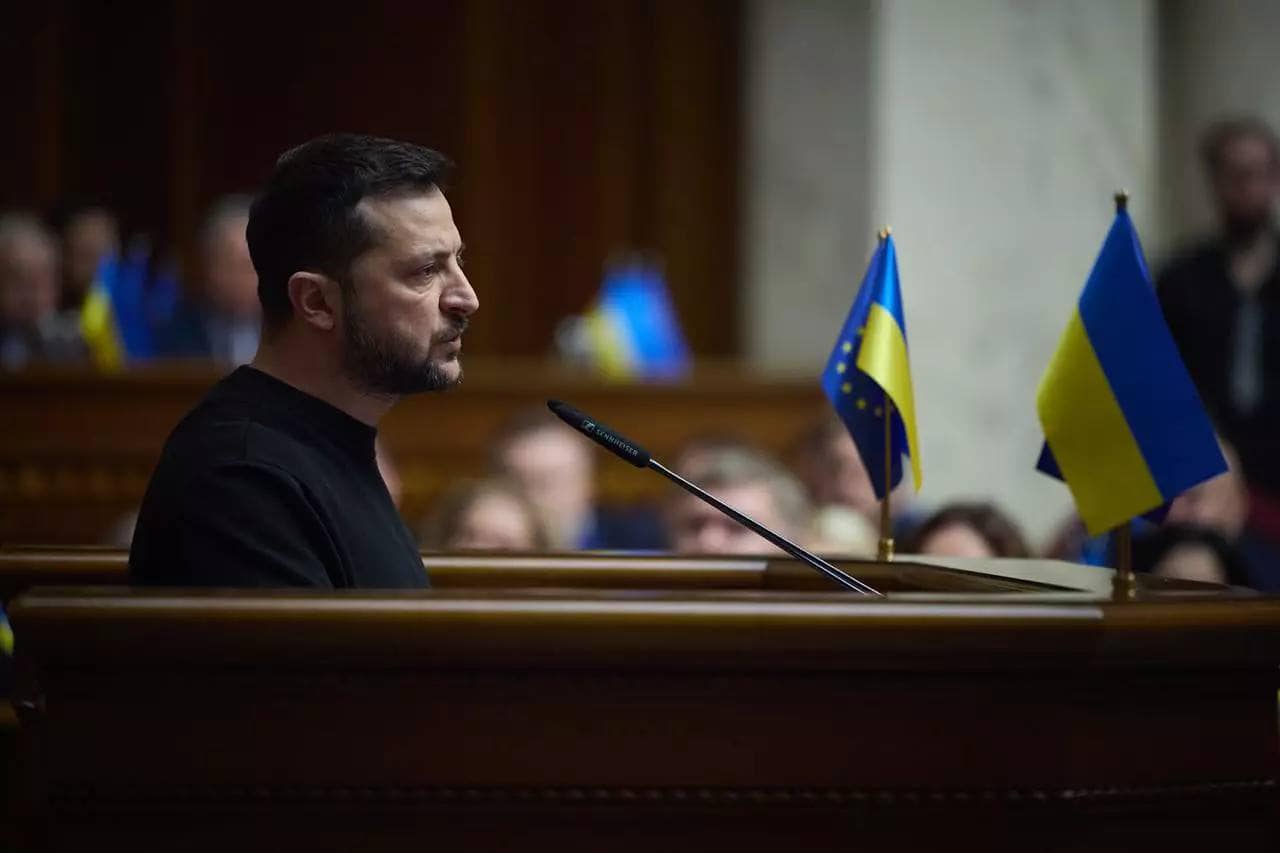
The decision comes as waning interest from the US was cited as a reason that Ukraine and Russia should agree to a ceasefire to make room for face-to-face talks in an open letter to President Vladimir Putin published by President Volodymyr Zelenskyy.
The letter puts on a very brave face and is filled with patriotic sloganeering as one might imagine, and indeed, an end to the war is framed by Zelenskyy as necessary for protecting Putin’s life, since “when Russia gets tired, changes happen”.
He suggested a meeting be set up between the two heads of state in “Switzerland, Turkey, [or] the countries of the Arab world…” and that “other specific participants may join the bilateral track,” meaning Europe, in order to achieve security guarantees from Europe which “we in Ukraine need… and you want for yourself”.
“We believe that Europe needs to participate—those who really have the ability to influence the situation,” Zelenskyy wrote. “It seems logical to involve those who can really act as guarantors”.
On the world stage, in the recent past, Europe’s great economies have proven themselves remarkably incapable of providing guarantees to any sort of agreement, whether that’s the Minsk I and II agreements, the JCPOA between the US and Iran, or anything related to the security of UN missions and humanitarian organizations in Israel, Occupied Palestine, or Lebanon.
“We have already had the experience of many agreements with Russia and the Minsk agreements that did not work. Therefore, we must first find our bilateral answers to the questions that exist, and not hide from the complex issues behind any formulations, technical groups, or wasting time in shuttle diplomacy,” the President wrote.
“Ukraine is ready for an exchange of prisoners of war on the principle of ‘all for all,’ and this could be a good prologue to the end of the war. We need to determine what the future will be for all future generations of Ukrainians and Russians. If you personally do not agree that it is time to end this war, Ukraine will continue to fight for its existence. We will have those who will support us”.
All eyes on Donetsk
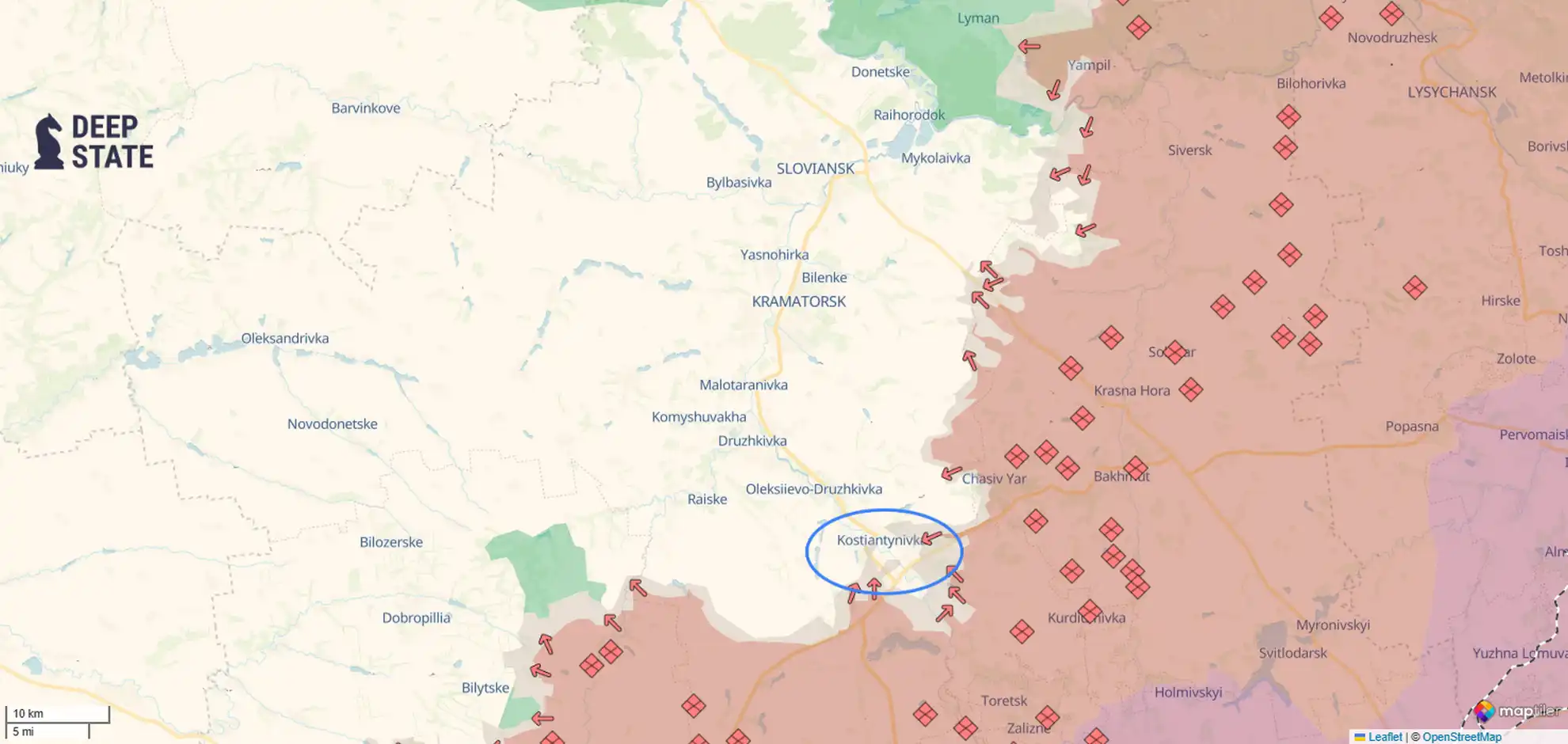
Open source civilian intelligence outlet Deep State Maps demonstrates that the conflict, slowed to something even less than a crawl by the advent of mass drone warfare, has virtually concentrated itself around the city of Kostiantynivka, a small city on the highway to Kramatorsk and Sloviansk, the largest cities in the Donetsk Oblast that remain in Ukrainian hands.
Elsewhere, the towns of Huliaipilske, in Zaporizhzhia, and Tykhonivka, in Donetsk, were both repeatedly captured by Russian forces. A photojournalist and writer recently took a trip from Kramatorsk down to Kostiantynivka along what is called the “Fortress Belt” at the best of times, and the “Kill Zone” at the worst.
Their documentation of the conflict’s front line for the Kyiv Independent shows how first-person view drones (FPV) are increasingly the only sign of the enemy at all. The entire highway is lined with anti-drone nets—as if the war was against malaria, fought between giant men and giant mosquitoes. Mobile fire groups move up and down the road using drone trackers to hunt down Russian FPVs and shoot them with their rifles.
The earlier picture of the war was one of continuous Russian advances backed up by an insurmountable artillery advantage of between 3 and 10 to 1 depending on where a battle was being fought. Ukraine managed to counter this by building a domestic drone industry that allowed their forces to quickly retaliate against the heavy and slow artillery positions.
According to Deep State’s intelligence maps, there has been no Ukrainian gains on the battlefield, and no Russian defeat. Everywhere, the maps read tiny gains that start to look like big gains overtime. The problem for Moscow is how long those timeframes are becoming. Presumably in response to this, Russian forces have increased the frequency of ballistic missile and drone swarm attacks against Ukrainian cities, a tactic that’s now being replicated by Ukraine. Kyiv’s military were recently able to send a squadron of attack drones 600 miles to bomb Saint Petersburg during the opening of an economic forum event organized by the Kremlin. WaL
We Humbly Ask For Your Support—Follow the link here to see all the ways, monetary and non-monetary.
PICTURED ABOVE: The battle areas around Donetsk, as recent as June 5th, 2026. PC: Deep State Maps.


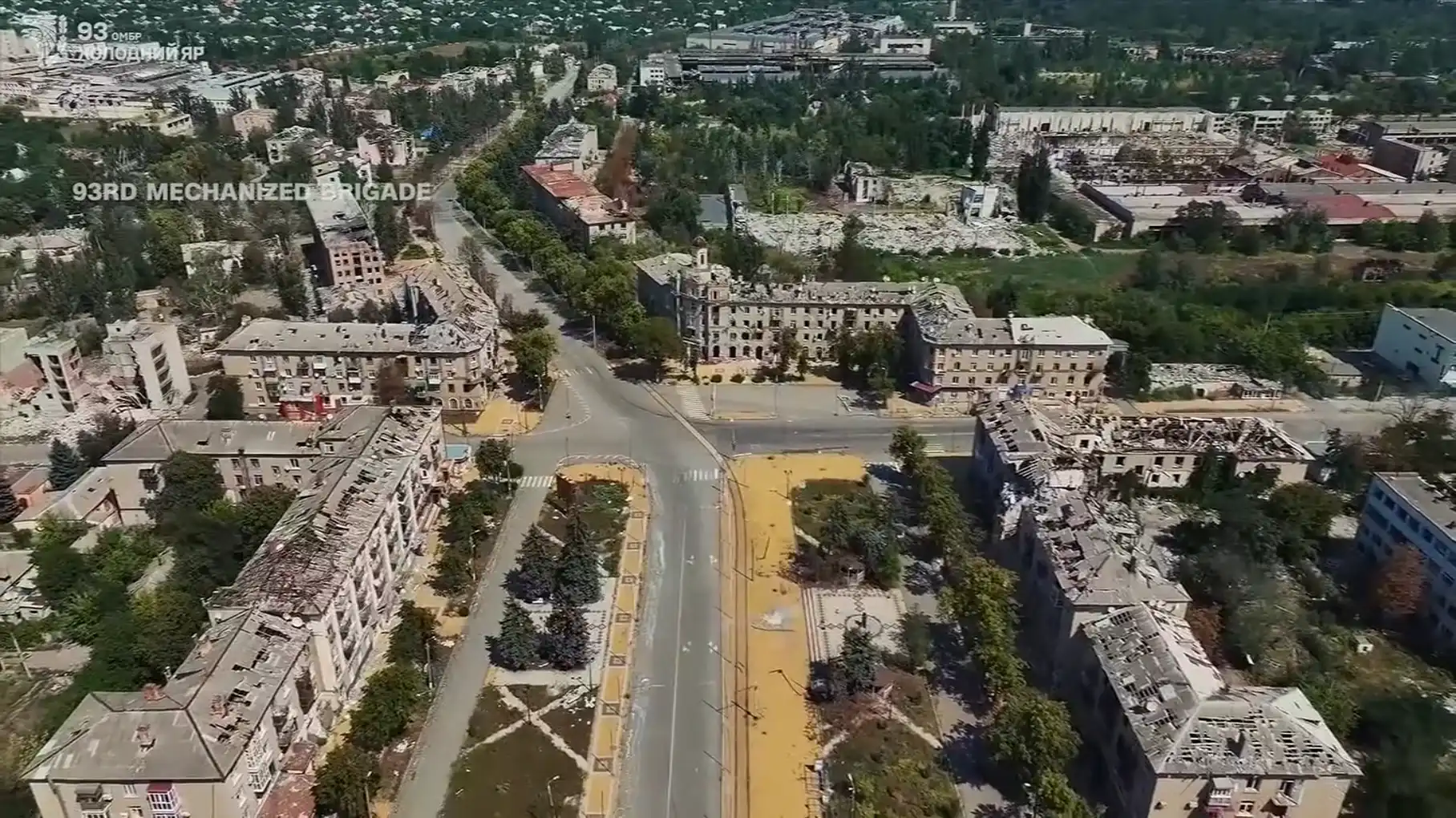
[…] Its gradual fall, though originally dismissed as false by national media and the office of President Volodymyr Zelenskyy, was confirmed more from the lack of further denials. […]