 1
1
 0
0

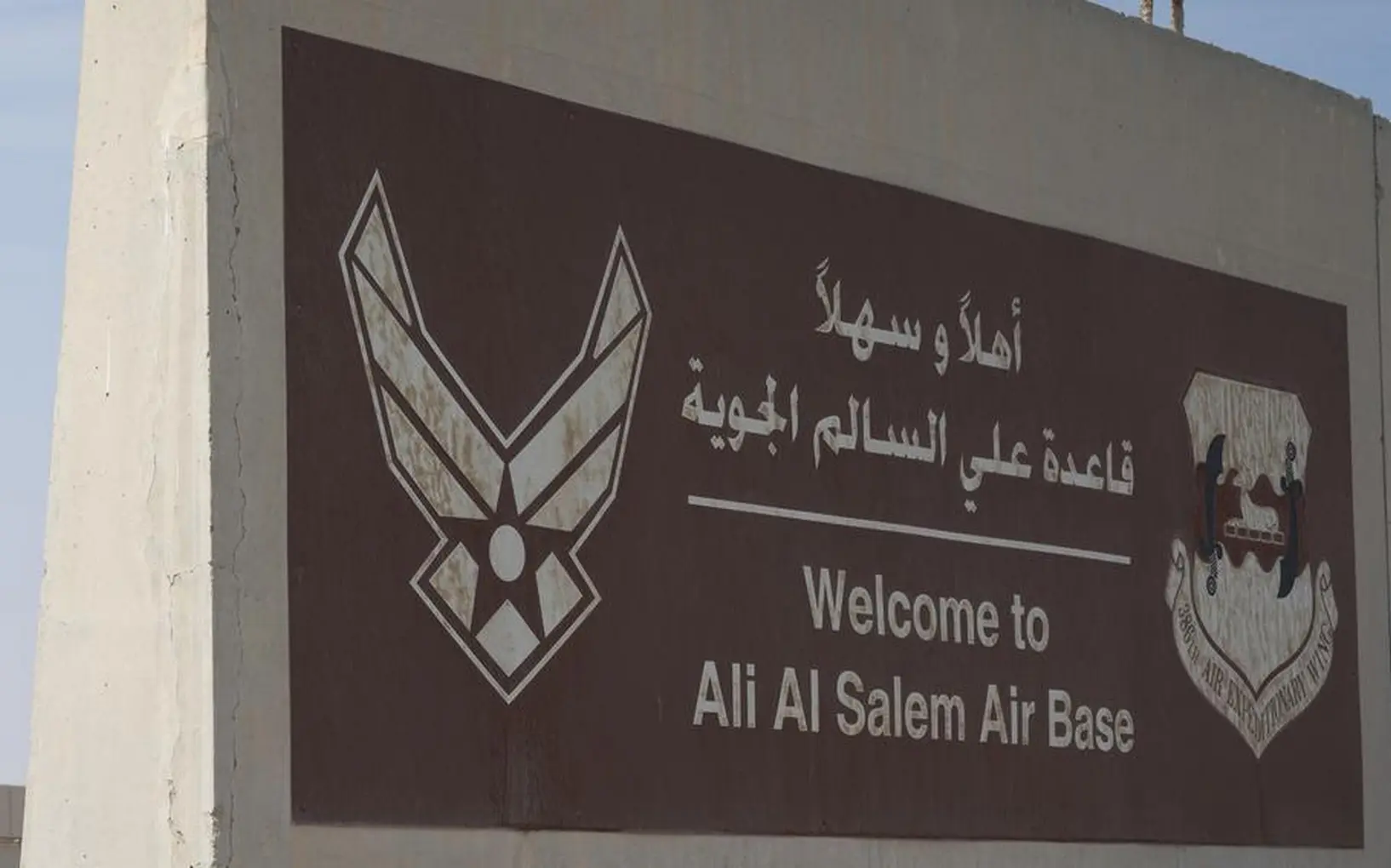
On May 28th, the Iranian Revolutionary Guard Corps. (IRGC) struck an American air base in Kuwait, destroying 1, potential 2 US unmanned war planes and injuring personnel.
The attack came after US forces bombed Iran twice during the last week of May, and demonstrates how Iran retains the capabilities that allowed her to destroy billions in communications infrastructure and aircraft during the March hostilities.
Currently engaged in negotiations with the aim of turning the fragile ceasefire into a lasting peace agreement, the attack also hints at the potentialities should negotiations fail.
On May 25th, US Central Command (CENTCOM) announced it had struck IRGC targets in the port city of Bandar Abbas in the south of Iran, alleging drone attacks being aimed at commercial vessels in the Persian Gulf. This was followed up by further attacks in the same area on May 27th, again in retaliation for an alleged targeting of a US tanker in the Gulf.
At the time, Iran vowed a response, which was delivered on the following day when a Fateh-110 ballistic missile, that while being intercepted by Kuwaiti air defenses, still collided with the Ali Al Salem Air Base. No damage or casualties were reported at first, but details later came out that 5 American military personnel including a civilian contractor suffered “minor injuries”.
The attack destroyed an MQ-9 Reaper drone, the largest and most capable unmanned warplane in the US arsenal, and seriously damaged another. They are reported to cost $30 million each.
Negotiations
Since mid-April, President Donald Trump’s closest cabinet members, and his son-in-law, have been attempting to assert his demands on the Iranians, including a moratorium on the civilian nuclear program, a removal or destruction of all 440 or so kilograms of already enriched uranium, an opening and de-mining of the Strait of Hormuz, and other security guarantees.
He has attempted to leverage these demands while simultaneously stating publicly that they should come without war reparations or sanctions relief (Iranian demands) or any new arrangements involving navigation in the Strait.
The Iranians have repeatedly designated several of these demands as non-starters, and though all through April and May there were anonymous tips to the press that progress was made or agreements were imminent, this impasse seems to remain. As recently as June 1st, and not for the first time since the ceasefire took effect, Iranian Foreign Minister Abbas Araghchi dismissed recent media reports about a potential deal.
“Everything being said now is speculation and should not be taken seriously,” he said. Araghchi’s comments come two days after President Trump suggested he would make a “final determination” on a draft agreement or memorandum that was supposedly progressed to the point of completion last week while the two exchanged air strikes. Iranian media have denied that Tehran’s leaders or negotiators have agreed to anything being reported in American media.
“I’d like to say I’m in a hurry because gasoline prices are going to come tumbling down, but if you’re going to be in a hurry, you’re not going to make a good deal,” the President said in an interview with his daughter-in-law, Lara Trump, on Fox News. “And slowly but surely we’re getting, I think, what we want, and if we don’t get what we want, we’re going to end it a different way. We’re going to make a great deal, [otherwise] we’ll just go back and finish it off militarily”.
Should negotiations fail
The final US intelligence assessment offered by now-resigned Director of National Intelligence Tulsi Gabbard detailed that Iran maintained 70% of ballistic missile stockpiles, even after firing an estimated 1,850 during the conflict, and 30 of its 33 underground missile launch facilities—nearly all of which are in working order. Trump and his spokesmen, for the third substantial time, claimed Gabbard was wrong.
The strike on Ali Al Salem Air Base is potentially a reminder of what an attempt to “finish it off militarily” will look like. Since the ceasefire began, military analysts and reporters have added up the cost of what Iran was able to damage and destroy on US bases in the Gulf and the wider region. They include billion dollar radar infrastructure, satellite communications, radar stations critical to air defense systems’ ability to spot incoming missiles, E-3 aerial reconnaissance aircraft, of which only 16 existed in the Air Force’s inventory, and five KC-135 Stratotanker refueling aircraft.
Kelly Grieco, a senior fellow at the Stimson Center think tank in Washington, DC, told Defense One that while there are still 5 E-3 aircraft in the theater, the loss of number 6 changes how effective they can be as a fleet.
“5 aircraft means accepting either a single continuous orbit or periodic gaps when a second cannot be regularly sustained. In those gaps, the air picture degrades, air battle management is less effective and the theater’s ability to coordinate a complex, multi-aircraft operation becomes significantly more constrained,” she said.
As for the Reaper drones destroyed at Ali Al Salem, it was estimated by Bloomberg that Iran has downed $1 billion of these, or roughly 20% of the whole US inventory since the US attacked her.
Returning to war would present a huge challenge for American forces, and could prove fatal to CENTCOM’s regional footprint. Already, the bases across the Gulf region have been rendered unusable in some cases, with The Intercept reporting one in Bahrain was even evacuated during the shoot out. Should negotiations fail, Iran was able to swiftly demonstrate in Kuwait the capabilities that it retains. WaL
We Humbly Ask For Your Support—Follow the link here to see all the ways, monetary and non-monetary.
PICTURED ABOVE: Ali Al Salem Air Base. PC: US Air Force photo.