 0
0
 0
0

Springtime saw Beijing security officials presented with two valuable datasets that would inform potentialities in a conflict between China and the US with its first island chain of Japan, Taiwan, and the Philippines.
The US strategic defeat to Iran in the Persian Gulf, and April’s Balikatan military exercises between that island defense chain show Beijing glimpses of the strengths and weaknesses their potential adversary if conflict broke out in the western Pacific theater.
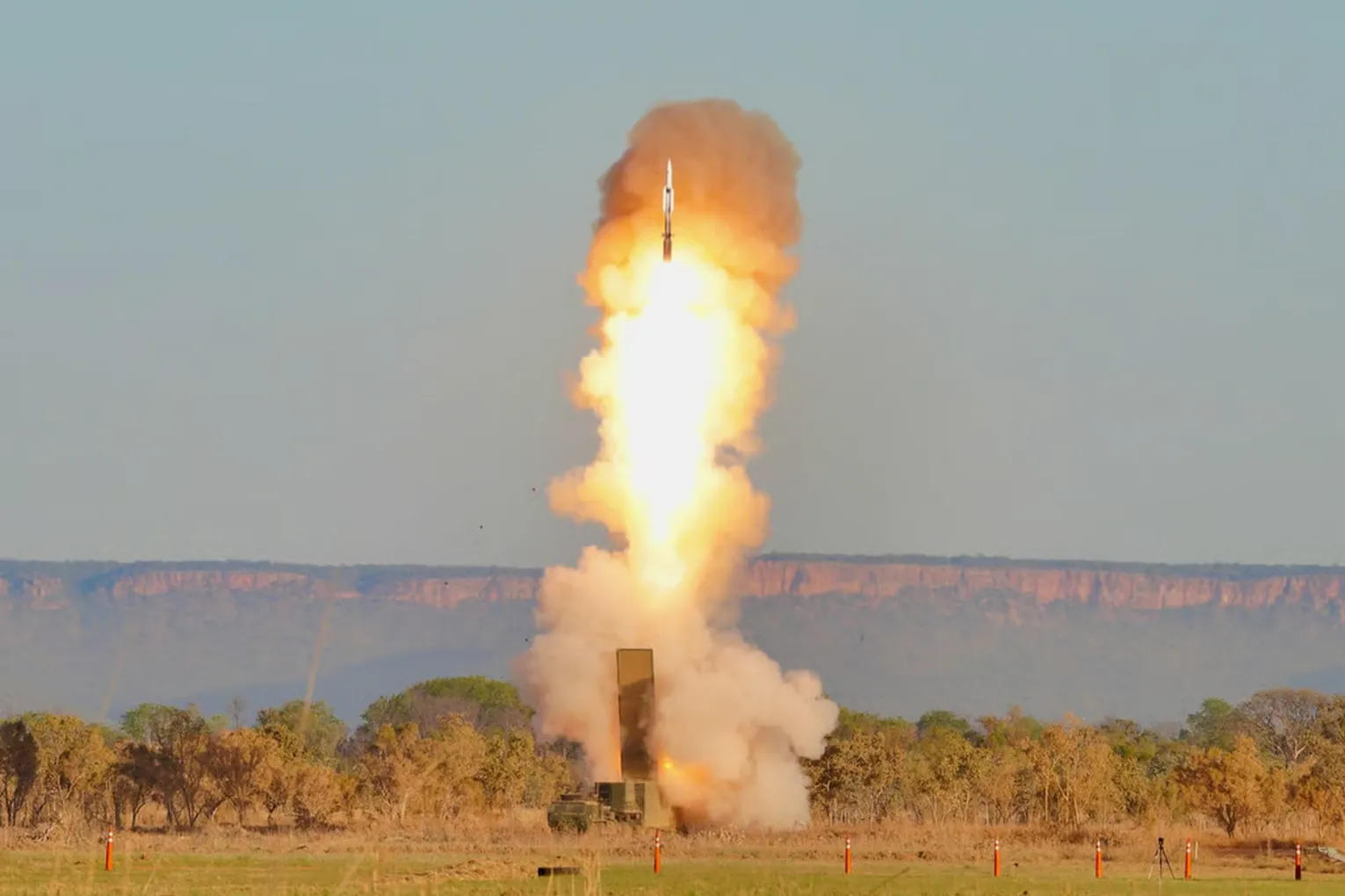
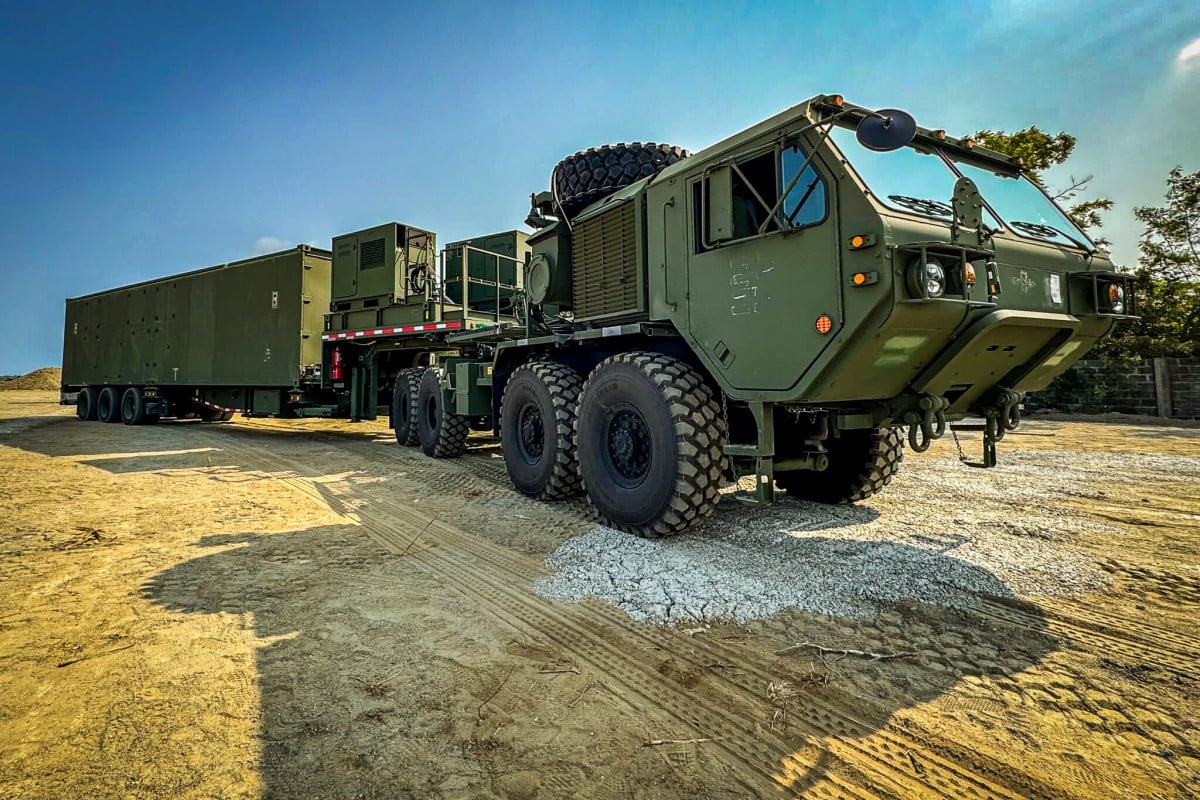
Worryingly, the Balikatan exercises showed that the US’ intermediate-range Typhon missile launcher is present on Japan with munitions. It was placed in Kanoya Airbase in Kagoshima prefecture, one of the closest, home-island bases geographically to China.
From that position, its range of fire would cover a variety of key naval transit lanes in the East China Sea and Dalian Bay, and multiple important mainland Chinese military sites, as well as a variety of civilian targets. The Typhon can fire the Tomahawk cruise missile which can be tipped with nuclear warheads and has a range of 2,500 kilometers, or 1,500 miles.
It also showed that Japan, which participated in Balikatan by conducting its first overseas “offensive missile” launch in 8 decades, and a sign that the country is taking military participation—ostensibly impermissible under the constitution—more seriously.
Encouragingly, and to the contrary, Iran’s ability to batter the Persian Gulf region and the US positions therein to the negotiating table, shows how vulnerable an overextended enemy can be to wave after wave of missile fire from indigenous positions. In less than 2 weeks, Iran was able to make all of the United States’ positions across the Gulf region unusable, destroyed billions in aircraft and state-of-the-art radar systems, and rapidly exhausted US interceptor missile stockpiles, which were just estimated to require 5 years of production to replenish.
Furthermore, Iran’s ability to absorb punishing missile and air strikes from the US should encourage Beijing. A recent US intelligence assessment found that Iran maintained access to 30 of its 33 underground missile facilities, and roughly 70% of its ballistic missile arsenal. Additionally, Iran’s use of cheap drones to strike American positions—including a volley that killed 6 personnel on a Kuwaiti airbase, shows that these simple, subsonic weapons can be incredibly effective when used in mass.
Much of Iranian standoff weaponry was positioned under mountains, something the southern Chinese coastline near Taiwan has in abundance.
Beijing has accused the US of “threatening regional strategic security” with the Typhon deployment in Japan.
“China urges the US and Japan to listen to the calls of regional countries, correct the erroneous practice, and play a positive role with concrete actions for regional peace and stability,” foreign ministry spokesman Guo Jiakun said on Friday.
Deterrence or provocation?
The Typhon system’s first arrival in the theater was in the Philippines in 2024. When the Biden Administration took office in the White House, the Pentagon accelerated its military partnerships with the archipelagic nation which is routinely involved in disputes with China over several uninhabited atolls and islands in the middle of this sea, such as the Spratleys. This has included the reopening of Subic Bay Naval Base, and now the placement of the Typhon on Luzon, the Filipino island closest to Taiwan.
It was then deployed in Japan for the first time last September during large-scale bilateral exercises at the US Marine Corps Air Station in Yamaguchi prefecture.
Until 2019, launchers of the Typhon’s range were illegal under the Intermediate-Range Nuclear Forces (INF) Treaty between the US and the Soviet Union, but rather than re-negotiating a new version that included China, or bringing greater inspection rights to address Russia’s alleged breaches of it, Donald Trump withdrew the US altogether and didn’t negotiate a replacement during his first presidential term.
It was the second of four arms control agreements that have elapsed since the end of the Cold War, and the first of two that happened during the Trump Administration.
In a joint statement issued recently after a summit between Prime Minister Sanae Takaichi and President Donald Trump in Washington the leaders stressed the importance of deploying “advanced capabilities” in Japan to strengthen their deterrence.
It has to be said that China will have her own set of conditions for when a deterrent becomes a provocation, and an antagonistic American empire slowly ringing her coastline with nuclear-capable weapons poses serious threat calculations for Beijing. In 2017, whistleblower and former nuclear war planner at the Rand Corporation Daniel Ellsberg revealed that nuclear weapons were deployed on Taiwan during the 1954 Taiwan Strait Crisis.
A 2021 interview with a former colleague of Ellsberg, Morton Halperin, further revealed that US military forces including those engaged in the Taiwan Straits were equipped and trained only to fight a nuclear war, with conventional weapons being referred to “obsolete iron.” So Beijing will know that the US, albeit a distant generational version of the same, is willing and capable of deploying nuclear weapons as close as 110 miles off her shoreline, and has placed nuclear-capable weapons on two of the three islands in the first chain.
In terms of a provocation, the Cuban Missile Crisis shows how nations react to these threats, and a more belligerent version of the Philippines, or militarily-resurgent Japan guarded by US launchers that can launch nuclear-tipped cruise missiles is certainly a sizable fraction of the threat that Washington perceived the missiles on Cuba to be in 1962.
The first island chain
Andy Perry, a naval mine-warfare and maritime geospatial specialist who previously served in the Australian navy, described the Balikatan exercises this year as one which wove together long-range missile strikes, joint command-and-control, drone and cyber domains, and other warfare disciplines to reflect “how modern war is actually fought”.
It focused, Perry continued, on integration and linking decision making across the first island chain’s militaries, with the US as “the central enabler, providing long-range fires, advanced intelligence, surveillance and reconnaissance, and the command-and-control architecture underpinning the whole enterprise,” he told SCMP.
The way that Iran was able to use its drones and missiles to deal substantial damage to the command and control infrastructure of the Americans demonstrated that concerted efforts to target the nodes that allow the US to be the “central enabler” more than 7,000 miles from California could prove decisive. During the shootout with Tehran, drones and missiles were able to completely empty the US Navy’s 5th Fleet headquarters in Bahrain. AN/GSC-52B satellite communications terminals, “which play a key role in facilitating high-capacity and near real-time communication for the US military,” wrote the New York Times, and costing $1.1 billion, were destroyed by drones that cost roughly $20,000 within the first 24 hours of a sneak attack the US had prepared to launch since the previous January.
“Each is a critical enabler of US air operations,” Kelly Grieco, a senior fellow at the security think tank the US Stimson Center, told Defense News. “That’s not random. That’s a target set derived from an understanding of how US airpower functions and where it is most exposed. The pattern suggests deliberate doctrine, or something close enough to it, not opportunism”.
Similar communications and radar installations were destroyed in Qatar, Kuwait, and Saudi Arabia—all within the first 48 hours of the war—which must have been a key concern of US war planners, yet something they could do nothing to prevent.
Iran was able to inflict substantial losses on America’s fleet of E-3 radar aircraft, and on the radar installations which missile interceptor systems like the THAAD rely on to accurately detect the incoming projectiles they mean to shoot down. This is believed to have led to increased success of Iranian missile strikes on Israel and US bases. Philip Sheers, an associate fellow at the hawkish Center for a New American Security, concurred with Grieco in the same piece.
“The entirety of this conflict should be a massive alarm bell on the need for passive defenses, not just for US forces in the Middle East, but… especially in the Indo-Pacific, where the Chinese missile threat is orders of magnitude larger and more difficult to suppress,” he told Defense News.
If his assessment is true, then it’s virtually impossible to assume that Indo-Pacific Command will be able to keep its immobile communications infrastructure safe. Balikatan’s rehearsal of distribution of decision making could be meant to diminish the impact of knocking out these sorts of systems, but it’s unlikely the Philippines defense force, or even the Japanese, have comparable capabilities to substitute if American comms should be taken out.
Asian security experts speaking with SCMP stressed that a system like the Typhon is imperative in any defense plan for marine-island combat. Mobility on islands is limited, and in some cases impossible. Hardened infrastructure that can withstand air and missile attacks may be difficult, or even impossible to build so close to both the sea and sea level. As such, the Typhon, as well as the HIMARS system which was also stationed on Japan during the Trump Administration, have the advantage of being able to quickly reposition after firing, while wielding munitions that can reach multiple critical sea lanes and beyond the Chinese coastline.
China-based military analyst Fu Qianshao points out that the Typhon is less mobile than the HIMAR, and the Tomahawk missiles it fires are slower than modern missiles, making them more easy to intercept for advanced air defenses. Unless the Typhon had a hardened shelter or underground depot to return to, it would likely be highly vulnerable to launch-detection firing by China-based missile systems. WaL
We Humbly Ask For Your Support—Follow the link here to see all the ways, monetary and non-monetary.
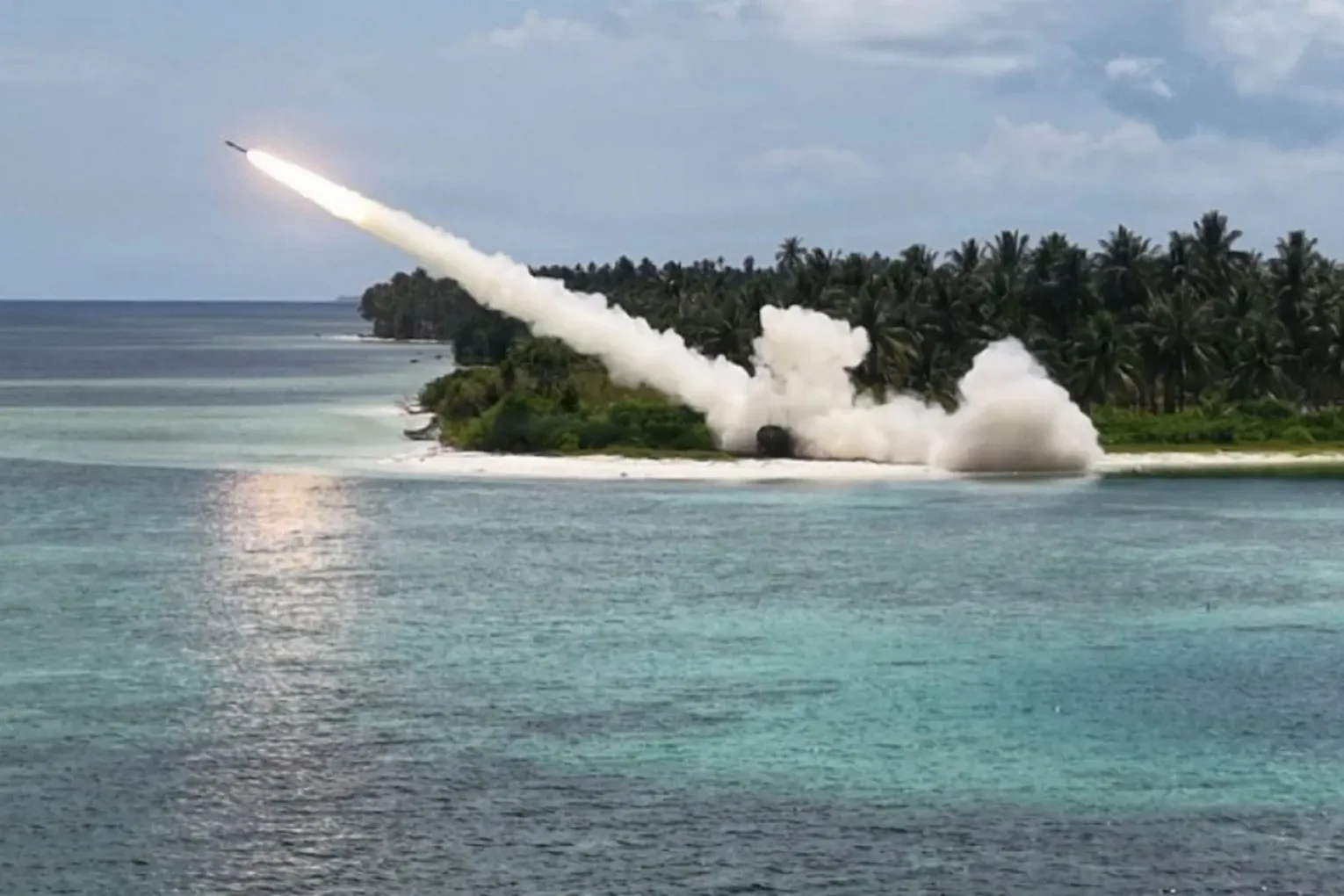
PICTURED ABOVE: US soldiers fire a HIMARS practice rocket after rolling off a landing craft in Palawan Province, Philippines. PC: US Army.