 0
0
 0
0

End of the Empire is a once-monthly feature on all news relating to the transition from the unipolar world of the US Empire to a multipolar world.
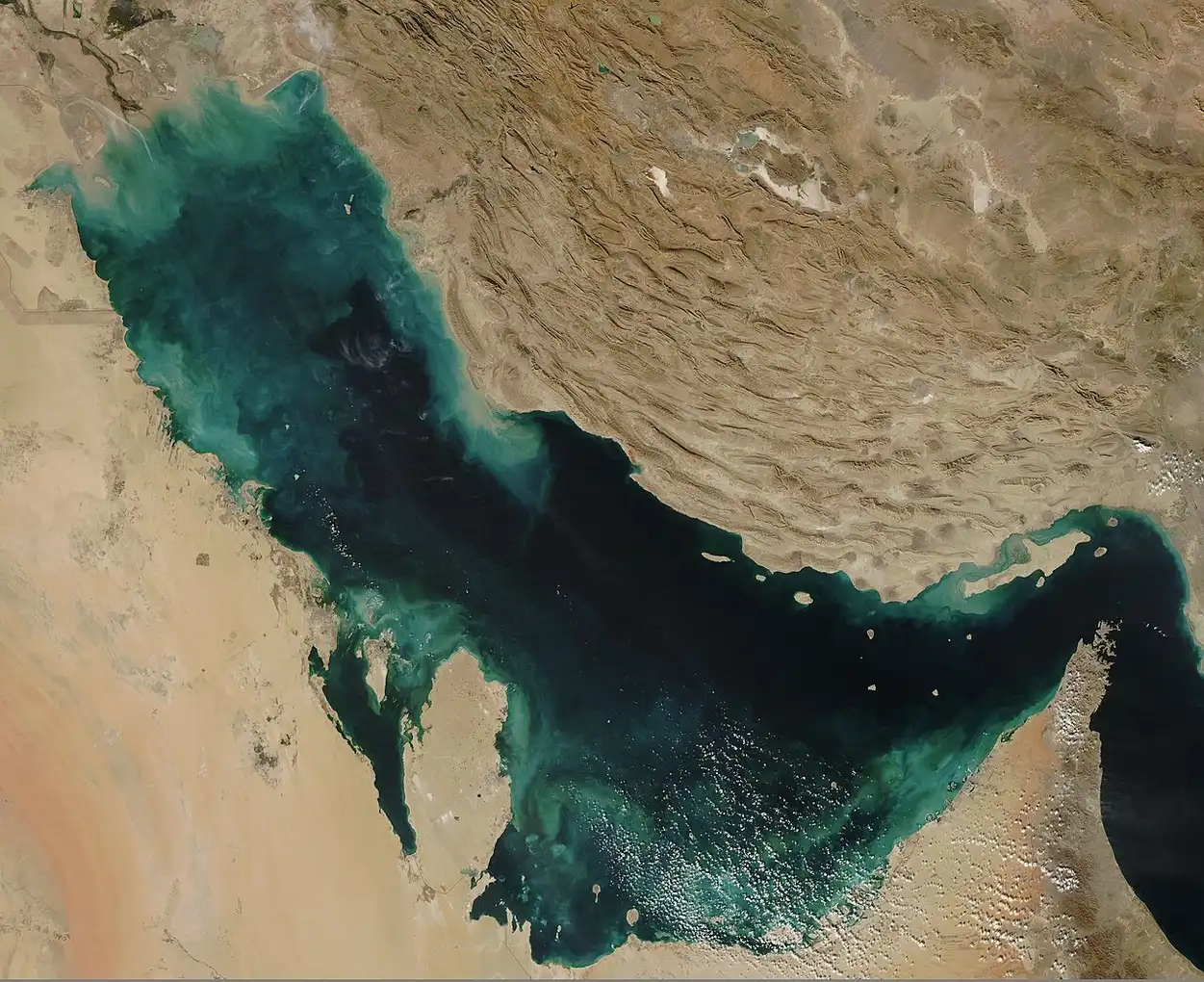
Iran has control of the Strait of Hormuz, will soon begin charging transit fees in coordination with Oman, and is reveling in that hard-won geostrategic jackpot.
Speaking poetically during America’s conflict with Iran in April, former-Russian President Dmitry Medvedev wrote on X that “Iran has tested its nuclear weapons. It is called the Strait of Hormuz. Its potential is inexhaustible”.
Speaking at the World Peace Forum in Beijing over the weekend, Iran’s Ambassador to China Abdolreza Rahmani Fazli affirmed that Iran and Oman would be charging fees for security and mitigating “environmental impact” to shipping through the Strait, which hosted one-fifth of all global oil transit traffic before America’s attack on February 28th.
However, Fazli said that China and other “friendly” countries would be granted “special considerations”.
When considering the damage Iran was able to inflict on American bases in the region, US Central Command’s inability to effectively assist Gulf allies to defend their economic and productive assets, and the inability to force open the Strait of Hormuz, it’s abundantly clear that the illusory status quo ante bellum of American regional hegemony cannot be restored; that President Trump decided to call at the poker table, and the Iranians showed a stronger hand.
Continuing the analogy, the pot which Iran raked in transformed the nation virtually overnight from a backwards and impoverished pariah into a regional power with the future to become the regional hegemon.
Even if the Memorandum of Understanding signed between Tehran and Washington, DC—and the war chest of economic benefits for Iran it contains—doesn’t long survive this intolerable state of humiliation for the Trump Administration and the Pentagon, there is a clear understanding that the US cannot, short of genocide with nuclear weapons, force open this narrow maritime passage.
Preliminary arrangements over the Strait and its management negotiated between Iran and Oman would see the central passage route blocked for lengthy de-mining, and ships organized along a northern and southern coastal route administrated by each country respectively.
The Cradle reports that Iran previously rejected the notion of the southern route put forward by Oman, since the plan involved American co-administration. Proving they would suffer no rival, Iranian coastal forces attacked a Singapore-linked ship last Thursday as it attempted to transit the proposed southern route.
On Friday, Iranian Parliament Speaker Mohammad Bagher Ghalibaf announced Iran and Oman had reached an agreement on the joint management and regulation of traffic in the Strait of Hormuz, according to a report in Tasnim.
Again, China benefits
A chief consequence of the Invasion and Occupation of Iraq in 2003 was the installation in power of 2 Shia-dominated, Iran-friendly political factions known as the Dawa Party and SCIRI. In effect, the removal of the Sunni leader Saddam Hussein was the replacement of the Shia majority sympathetic to Iran.
A chief consequence of the US decision to make all efforts to ensure the war between Ukraine and Russia raged on as long as possible was a solidification of the strategic partnership between Russia and China beyond what was previously possible, given Russia’s necessity to engage economically with Europe.
This war has had a similar effect of enriching the US government’s adversaries at the expense of its own grand strategy. Along with elevating Iran to the position of regional power and enriching it with hundreds of millions in daily revenue from expected transit fees through the Hormuz Strait, its defeat in the war also sees China receive a “special consideration,” as well as those countries which it labeled as “friendly”.
China has few domestic sources of oil production, and has been a major buyer of Iranian crude since the 1990s using shadow tankers to disguise its involvement. Beijing was only too happy to hoover up discounted Russian oil futures after the NATO-bloc sanctions regime was imposed on Russia in the aftermath of her invasion of Ukraine, and will be happy to go back to buying from Iran when their ally solidifies control of the Strait.
To what degree Iran was the largest state-sponsor of stateless militants before the war, she will certainly see the future as bright for supporting regional allies like Ansar Allah (AA), the controlling power in Yemen, which coincidently just launched the largest and most-successful (deadliest) attack on Saudi-backed forces in the south of the country in years. The conflict between AA, often called the Houthis after the surname of the group’s founder, and a variety of Gulf-linked militants in the south, has been largely on ice since a UN-brokered ceasefire in 2022.
Again, The Cradle wrote that multiple local news reports on June 29th covered massive mobilizations of tribal groups following a national call to arms by AA.
“We will not accept the continuation of the US-Saudi aggression, occupation, and blockade, and we will act within the framework of our grievance to rid ourselves of this by all legitimate means until our people enjoy freedom, independence, and a life of dignity,” said Abdel Malik al-Houthi, AA’s leader, in a June 25th speech.
“I commend the broad popular movement and widespread tribal gatherings within the framework of general mobilization. I call upon our people to close ranks, strengthen the home front, maintain the spirit of general mobilization, and continue … military training”.
Houthi’s reference to US-Saudi aggression referred to the key logistics and supply role that US forces played in facilitating the brutal war and blockade on Yemen by Saudi Arabia and the UAE, which resulted in what some scholars consider a genocide. Death tolls, largely civilian, of Yemenis from 2015 to 2022 topped 300,000 people killed through bombings, and also famine and epidemic utilized as tools of war.
Armed rallies occurred in Sanaa, Dhamar, Al-Mansouriya, Shuub, Hajjah, and Al-Jawf, where the Bani Nawf tribes pledged to follow AA. It would be an interesting coincidence that AA planned a massive mobilization and attack on its enemies just after America’s near-total defeat in the Persian Gulf. As often as they’re referred to as the Houthis, they’re also referred to as the “Iran-backed Houthis” by big corporate news outlets. If they are supported militarily by the IRGC, then the timing of their new attempt to seize control of the entire country may suggest renewed support from Tehran, which would have ample reason to want Houthi in control of the entire country.
Medvedev, who referred to control of the Strait as Iran’s “nuclear weapon,” said just yesterday that the mouth/strait of the Red Sea, known as the Bab al-Mandeb and which borders Yemen, is Iran’s “thermonuclear weapon”.
“I believe Iran has more than just this ‘nuclear weapon’ in reserve. It also has a ‘thermonuclear weapon’ – the Bab el-Mandeb Strait—which could come into play in the event of military conflicts, creating a situation in which all oil shipments and other maritime traffic would effectively come to a halt. I hope it never comes to that, but every country seeking conflict in the region should keep this in mind,” the Russian Security Council deputy chairman stressed. WaL
We Humbly Ask For Your Support—Follow the link here to see all the ways, monetary and non-monetary.
PICTURED ABOVE: The Persian Gulf and the Strait of Hormuz at its entrance. PC: NASA Earthlabs.