 0
0
 0
0

The American, Arab, Israeli, and Iranian airways are drunk on speculation over what this Memorandum of Understanding (MoU) signed electronically between US and Iranian leaders contains, with early indications suggesting major concessions from the White House.
In part that’s because Iranian sources seem free to talk about it, while the US President and Vice President have been tight lipped about exactly what was agreed upon. The Trump Administration has absorbed substantial criticism from Iran hawks in the GOP and Israel lobby-at-large, and VP J.D. Vance, who’s been circulating daytime talk shows defending the agreement, has had to use an eyebrow-raising amount of indeterminate language.
But what do Iranians, Iranian media, and the various government factions in the capital think of the agreement that’s just been made? Tehran Times, the longest-printing English-language daily in the country, in its “Tehran Papers” column summarizing the Farsi language news in the capital, reports that most column inches have been dedicated to combing over the catalogue of accomplishments the Iranian Revolutionary Guard Corps. (IRGC) and the diplomatic troupe have made since the war against the US and Israel began.
This includes an examination of how Iranian “proxies” which the IRGC proudly term the “Axis of Resistance,” and which Washington has used for ages as reason to refer to Iran as the “largest state sponsor of terror,” have had to not only be excluded from Washington’s demands, but actually catered to—almost certainly, in terms of Hezbollah in Lebanon—in order to get Iran’s signature on the document.
That was from Sobh-e-No, a principalist newspaper that is one of Iran’s more active private news outlets on social media. In somewhat of a contrast, Reselat, a conservative newspaper favoring previous leaders like Ahmadinejad who have shunned diplomacy in the past, described the MoU as “breathing space” and little more—based on Trump’s two previous uses of diplomatic talks as cover to launch surprise military operations.
“These 60 days—and any potential agreements—should be treated as a breathing space, a window of time to repair, update, and reinforce the country’s military and security deterrence machinery,” the outlet wrote, according to The Times.
Major syndicated outlets like the state-linked Tasnim, Fars, and Mehr news agencies, have maintained condemnation of the US without taking a particular position on the MoU.
For the regular Iranian on the street the response has been almost unanimous: it’s good that the war has ended, but how can we trust any agreement made by President Trump?
The IRGC and Government
The current head of state, Mojtaba Khamenei, has neither endorsed nor derided the MoU, but rather has had statements released under his name that iterate the importance of preserving both the Iranian ballistic missile industry, and the civilian nuclear energy program. Despite President Trump indicating in early February that Iran’s extensive development of medium range missiles was a problem in the region, there’s no indication from his team or from the Iranian government that any compromise has been made there.
The nuclear energy program has been confirmed by J.D. Vance as the subject of a 60-day negotiation commitment subsequent to the signing on Friday of the MoU. In this sense, the deal which Khamenei the Younger has not referenced, seems to uphold his two most important concerns.
Iranian President Masoud Pezeshkian, head of the Supreme National Security Council, recently told a gathering in Tehran last week that Iran needs to end the current harmful state of “no war, no peace” with the US, according to Al Jazeera.
Pezeshkian has been joined in supporting the negotiations and eventual agreement by the Foreign Minister Abbas Araghchi, who helped and engaged in the negotiations led by Speaker of the Iranian Parliament and former IRGC Commander Mohammad Ghalibaf
Mohammad Javad Zarif, the former Foreign Minister of Iran who negotiated the JCPOA under former President Hassan Rouhani, also expressed that the diplomatic efforts “deserve national support”.
هوشمندی رهبری و ایثار رییس جمهور، رییس و اعضای هیأت مذاکرهکننده برای تثبیت پیروزی تاریخی مردم و سربازان وطن در برابر دو متجاوز اتمی، شایسته پشتیبانی ملی است.
امیدوارم با تقویت رضایت مردم و ستونهای مادی و معنایی قدرت میهنی، این راه پرگردنه به سلامت طی شود.
جای شهدا خالی pic.twitter.com/onceg9oVkC
— Javad Zarif (@JZarif) June 15, 2026
For these men, the aim of the negotiations is clear: the need for sanctions relief and war reparations for the ravaged Iranian economy and labor market. Early signs suggest part of these were secured in the MoU. Again, J.D. Vance told American news anchor Sean Hannity that Iran could have access to one or multiple of: $24 billion in frozen assets held in the US, a reconstruction fund paid for primarily by the GCC countries of up to $300 billion, and sanctions relief, if it upholds its end of the agreement.
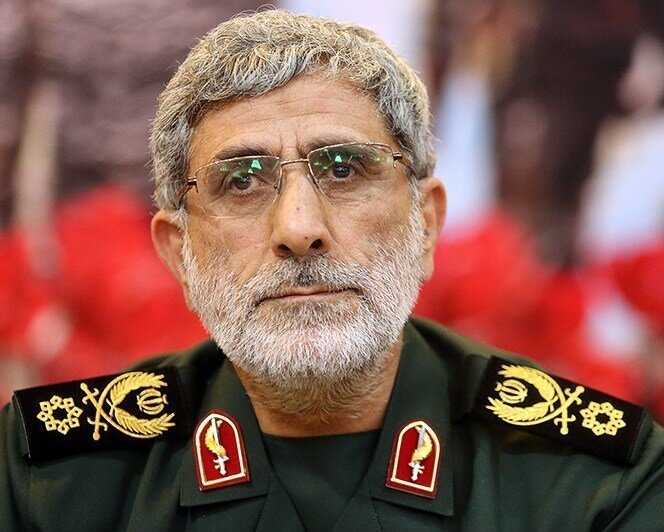
For the IRGC and associated intelligence agencies, their spokesmen have only commented on the need to maintain military readiness. The exception is General Esmail Qaani, the commander of the Quds Force who replaced the assassinated Major General Qassim Soleimani, who spoke to national news “explicitly backing Ghalibaf and other figures leading the negotiating team with the US,” after the agreement was made.
War has a way of uniting society, and the cadre of Iran’s leadership that has survived the mass assassination campaign by Israel and the US, seem more or less united that whatever was agreed on Sunday is for the good of the country. WaL
Consider Following the link here to see all the ways, monetary and non-monetary, you can support this work and more like it.
PICTURED ABOVE: Iranian Brigadier General Esmail Qaani. PC: Tasnim News Agency. CC 4.0