 0
0
 0
0

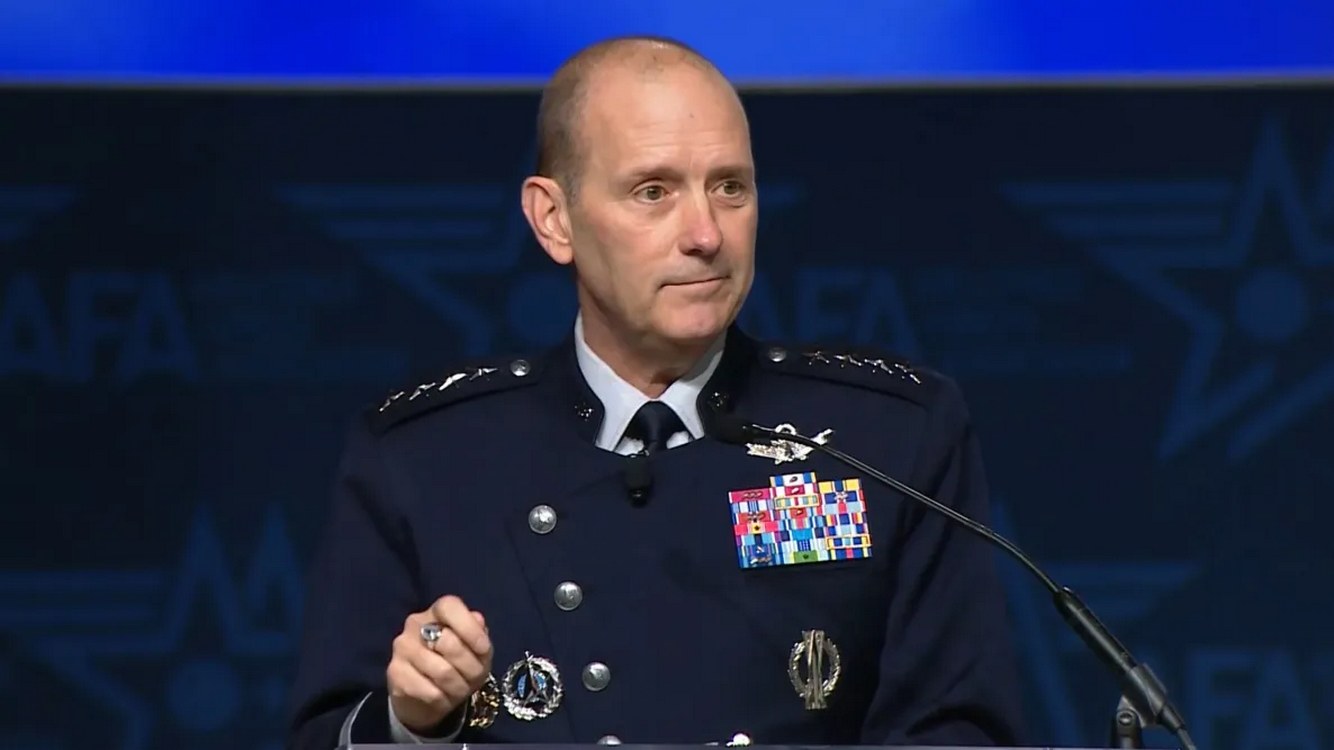
During a recent “State of the Space Force” address in Maryland, Chief of Space Operations Gen. Douglas Schiess stated frankly that the US has at least non-kinetic weapons positioned in space, and that these capabilities were used in the war on Iran.
“Let me be crystal clear: today, Guardians operate on-orbit weapons that can defend the joint force against space-enabled attacks,” Schiess said. He was lying, however, as he later testified to the aggressive combat actions of a certain “Specialist Gray,” who, “courageously held the line, protecting forces, denying adversary capability, and delivering space effects,” even while “sirens were blaring and incoming missiles targeted her site,” doubtlessly referring to a US base in the Middle East.
Schiess said that Gray was supporting Operation Epic Fury, an aggressive and unprovoked surprise attack on Iran. In finally being able to demonstrate to the wider military establishment that the Space Force can actually help blow stuff up, he not only proved himself to be making false statements about defending the joint force from space, (Iran has little if any space capabilities) and equally in regards to another statement he made later in his speech that the Space Force’s aim “is deterrence,” but also that the US has violated the spirit, if not the precise wording of the UN Treaty on the Use of Outer Space.
The Outer Space Treaty, while prohibiting the deployment of weapons of mass destruction in outer space, doesn’t outrightly ban conventional weapons in space. Other language on banning military exercises and installations on celestial bodies, as well as the treaty’s repeated emphasis that space is to be used for peaceful purposes, has lead some legal scholars to interpret the positioning of any weapons, in space or on celestial bodies, as a violation of the treaty.
Nevertheless, Article 1 states that “…use of outer space, including the Moon and other celestial bodies, shall be carried out for the benefit and in the interests of all countries”. It is certainly not in the interest of Iran for the US to be attacking her from space with signal jammers and other forms of cyberwarfare.
The Space Force will have inherited from other agencies and departments incredible capabilities already online in space for the detection and surveillance of nuclear weapons around the world, which themselves constitute a part of the US nuclear arsenal apparatus, and therefore something of a grey area between peaceful use and WMD-related use of space.
In the history of WMD arms control, of which the Outer Space Treaty is one, there are several examples of WMD-adjacent technologies that were restricted, including various kinds of launchers under the New START Treaty that could also be used for conventional weapons, but which the US and Russia recognized as dual-use and therefore too dangerous.
The weaponization of space
Arms control in all its forms, both conventional and non-conventional, is something the US has a history of delicately dancing around. CNN, reporting on the virgin announcement of the Space Force’s new capabilities from Air Force Secretary Troy Meink, outlined that in 2022 the Biden-Harris Administration committed to never again testing “direct-ascent” anti-satellite weapon known broadly as an ASAT. Yet there was nothing in the commitment that referenced on-orbit ASAT use, in other words, a spacecraft already in space firing a projectile at a satellite already in space.
The result, however, would be the same as that which brought about the Biden-Harris commitment: the fracturing of the satellite and ASAT projectile into thousands of pieces that enter orbit and pose a huge threat to other spacecraft and satellites.
Speaking Monday, Meink also said a US space-based interceptor program had moved “from initial contract to flight-ready hardware in less than one year,” without revealing further details. In other military branches, “interceptor” typically refers to a guided projectile that is launched with the purpose of striking another moving object. Given that everything is always moving in space, all projectiles would have to have interceptor-like capabilities.
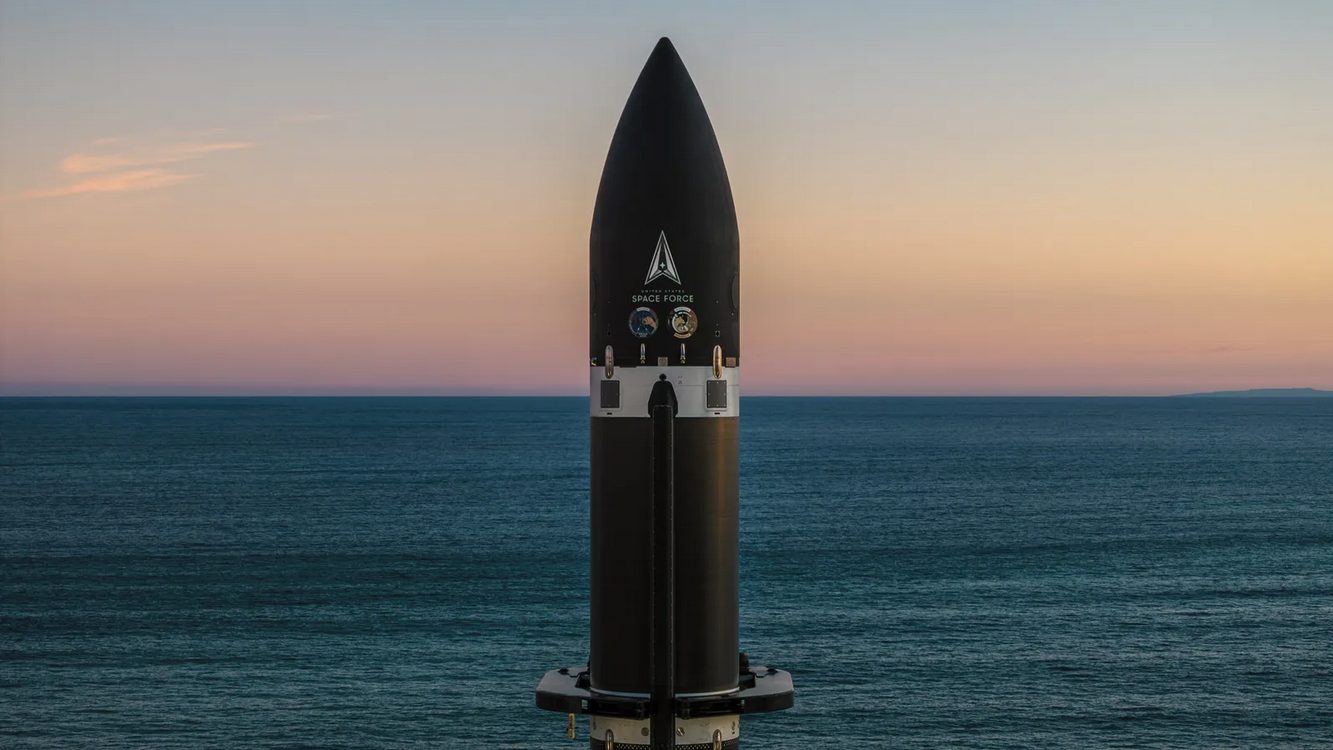
Put together, Meink’s teaser almost certainly suggests that the US is developing ASATs for positioning in space, or as General Schiess stated, already has them there. To wit, in June, two commercial space companies, True Anomaly and Rocket Lab, conducted interceptor missions on behalf of the Space Force, launching a satellite on a mission to intercept another satellite within a 72-hour deadline.
Rocket Lab’s Pioneer spacecraft launched as part of the Victus Haze mission on short notice from New Zealand at 10 p.m. local time on June 19th. It delivered its Puma satellite to low Earth orbit in order to “simulate a rapid threat-response scenario alongside a non-compliant satellite”.
Awaiting Puma’s arrival in space was True Anomaly’s Jackal satellite, launched onboard a Falcon 9 rocket in May where it awaited command from the Space Force. Jackal is “designed exclusively for space superiority, not adapted from non-defense baselines,” a statement on the event detailed.
The Victus Haze mission was the second under a program called Tactically Responsive Space (TacRS) that seeks to leverage military-industrial-complex firms in the commercial space sector to rapidly respond to potential threats as the Space Force sees them. Or, as we shouldn’t forget, position military hardware to aggressively attack other nations, as General Schiess both admitted and celebrated.
As WaL has reported before, the Space Force is determined to weaponize space and turn it into the domain of the Pentagon. In President Trump, its leaders have found the ultimate tool to complete that aim, who, as if in perfect metaphor, dramatically increased the Space Force budget while attempting to dramatically reduce the budget of the government agency for the peaceful use of space, namely NASA, whose Trump-appointed administrator has already said that it should share capabilities with the Space Force. WaL
We Humbly Ask For Your Support—Follow the link here to see all the ways, monetary and non-monetary.
PICTURED ABOVE: Rocket Lab launched its part of the Space Force’s Victus Haze mission. PC: Rocket Lab.