Evidence has shown that caloric restriction, meaning a single period or a diet below recommended limits for calories—but not micronutrient amounts—is one of the most effective delayers of aging.
A variety of private companies are now attempting to take caloric restriction and bottle it into a pill that tricks the body into thinking it’s in a fasted state even when it isn’t. The growth of this niche market came after years of scientific work showing that age-related degeneration was consistently less in any organism, whether a worm or a rat, that underwent calorie restriction.
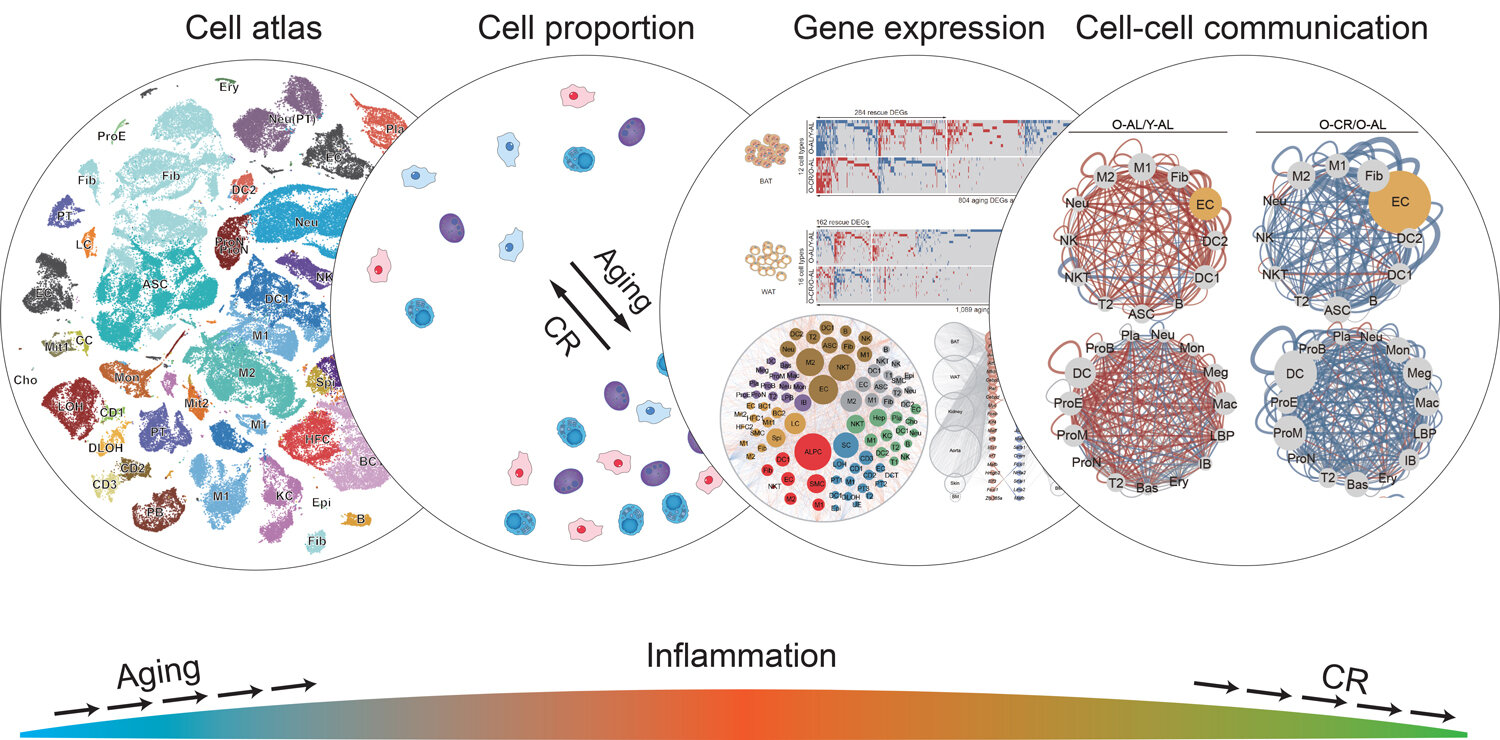
In 2020, a landmark study published in the journal Cell featured the most comprehensive single-cell map of the genetic reactions to aging under calorie-restricted conditions in rats that’s ever been done.
The rats in the study were placed on a calorie-restricted diet from 18 months of age and 27 months of age – about the same quadrant of life as if a human went on a diet at 50 and stopped at 74. At the start of the trial and again at the end, 168,703 cells from 40 cell types in the 56 rats were measured for activity using single-cell genetic sequencing technology. The cells came from organs like the liver, kidney, aorta, skin, and brain, and other tissues like the bone marrow and muscle.
The results, as detailed on a report from the Salk Institute for Biological Studies website, seems to be something like “eat less, live longer”.
“We already knew that calorie restriction increases life span, but now we’ve shown all the changes that occur at a single-cell level to cause that,” says Juan Carlos Izpisua Belmonte, a Salk Institute researcher who assisted the production and authoring of the new paper.
“This gives us targets that we may eventually be able to act on with drugs to treat aging in humans,” said Belmonte.
Eat less, live longer
While it may seem entirely counterintuitive to the layperson, the process of metabolizing food cannot take place in the body with other processes, such as autophagy, the cellular cleanup and repair process. Chronic calorie restriction leads to a mimicking of many of the benefits observed in fasting. This is most prominently researched by Dr. Valter Longo, and the scientist maintains a fasting-mimicking diet program on his website.
In the rat trial, the genetic sequencing found that many of the standard genetic and cellular changes associated with aging were absent in rats on the calorie-restricted diet. In fact, even in old age, many of the tissues and cells of the aged rats on this diet more closely resembled those of young rats.
How close? 57% of all changes in cell composition and genetic transcription associated with aging that were observed in the tissues of rats on a normal diet were not present in the rats that were skipping lunch. A lazy scientist might say that a little more than half of age-related dysfunction was halted.
“This approach not only told us the effect of calorie restriction on these cell types, but also provided the most complete and detailed study of what happens at a single-cell level during aging,” says co-corresponding author Guang-Hui Liu, a professor at the Chinese Academy of Sciences.
One of the most striking patterns which emerged from the gene sequencing was that the amount of immune cells produced in every observed tissue radically increased in response to aging, but that the diet attenuated this inflammatory expression – so much so that the Salk write-up described the calorie-restricted rats as being “not affected” by age-related increases in immune cell production.
“The primary discovery in the current study is that the increase in the inflammatory response during aging could be systematically repressed by caloric restriction,” says co-corresponding author Jing Qu, also at the Chinese Academy of Sciences.
This is a major confirmation of earlier suspicions. In 2015, a breakthrough study by Japanese researchers found that in a cohort of 1554 Japanese individuals including populations of centenarians (100 years of age to 104), semi-supercentenarians (105+), as well as their offspring and some of their other relatives, levels of inflammation and not the length of telomeres (another potential marker for successful aging) predicted not only survival, but cognition and general capability.
The team of researchers from Salk and the Chinese Academy of Sciences is now trying to utilize this body of work in order to further the potential of anti-aging drugs by formulating the correct targeting and implementation strategies towards the increase of life and health span.
Fasting in a pill
This could mark a serious change in human society. While fasting and calorie restriction are available to all of us as tools of health and wellness, there aren’t many who will commit to giving up meals and calorie-rich food altogether for a benefit that may take 30-40 years to manifest.
However if we could take a pill that tricks our body into entering a calorically-restricted state even when it isn’t, people across the world could obtain the benefits of fasting without the personal and social struggle involved with forgoing meal times.
One company involved in this new market for fasting-mimicking drugs is Mimio, which admit in a review on their website that pills, as the science currently stands, cannot replicate the full compliment of biological mechanisms that begin to work under conditions of fasting or calorie restriction. Pill have been shown, however, to support those underlying mechanisms, particularly autophagy induction, AMPK activation, SIRT1 signaling, and NAD+ metabolism, 4 key processes that occur during fasting, several of which were used as markers in the rat study.
“Products that claim to fully replicate fasting are overstating the science,” Mimio states on their website, adding that their formula was benchmarked against a 36-hour fast based on 3 compounds demonstrated to activate the same pathways activated during such a fast.
Not all efforts at a fasting-mimicking pill have been commercial: one study of mice in 2022 seemed to uncover one accidentally while developing new cancer drugs.
“Giving this drug seems to mimic some of the metabolic and therapeutic effects of fasting,” said senior author Brian DeBosch, MD, PhD, an associate professor of pediatrics at Washington University School of Medicine in St. Louis who was running a trial on a drug for use as a potential treatment for a number of cancers, including sarcoma, breast and pancreatic cancers.
“I was surprised by how large the effect was. In the mice prone to weight gain, the group that received the drug ended up weighing about 25% less than the mice that didn’t get the drug”.
The drug breaks down the amino acid arginine in the blood, starving the tumors of their energy source. The drug seemed to trigger autophagy—a word meaning “self-eating” that refers to how cells consume dead and damaged ones to repair themselves during fasting.
At the time the Salk researchers published their paper, the idea of a fasting mimetic was still a hypothetical one, yet a popular-culture driven interest in longevity research has seen such science rapidly expand into the nutritional supplement market. Mimio markets itself as the first, but it almost certainly won’t be the last. WaL
We Humbly Ask For Your Support—Follow the link here to see all the ways, monetary and non-monetary.
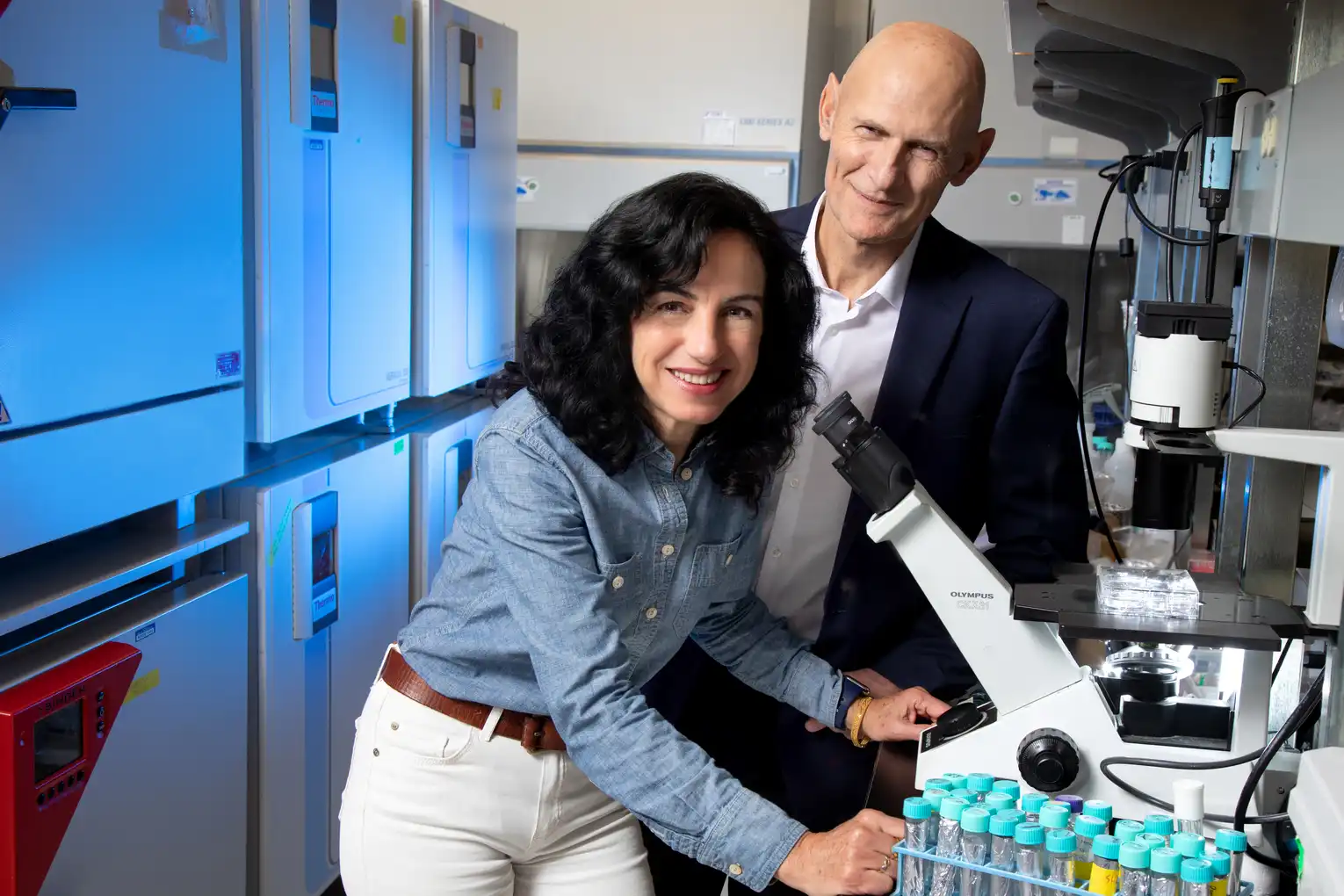
PICTURED ABOVE: Researcher Juan Carlos Izpisua Belmonte, and his colleague Concepcion Rodriguez Esteban.
 0
0
 0
0