 0
0
 0
0

South Korean President Lee Jae-myung used the occasion of the country’s day to commemorate freedom from Japanese domination to extend the offer for renewed negotiations with North Korea.
Lee suggested a “multi-layered security system” built specifically to prevent flare-ups along the border between the two countries known as the Demilitarized Zone or DMZ.
“Let us put down our intentions to threaten each other and begin discussions to end the long-running war as the directly involved parties,” he told the ceremony, while expressing hope that the two nations “will sit face-to-face for peaceful coexistence and mutual growth”.
The DPRK has yet to respond to the comments, with national media only covering their own liberation day celebrations.
Regarding America’s security interests on the Korean Peninsula, Washington has unsurprisingly marched to the beat of a single drum: denuclearization.
America’s foreign policy establishment likes to hold a grudge, and with the DPRK being the only country to have ratified the UN’s Non-Proliferation Treaty (NPT), withdrawn from it, and subsequently acquired nuclear weapons, there is little room in strategic discussions for anything other than a reversal of this perceived misfortune.
Yet the impasse on the Korean Peninsula has previously been where President Donald Trump’s innate common sense for foreign policy shines brightest, with the now-staunchly wartime president coming closer than any before him to ending the Korean War which was never officially concluded, and of bringing the Communist hermit kingdom out of reclusivity.
That effort, which culminated in the Panmunjom Declaration, was later scuppered through an intervention by Trump’s former National Security Advisor John Bolton, who proposed in talks with the DPRK, denuclearization “along the Libyan model” and scared their delegation back to Pyongyang where talks have not resumed since.
Moral hazard
Now 7 years later, and the South suddenly has a very good reason for seeking a resumption of talks with the North again: two instances of the US military seemingly abandoning its role as security steward over the country, first by shifting Patriot and THAAD anti-missile batteries out of South Korea to the Middle East, and then just last week instructing the Pentagon to scale back upcoming training exercises between US and South Korean forces while criticizing Seoul for not joining or supporting efforts to “denuclearize” Iran.
Trump wrote in a post on Truth Social that the exercises send out a threatening message to the DPRK.
“These exercises are not only costly, with much of these costs paid for by the United States of America (as usual!), but send a signal that is totally inappropriate and hostile, to a Country that, as long as Donald J. Trump has been President, has been unthreatening and respectful”.
The Ulchi Freedom Shield exercises are held every year and involve over 50,000 personnel from both countries. North Korea’s Foreign Ministry called the exercise “a rehearsal for an aggressive war” last week in a statement carried by state media, Reuters reported.
American military power is a huge deterrent to the DPRK, and without nuclear parity between the Koreas, is the largest component to the overall peace puzzle in the region. This is also America’s role in a suite of regions in the world; in the East Asian region more broadly, and in eastern Europe to name two.
Critics of this security regime point to the moral hazard it creates, as smaller and weaker nations need not develop strategies to co-exist or alleviate security concerns with larger, more powerful neighbors. One could point to America’s security relationship with Japan, the Philippines, Israel, Ukraine, and a host of NATO countries as examples. South Korea too, could be accused of long-ignoring the urgency of learning to co-exist with the North because of the Pentagon’s presence on the peninsula.
In seeing that, for at least the current administration, South Korea’s needs may fall lower down the list of foreign policy priorities, Lee’s call for renewed peace talks, and especially the notion of a new security architecture, could be an attempt to test the waters of a status quo sans America.
In dragging the military into another prolonged conflict in the Middle East, President Trump has likely engaged himself for the rest of his term in office in managing the situation in the Gulf to the best of his administration’s abilities, and will likely exclude South Korean concerns for the majority of that time. Moreover, the new reality regarding Iran’s control over the Strait of Hormuz will likely demand much from his successor. It could be 3 or even 4 years before an American president has the time and resources to reinvest into South Korean security. It could be even longer, given the timelines for replacing the expensive interceptor missiles withdrawn from Korea—needed in actually active war zones like Ukraine, Israel, and the Gulf States.
Analysis published by WaL on the eve of Trump’s inauguration detailed that any Korea policy would likely come from Trump himself, and with his most recent outburst, he may have touched off a significant realignment in Korean Peninsula politics. WaL
We Humbly Ask For Your Support—Follow the link here to see all the ways, monetary and non-monetary.
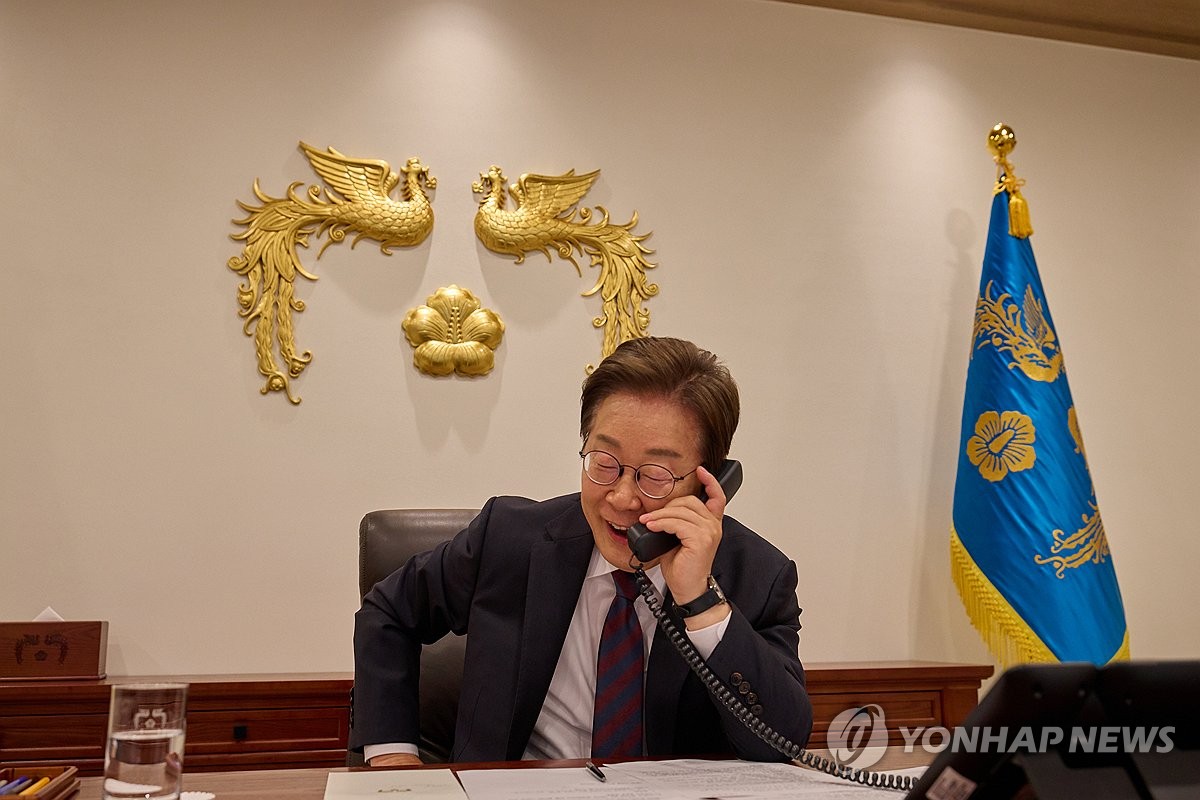
PICTURED ABOVE: President Lee Jae-myung on the phone with President Xi Jinping. PC: Blue House, press handout.