 0
0
 0
0

On the final Friday in June, Greenland’s Ministry of Mineral Resources rejected an application from Australian mining company Energy Transition Minerals for further exploration work at the Kuannersuit/Kvanefjeld rare earths project, one the largest undeveloped deposit of rare earth oxides on Earth.
WaL reported extensively on ETM’s struggles against the Greenland government over Kvanefjeld, and whether it pertained to President Donald Trump’s strange fixation on Greenland that colored the first year of his presidency.
In its decision, the Ministry stated that “further exploration in the area is not deemed likely to lead to the discovery of deposits that can be exploited in accordance with the Uranium Act”.
In 2021, the then-ruling Inuit Ataqatigiit party in Greenland’s autonomous territorial government banned uranium mining, which the Kvanefjeld project, also known as Kuannersuit, would produce as a byproduct of its rare earth oxide collection.
Greenland is often touted as possessing mineral endowments that could make it the mining capital of the world. What’s not included in many such AI-generated infographics in investor presentations is the fact that for all intents and purposes, almost zero of them are accessible because of numerous factors including the long winter of snow and ice, unfavorable geography, a dearth of power access, the island’s lack of paved roads, political and populist antipathy towards mining, uneconomic metallurgical recovery of rare earth ores, and little local labor force.
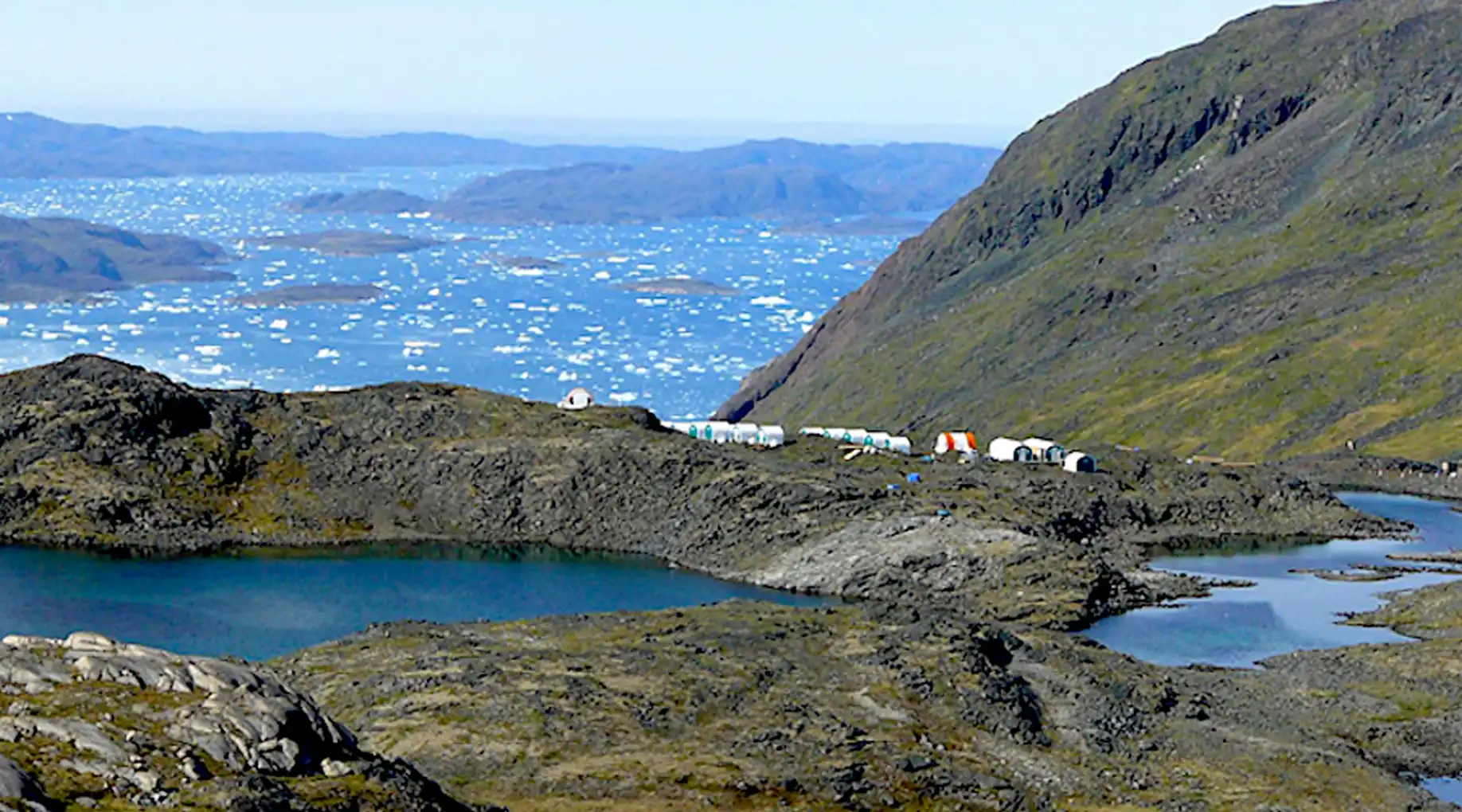
Kvanefjeld is to most of these factors the exception, rather than the rule. It remains largely ice-free year round, and has demonstrated that conventional metallurgy methods will work to pull the rare earth elements from the ore bodies in which they’re contained. It’s also located near favorable infrastructure, including fresh water access, a deep-water ice-free port, and an airport.
Nevertheless, among its 1.14 million tonnes of rare earth oxides is uranium, and Inuit Ataqatigiit was elected on the back of a “zero tolerance” populist policy of uranium mining. The new Uranium Act made illegal activities that ETM and its local, wholly-owned subsidiary Greenland Metals had previously acquired licenses to pursue.
In 2023, ETM entered into legal proceedings with the government on that very basis. This new setback came after the Ministry of Mineral Resources held the application for extended exploration for 9 months, then offered the company just 48 hours to respond to technical geological assessments while refusing a one-week extension. The current ministry head Mute Egede led Inuit Ataqatigiit as the Prime Minister of parliament when the Uranium Act was passed.
Better white than Red
WaL previously offered analysis that Trump’s saber-rattling over Greenland might have been driven by a 6.5% stake in ETM by Chinese mining firm Le Shan Shenghe, which had originally signed up to provide optimization work and consultation on the Kvanefjeld project.
With China’s dominance in global mining and refining of rare earths—many of which are needed for military technologies—allowing their market control to extend as far as Greenland might have been an intolerable outcome for the Trump Administration. Though a mere 6.5% wouldn’t give Le Shan, a subsidiary of the $46 billion-valued and partially-state-owned Shenghe Resources, a controlling stake in the company, takeover fears might have persisted among Trump’s trade team headed up by Commerce Secretary Howard Lutnik, himself an owner of a stake in a Greenland mining endeavor.
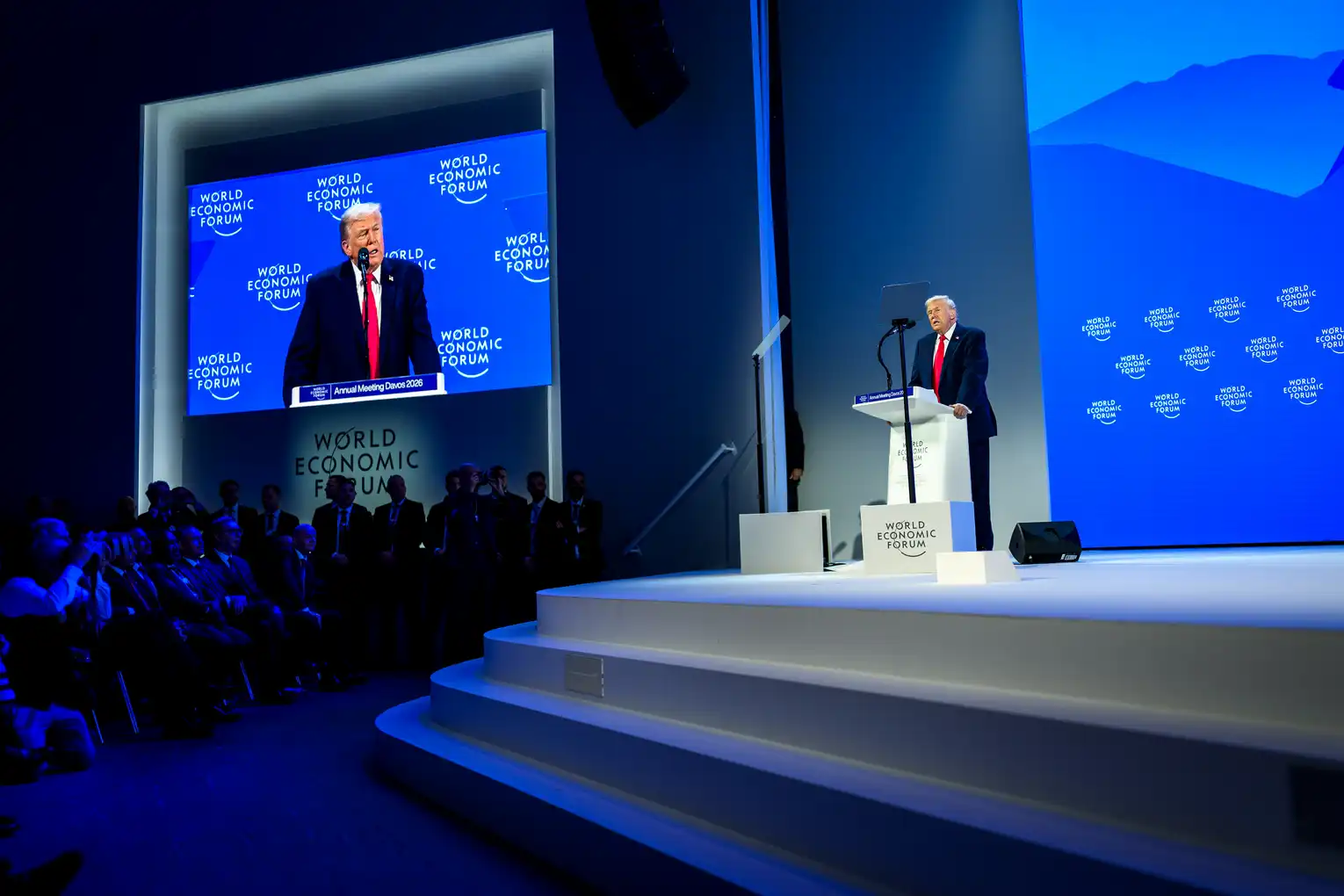
In a January meeting of the World Economic Forum in Davos, Switzerland, President Trump and his team held apparently successful discussions with NATO’s General Secretary Mark Rutte, along with Danish authorities. Not everything in the deal framework announced by Trump regarding Greenland has made it into the media, but reports claim it involves both security policy and mining interests.
Among the national security interests are an Arctic base for Trump’s proposed Golden Dome missile defense system, and more conventional military bases. Mining interests are there too, with one particular standout being the right of first refusal for any international mining projects.
ETM is Australian with Chinese backers, and so would certainly qualify as international. Though Trump didn’t have to invoke right of first refusal for the Kvanefjeld exploration license, that could just as well have been Greenland authorities operating according to their own agency. Locals, both in the political sphere and private sector, had no illusions over NATO and Trump’s interest in the island last year, and indeed Egede commented on the application denial on Facebook, claiming it was made according to the island’s laws but also the interests of locals.
“At the same time, we are listening to the people — especially in South Greenland — who have made their position clear for many years. We remain committed to the course Greenland has chosen,” said Egede.
“Greenland has positioned itself as open for business. This decision creates a different impression,” ETM said in a statement to the application refusal. “For companies and capital evaluating the jurisdiction, the message is now clear: regulatory process in Greenland may be used to serve political outcomes rather than to ensure fair and predictable treatment”.
Hypocritically, ETM went on to say that 15% of the entire Western demand for rare earths could come from Kvanefjeld, and the rejection “narrows the field of reliable sources available to the West at the moment when diversification matters most,” thereby proving it’s impossible not to politicize mining decisions made around rare earths. WaL
We Humbly Ask For Your Support—Follow the link here to see all the ways, monetary and non-monetary.
PICTURED ABOVE: The Kvanefjeld project site. PC: Energy Transition Minerals via Mining.com.