0
0
 0
0

In July, 2020, rising waters from a newly constructed dam in Anatolia flooded a small historic town that had been a center of habitation across 9 civilizations going back to the Neolithic period. That fateful summer, the battle to save the town was all over but for the crying. The international press packed up, and returned to their bureaus with what little material the heavy-handed government policing permitted them to gather.
For the first time since the dawn of civilization, the town of Hasankeyf stopped making history.
WaL visited Hasankeyf in late April to see what life after history looked like 6-years on for the residents of a new town that had been hastily constructed to replace what had been lost. There are few places in the world like it, with a vibe that feels like a population living in its own cemetery—reminiscent of Jan Morris’ account of rebuilt post-war Hiroshima.
Hasankeyf was situated on the Tigris River in a handsome valley enclosed by sandstone cliffs. Its charm was evident to the ancient Hurrians of 1,500 BCE, as well as to the later kingdom of Mitani, the Assyrians, Medes, Persians, Romans, the Byzantines, Sassanian Persians, the Umayyad and Abbasid caliphates, the Seljuks, the Ayyubids, the White Sheep Turkomen, the Safavids, the Ottomans, and the tourists and travelers of every century.
“I have never seen a city as mysterious and gloomy as Hasankeyf, during my journeys to the east,” wrote the Swiss archaeological historian Samuel Guyer. “We stopped at the bottom of the bridge, like all travelers passing by, to see the architecture of the bride and the perfect painting of the ruins around it”.
The town collected these ruins—monuments and relics of all these societies, as the way a family collects ornaments to hang on their Christmas tree, every year seeing more and more baubles dangling from its branches. Then, in 1980, a Turkiye rushing towards modernity undertook a series of massive infrastructure projects, including the Ilisu Dam project that would form a 10.4-billion cubic meter reservoir along the famous ancient river. Some 80,000 people had to be relocated from the old town on the southern bank to a new town built on the northern bank.
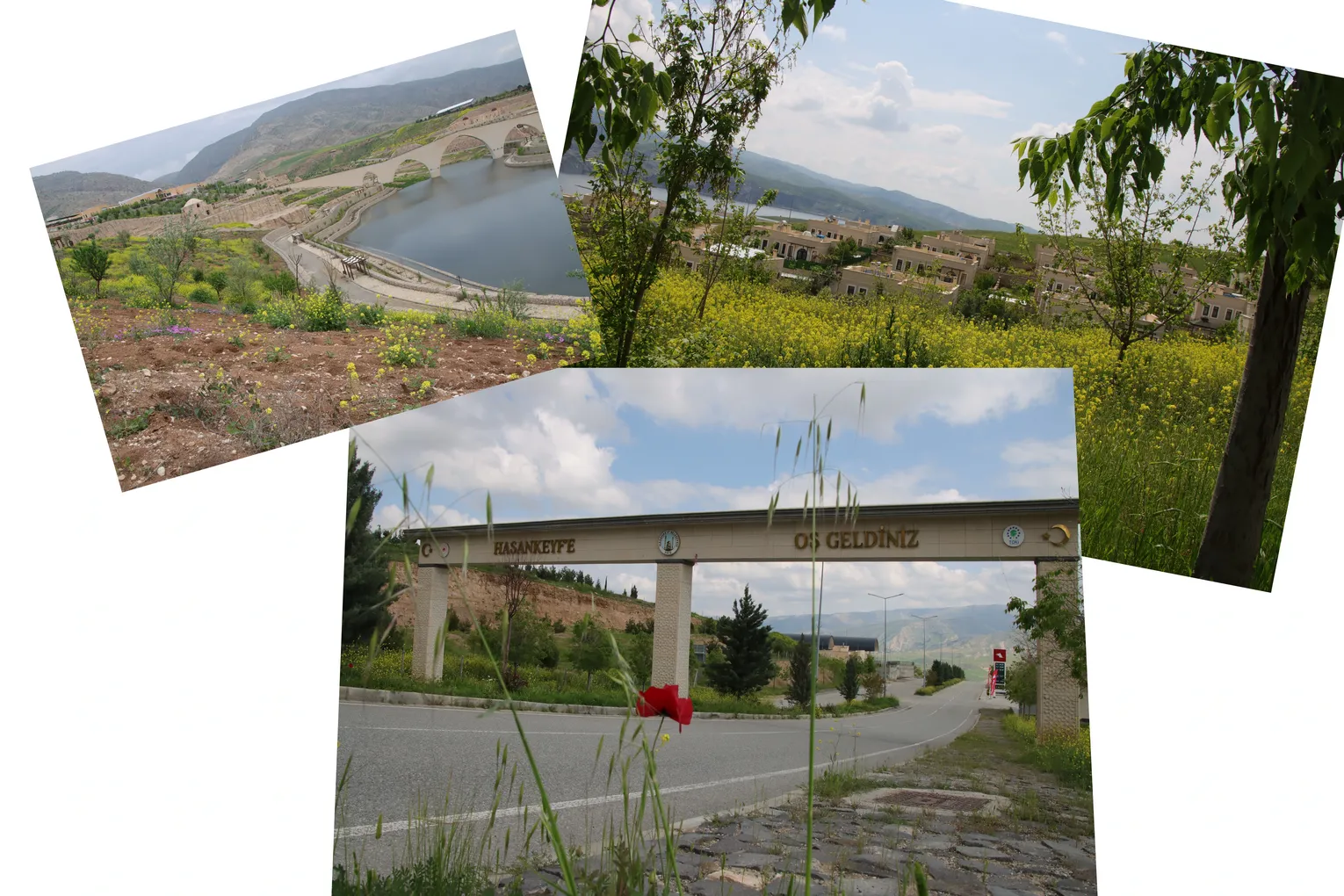
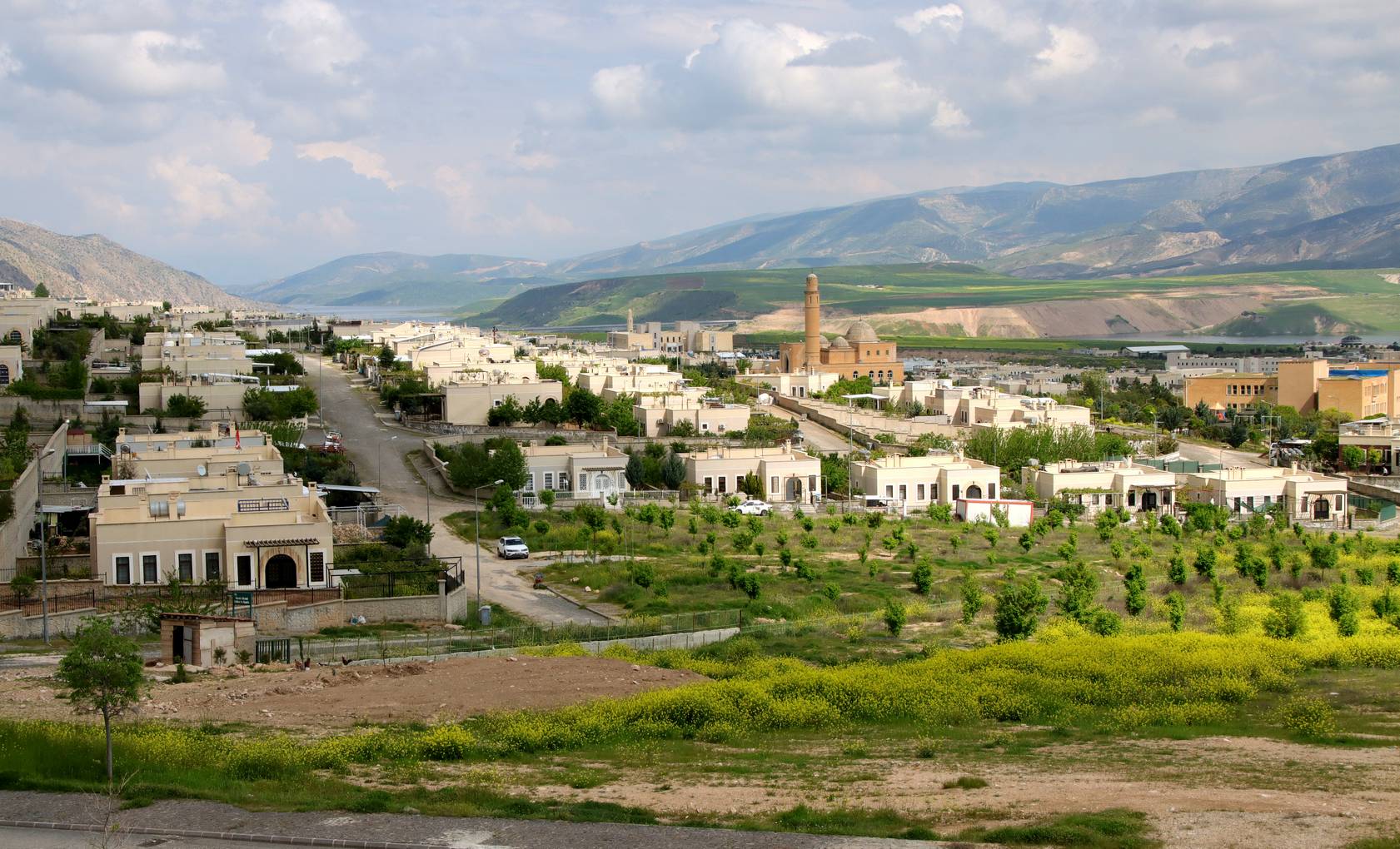
Arriving across a large new bridge spanning the reservoir, the town draws your attention from the left. At a certain moment your road transport will reach the exact parallel spot with the newly drawn roadways, and you can see right through the mass of new buildings built along a predictable grid like the avenues of Manhattan. It is, in a sense, like looking through the new town’s soul, and there isn’t much there.
“I cannot describe the feeling of this place,” Morris wrote of Hiroshima in the 1960s, “but it is as though some indefinable essential element has been withdrawn from the ambiance- not color, nor smell, nor sound, but something else, something which gives meaning and warmth to a city, like salt with your victuals, or eyes in a beautiful face”.
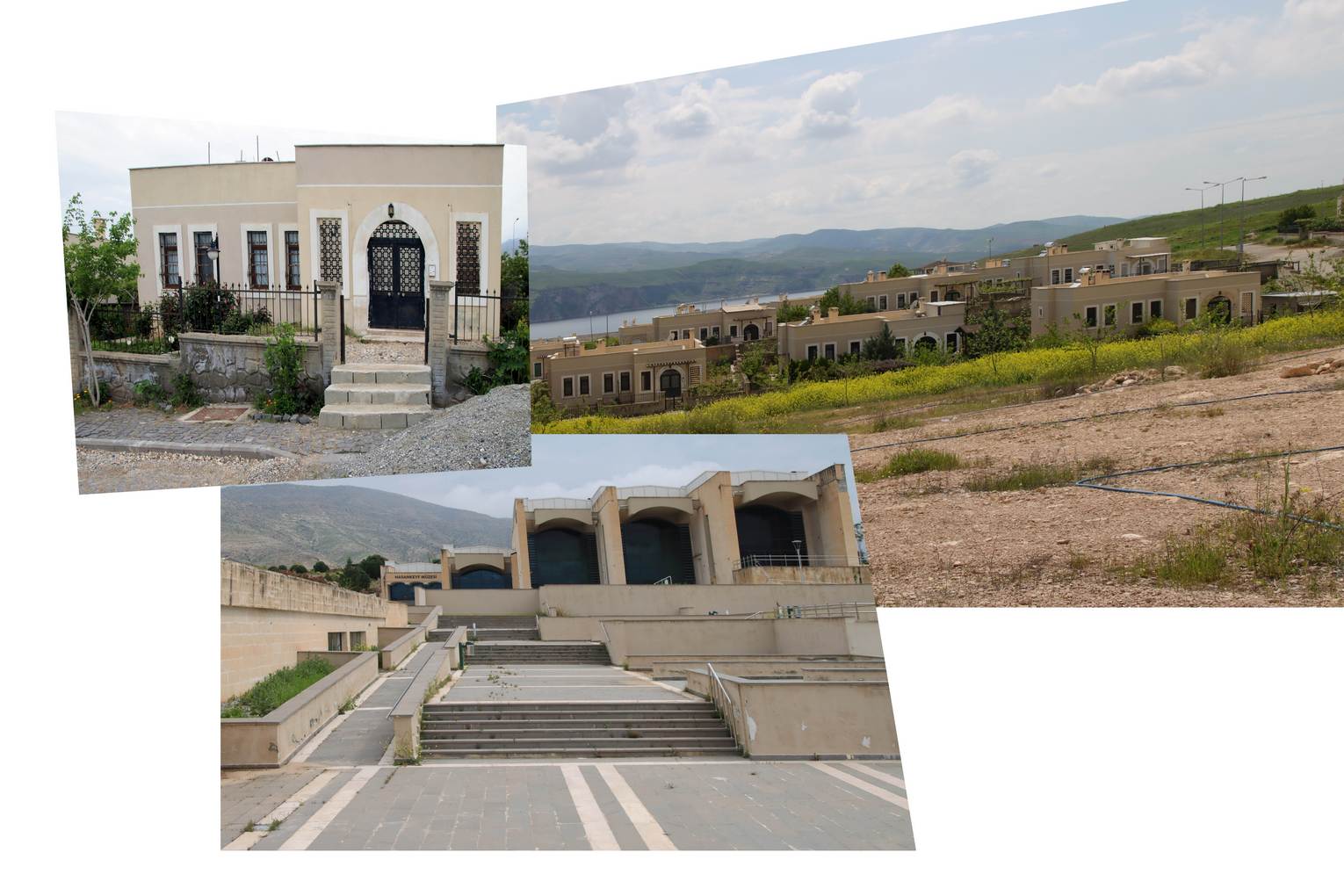
From afar, Hasankeyf appears landscaped and bedecked in gardens, but close in, one realizes it is cloaked in that foliage which always erupts in derelict building sites. Uncreative government contractors armed with eminent domain level everything for excavators and trucks, and have no ideas for what to do with the flat empty space between the sidewalk and someone’s front garden. Each median strip had a small, deliberately planted tree, surrounded by unkempt chest high pioneer species.
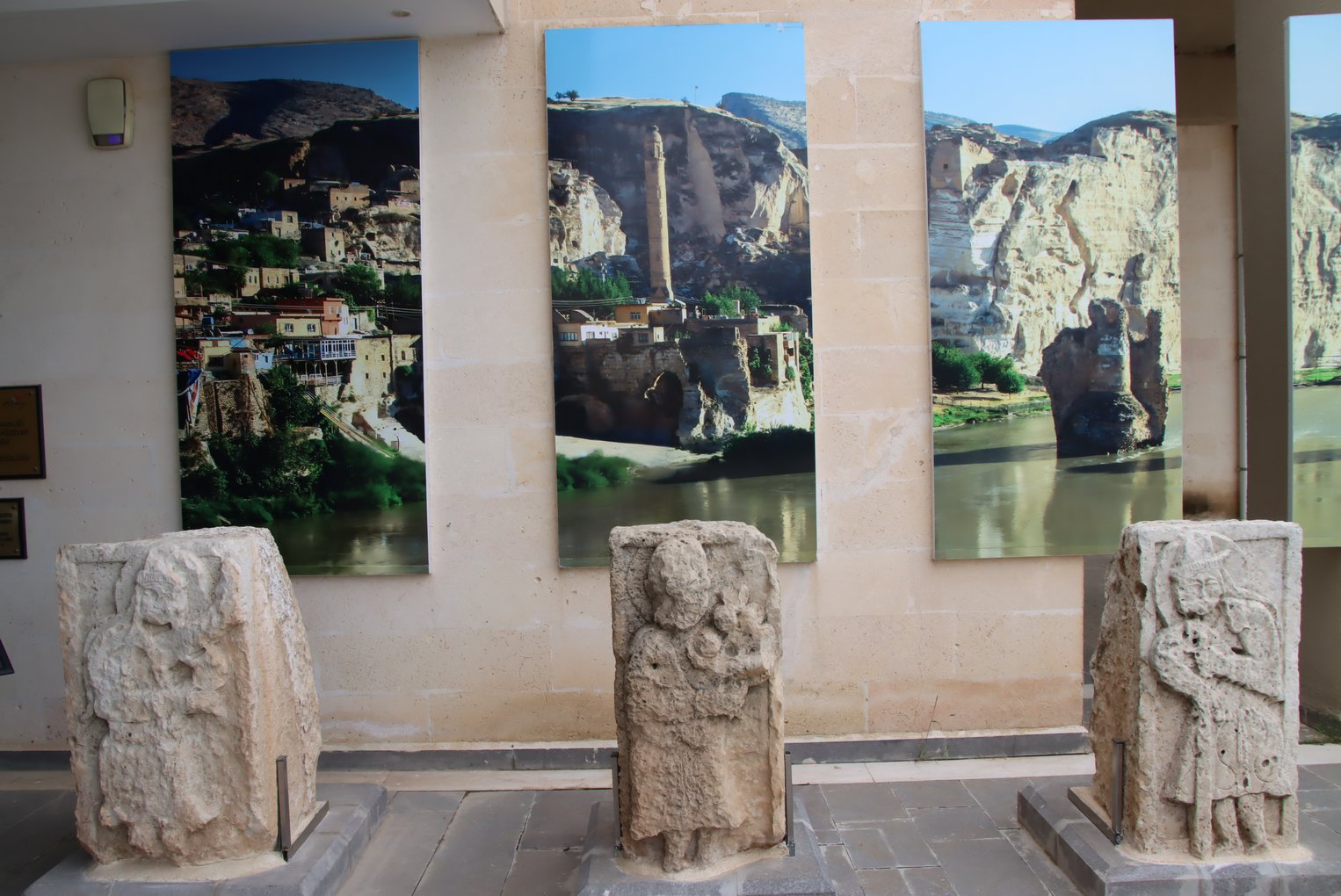
“There was something exceptional about Hasankeyf that made visitors fall in love with the town on first sight,” wrote the New York Times’ Carlotta Gall in 2020. “Graced with mosques and shrines, it lay nestled beneath great sandstone cliffs on the banks of the Tigris River. Gardens were filled with figs and pomegranates, and vine-covered teahouses hung over the water”.
I knew arriving that all of this beauty Gall wrote about was underwater, yet I didn’t know the dimensions of the loss, either physical and emotional.
Sometimes, arriving in a new country, in a particular place, I prefer to enter alla port de salon—like the gunslinger’s walk down main street. Insofar as I was able to draw anyone’s gaze, they were across the large vacant spaces that are everywhere overgrown and featureless.
When work on the Ilisu Dam began in 2006, it was under the tentative financing from the major European banks of Société Générale, UniCredit, and DekaBank. Together, they had signed loan contracts of approximately €450 million for the Ilisu project, after the governments of Germany, Austria, and Switzerland awarded export credit guarantees in March, 2007.
However, after some 153 points of concern related to human rights, environmental impact, and the cultural value of the site went virtually all unfulfilled, the Export Credit Agencies announced in 2008 it was suspending their guarantees, which in turn saw the banks end financing.
In response, the Minister of Environment and Forestry Veysel Eroğlu said at the time that foreign governments didn’t want Turkiye to develop, and stated unequivocally that “we do not need any country or money to build the project”. The government, run by longtime leader Recep Tayyip Erdoğan, encouraged banks to make the loans and back the project.
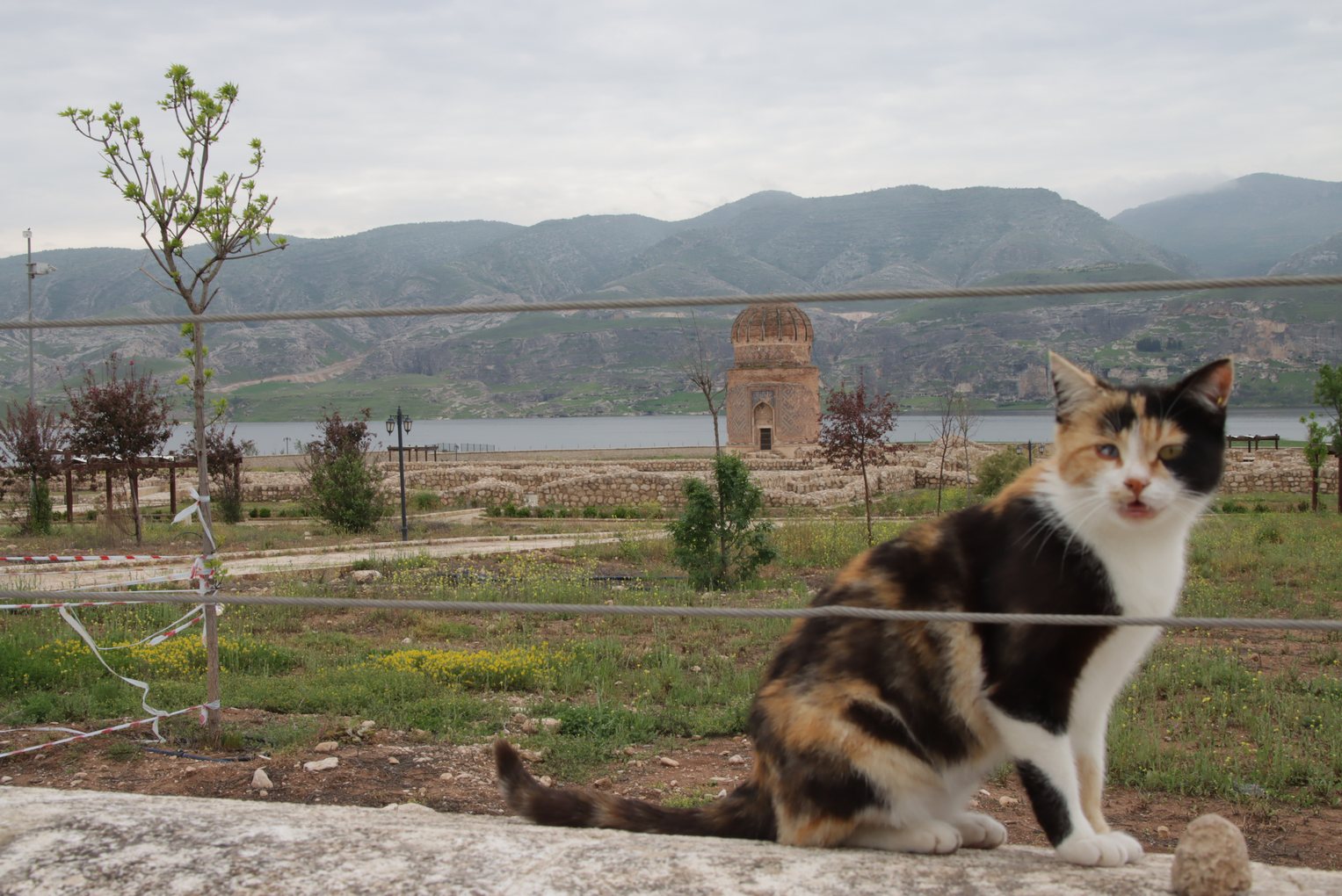
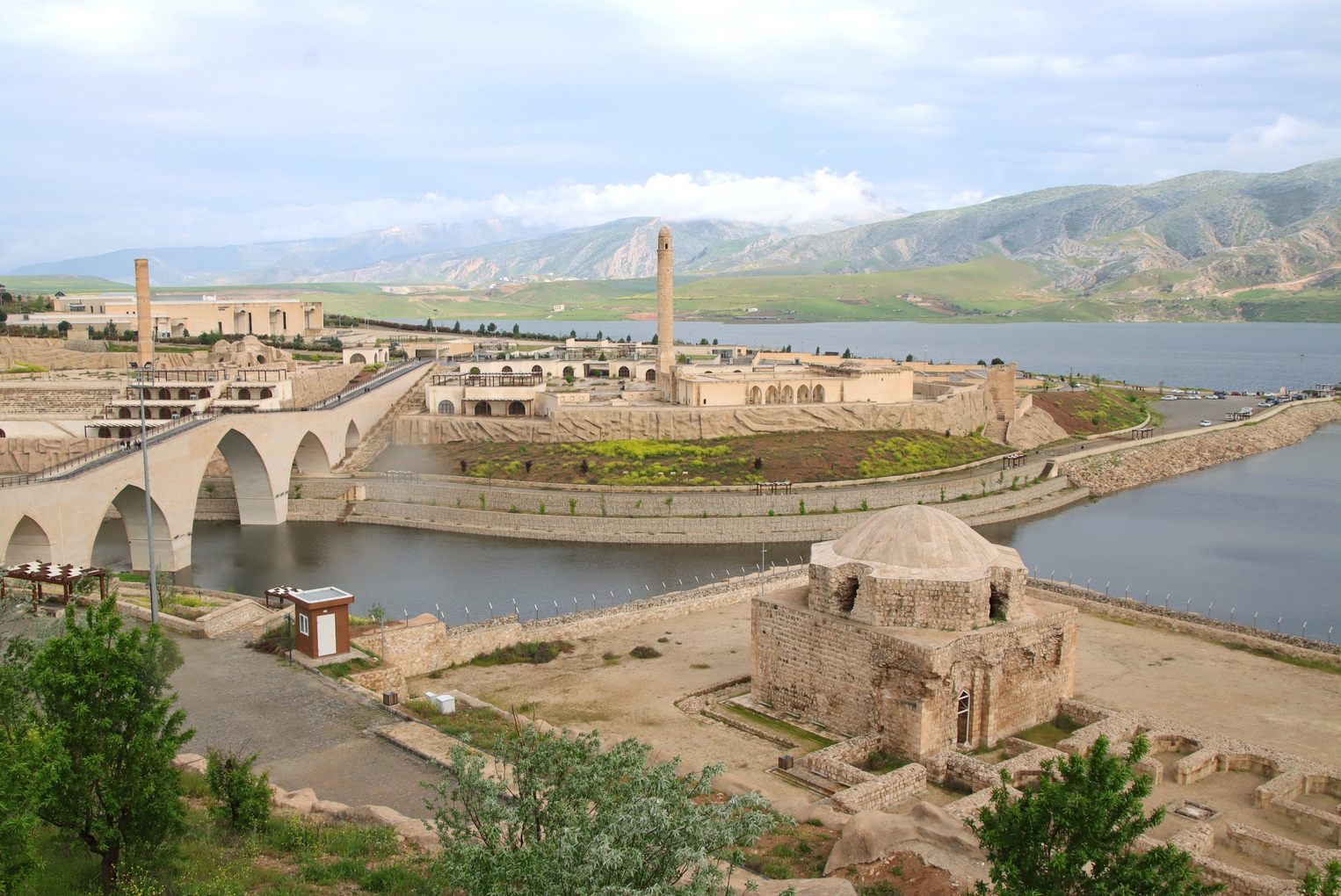
At the city center, such as it is, one cannot help but be drawn down to look at the water, and it’s there that one sees the archaeological park built to accommodate 8 of the monuments of the old Lower City of Hasankeyf. The steep terraces and embankments were held up by a sort-of faux cliff face, of the kind used in zoos and amusement parks wherever the theme is ‘adventure’ or ‘ruins’. All along the terraced promontory were gift shop fronts, mercifully vacant.
“It was always going to be a problem because this government is so corrupt,” a boat captain, part of a cooperative formed by tour guides that used to take visitors through the Lower City, told me. The man was born in the citadel, or Upper City, which while not being flooded was eliminated as a residential area by a mixture of legal threats and compensation (bribery).
“They were not happy because they grew up near the castle,” the captain, who told me his family history spanned many generations living near the same. “Me? I’m content, they [government] gave me a house for cheap. You know before they said they’d give out houses at 7,000 lira rent a month. But, you know, then they’re adding carpets, etc. and now then the rent is 35,000 lira”.
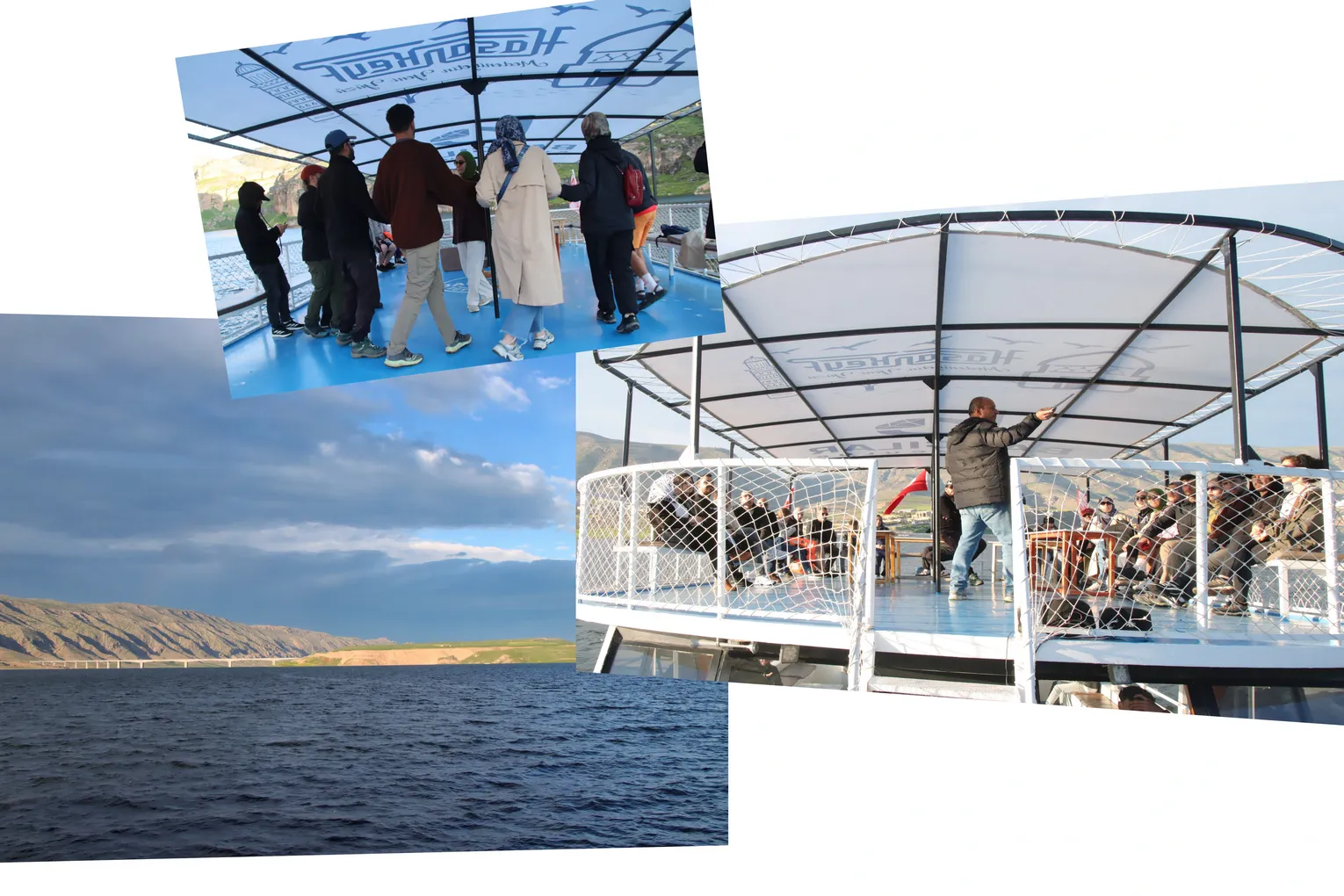
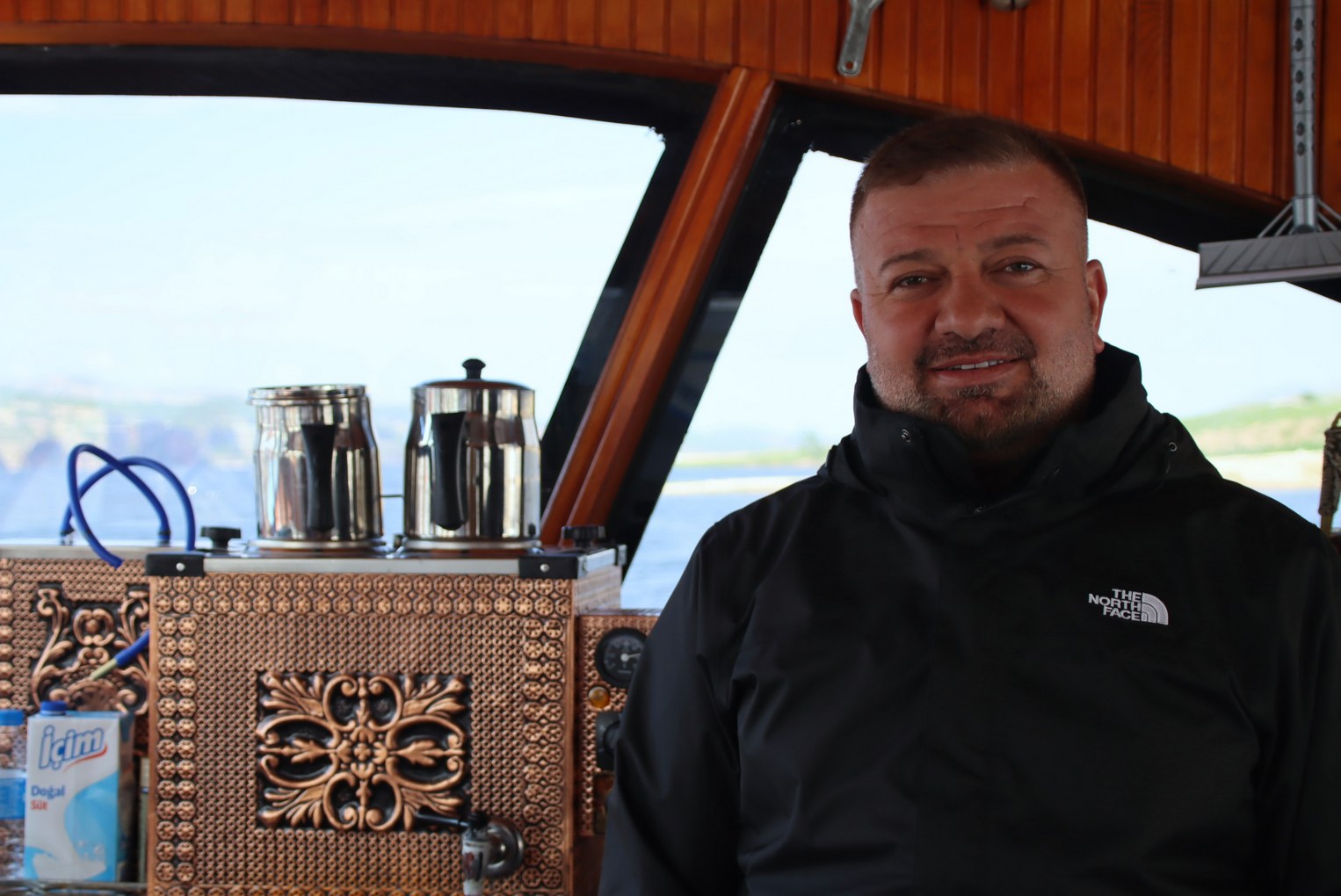
“With the project, Hasankeyf will be a city of culture and a center of attraction, of tourism,” said Minister Eroğlu in the same press conference back in 2008. “Cultural assets can be moved to an open-air museum if desired. What comes out of the excavations can also be exhibited”.
I had visited the museum expecting to see the riches of these excavations, but like so many Turkish museums, I was left having spent most of my time reading, rather than examining any exhibitions. Most of what was there came from Neolithic and Chalcolithic sites further down the Tigris.
“It’s tourism, animals, fish. Those are our jobs,” said Faesi, another boat captain, who had a harsher view on the transformation. “Old Hasankeyf, it was really nice. You’d wake up, go down the lane, see history, castle. Yeah tourism was too much and their were too many people, but…”
Both men agreed that power and water availability was the same after the dam, and costs had not come down. In fact, unsurprisingly given the continual debasement of the lira, electricity costs rose. Faesi also told me the following day that of all the pre-dam population “a hundred thousand people” left without settling in the new town.
“Now everything, every building, is the same, and no one comes here. Nothing’s here you know? It’s all like new, and empty”.
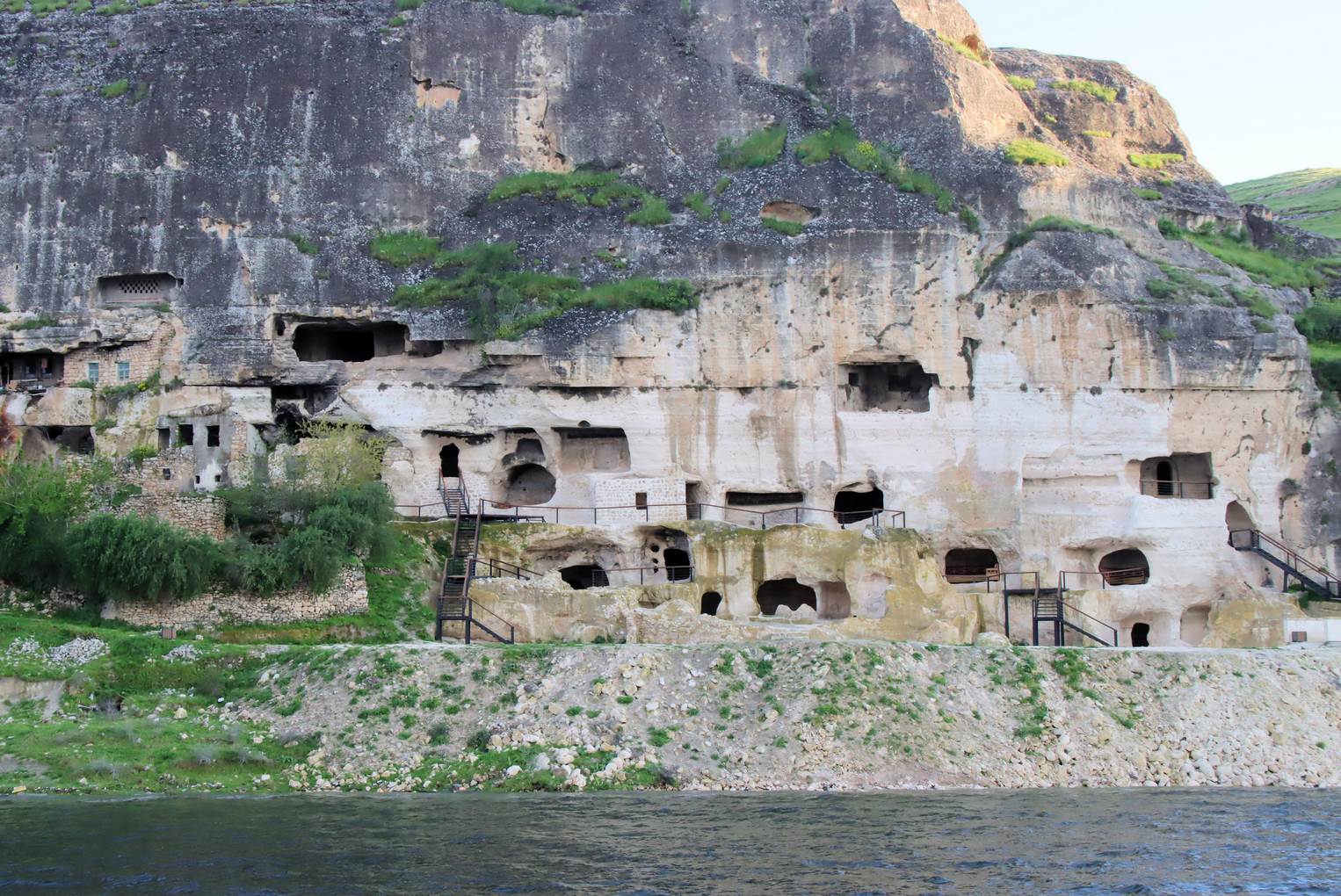
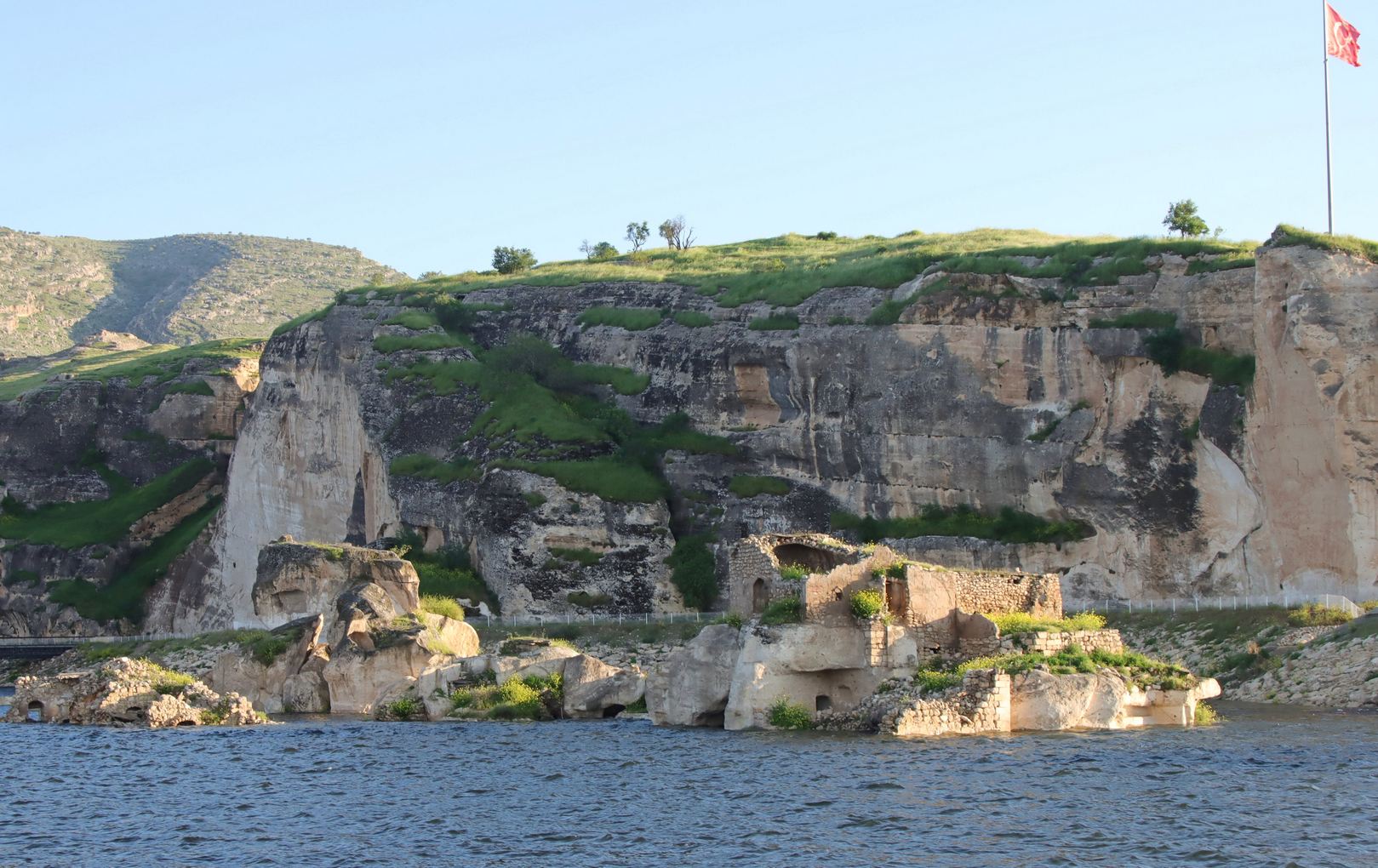
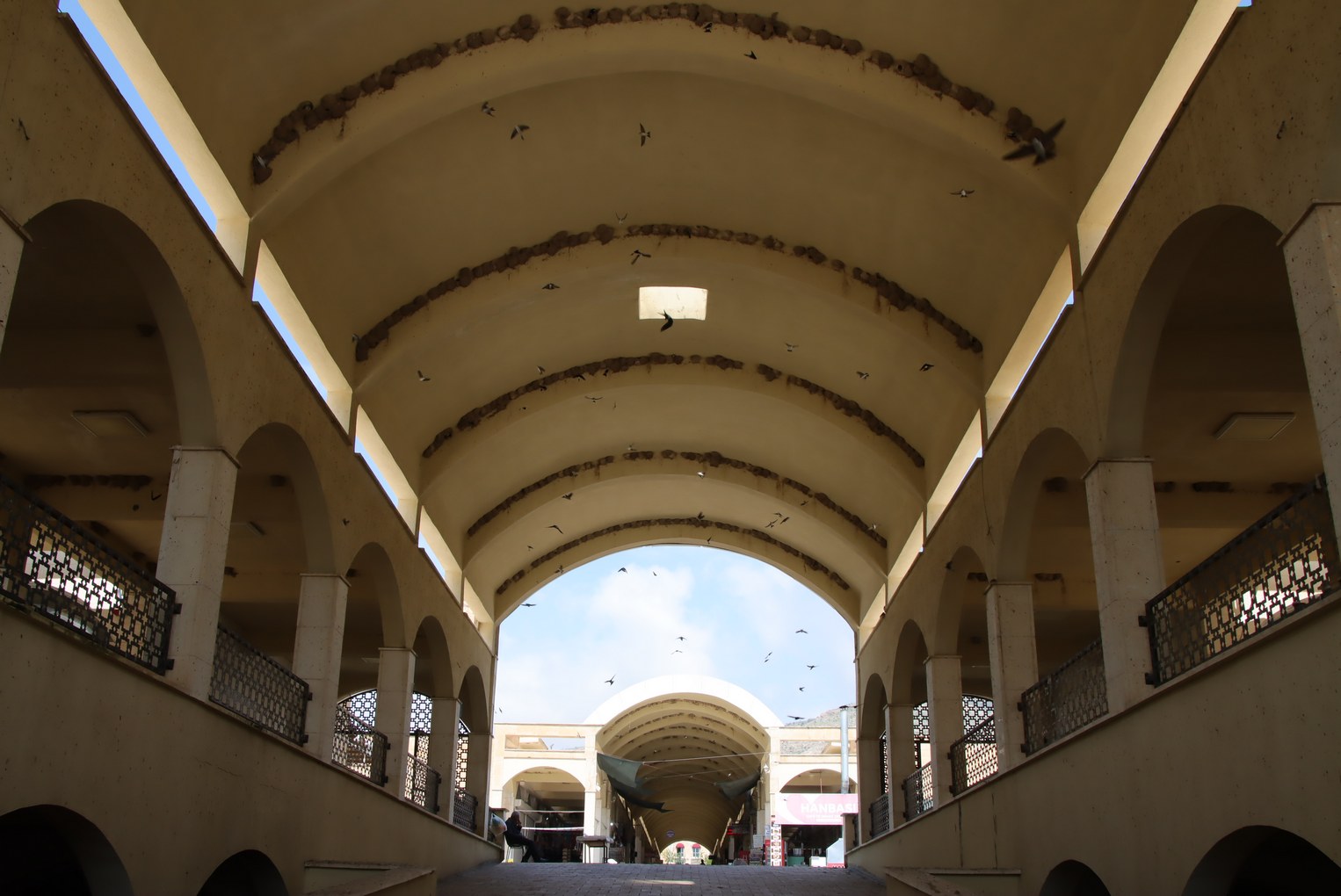
Every person who was willing to speak to WaL answered the question “did you live in Old Hasankeyf” in the affirmative, and the follow-up “is life good in New Hasankeyf” in the negative. Nothing even resembling the true chronicle of anguish, bartering, and protest can be told here, but readers can continue the experience with Carlotta Gall’s account published here.
Time heals all wounds, and even just during our visit over coffee the next day, Faesi, the second boat captain, admitted that things were getting a little bit better. Every year, more and more visitors were coming to see what had happened to the town. A block of new luxury flats would soon be welcoming rich out-of-towners to enjoy the water and the weather, which seemed to exist as a sunny singularity amid the squally spring wind and rain engulfing the surrounding mountains during my stay.
As my bus drove away, I saw the boatmen in the cooperative taking another round of visitors out onto the reservoir, techno-enhanced Turkish music thrumming from the speakers. It felt to me like the town had witnessed the mailed fist of the conqueror yet again, as it has so many times throughout its history, but this time of a conqueror more cruel than Genghis Khan’s offspring or any howling Turkic invader from the desolation of the Asian steppes. WaL
We Humbly Ask For Your Support—Follow the link here to see all the ways, monetary and non-monetary.