 0
0
 0
0

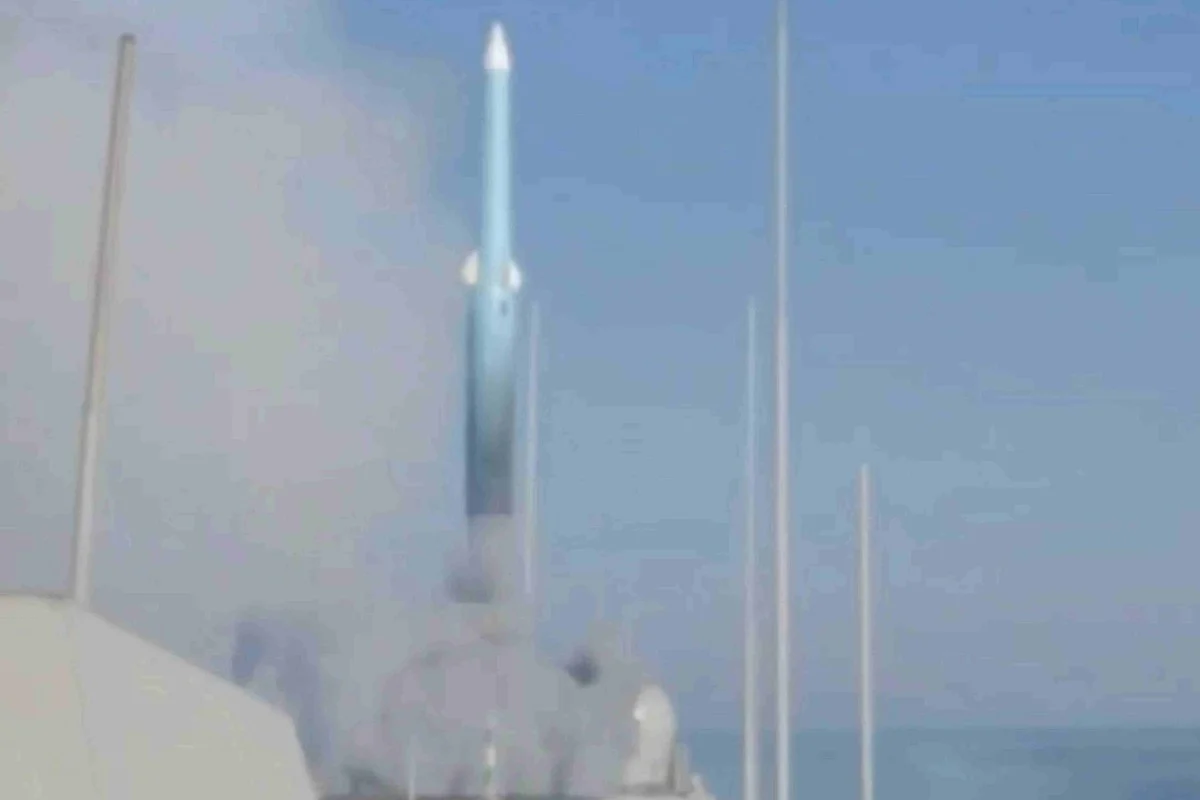
Having been reportedly in development for 3 years, the People’s Liberation Army’s YJ-20 hypersonic ship-to-ship missile is being claimed through official channels to have entered its “finalization test” ahead of mass production.
Footage posted on the PLA’s official social media channel showed the YJ-20 rocket out of a vertical launch system on board the Type 055 destroyer Wuxi. There are 8 of these ships in service, 4 in construction, and 16 in planning phases. The YJ-20 would give each vessel a ship strike range of 1,000 to 1,500 kilometers (621 to 932 miles) which is far beyond naval stand-off range.
The weapon itself was more or less unveiled during this year’s Victory Day parade, along with two other hypersonic missiles, the YJ-17 and YJ-19. They are purported to be all but undefendable by existing ship-mounted anti-missile systems. The YJ-20 is said to have a cruising speed of around Mach 6 and a terminal dive speed as fast as Mach 10, but its biconical aerodynamism allows it to fly along an unpredictable path.
This mixture of speed, maneuverability, and unpredictability, is generally believed to be unstoppable with current technologies, and would vastly expand the PLA’s anti-access area denial (A2/AD) capacity.
“The video does not specify the time or location of what it calls the missile finalization test—the decisive evaluation phase to certify that the design meets all operational requirements. It serves as the official green light for mass production and deployment,” wrote SCMP, covering the video release.
The PLA watching community have noted that identical missiles have launched in other videos posted by the army—as far back as 2022.
The Missile Gap
SCMP’s Liu Zhen writes that, despite its global dominance militarily, the US military is not known to possess hypersonic missiles, nor so-called ‘carrier killers’ like the YJ-20. Instead, it canceled the HALO program that was in line to produce such advanced ballistics, “citing budget overruns and a failure to meet performance expectations”.
There may be, for the first time since it was feared erroneously during the Cold War, a missile gap developing between the US and its peer/near-peer competitor. Diffused primarily through studies and papers published by the Air Force’s RAND Corporation, the idea that there was a “missile gap” between the US and Soviet Union was first hatched from spy aircraft flights showing hundreds of Russian ballistic missile positions that weren’t functional, were empty, or simply older systems.
The photos nevertheless caused the military industrial complex to pour millions of dollars into expanding the number of nuclear warheads and nuclear-capable ballistic missiles in the American arsenal to “close” the gap.
At the moment, if the long-hypothesized war over Taiwan was fought, there’s probably a bigger chance of there being an actual missile gap now than when the US was in confrontation with Moscow working under the assumption there was one. But hypersonic missile technology isn’t the only area where such a gap exists or might exist.
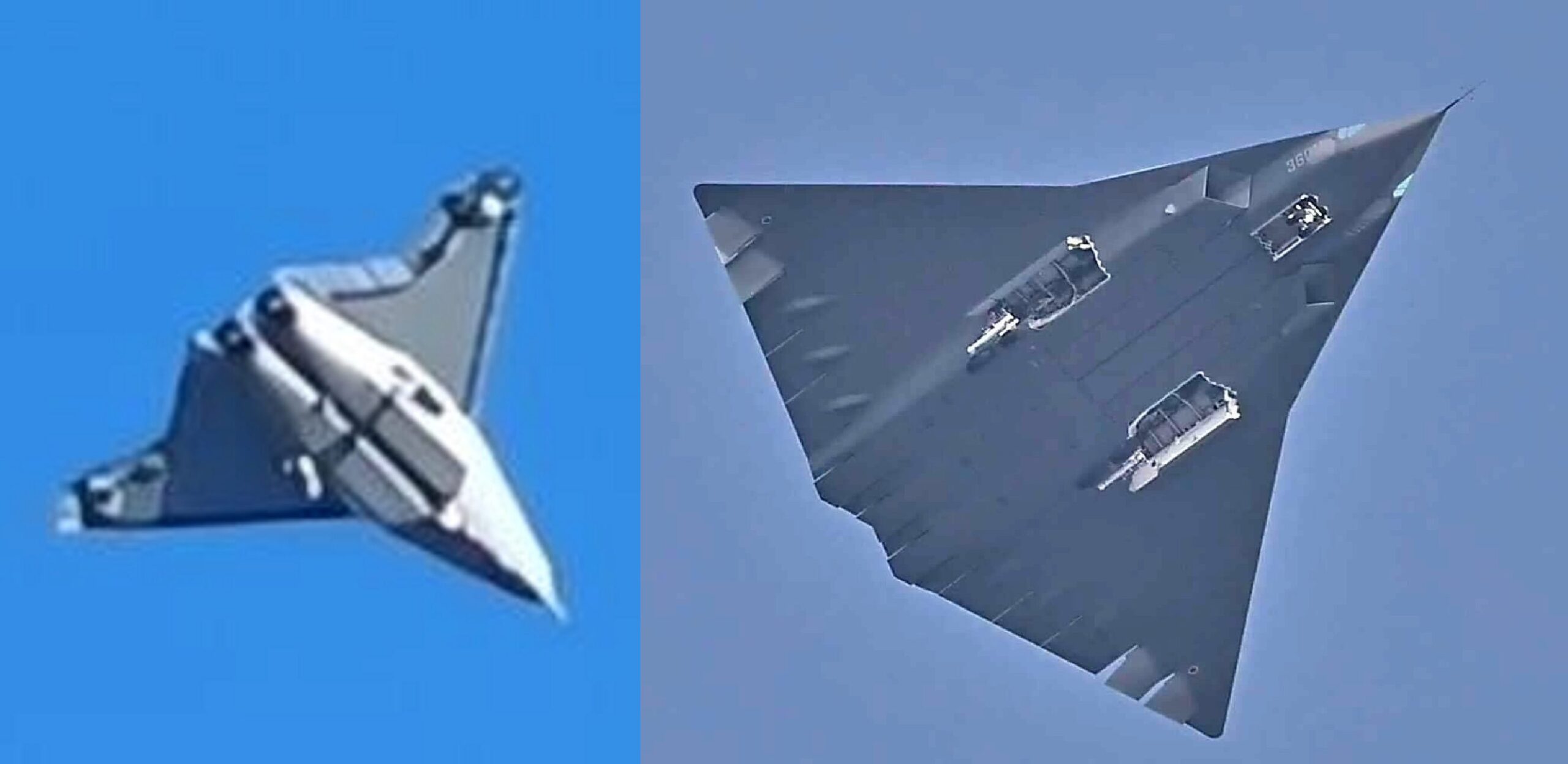
On December 24th, 2024, a pair of unmarked, unidentified warplanes screamed across the skies above Chengdu, a city that hosts the factory of the Chengdu Aerospace Corporation that is known to be currently working on a new fighter jet.
WaL reported at the time that the J-36 and J-XX, (no official names exist) were believed to be 6th generation warplanes, or at least “next generation,” and were supposed to possess “significantly greater combat radius, superior and omnidirectional signature reduction, significantly greater power generation with sensor and [energy weapon] capabilities,” and possessing of a larger internal weapons bay long enough to potentially host the long-range air-to-air PLA missile known as the PL-17.
Rathindra Kuruwita, writing at The Diplomat, looked at the time it took from testing to deployment of previous aircraft and judged that the J-36 and J-XX may be ready for action by 2031 if they followed the same timeline as the previous Chinese flagship warplane, the J-20. The US needed about 12 years to test and deploy the F-22 and F-35, but its current so-called 6th generation aircraft, called the Next Generation Air Dominance (NGAD) program, is in limbo after huge cost overruns were found, and a reimagination of the system was determined to be necessary despite being launched six years ago.
Air Force Secretary Frank Kendall initiated a “strategic pause” to reevaluate what it was the program was meant to be building, all but guaranteeing that the projected completion date of 2030 will be overshot by several years. Air Force internal reviewing found that any craft would have to be cheaper, as a price point of $300 million, three-times as much as an F-35, was simply unreasonable. It also found the craft would have to be much more accommodating to unmanned aerial vehicle collaboration.
That leaves the F-35 as the most available warfighting option for the US, but its long troubled history hasn’t concluded. Despite the US military recently clearing it for full-rate production, a 2024 review by the Pentagon still identified major issues with the aircraft. In 2023, the report found that any given F-35 was available for action only 51% of the time, compared to the benchmark of 65%.
Without question, it’s safe to assume at least some of these issues are present in the PLA Air Force because of the technical sophistication and demands of modern warplanes, but for the first time since World War II, it seems all but certain that if it came to a clash in the skies over the Pacific, the US has entered a period in which it will be outgunned. WaL
We Humbly Ask For Your Support—Follow the link here to see all the ways, monetary and non-monetary.
PICTURED ABOVE: The Chinese military released footage on Sunday of the YJ-20 hypersonic missile in a test launch from a Type 055 destroyer. PC: China Military Bugle