 0
0
 0
0

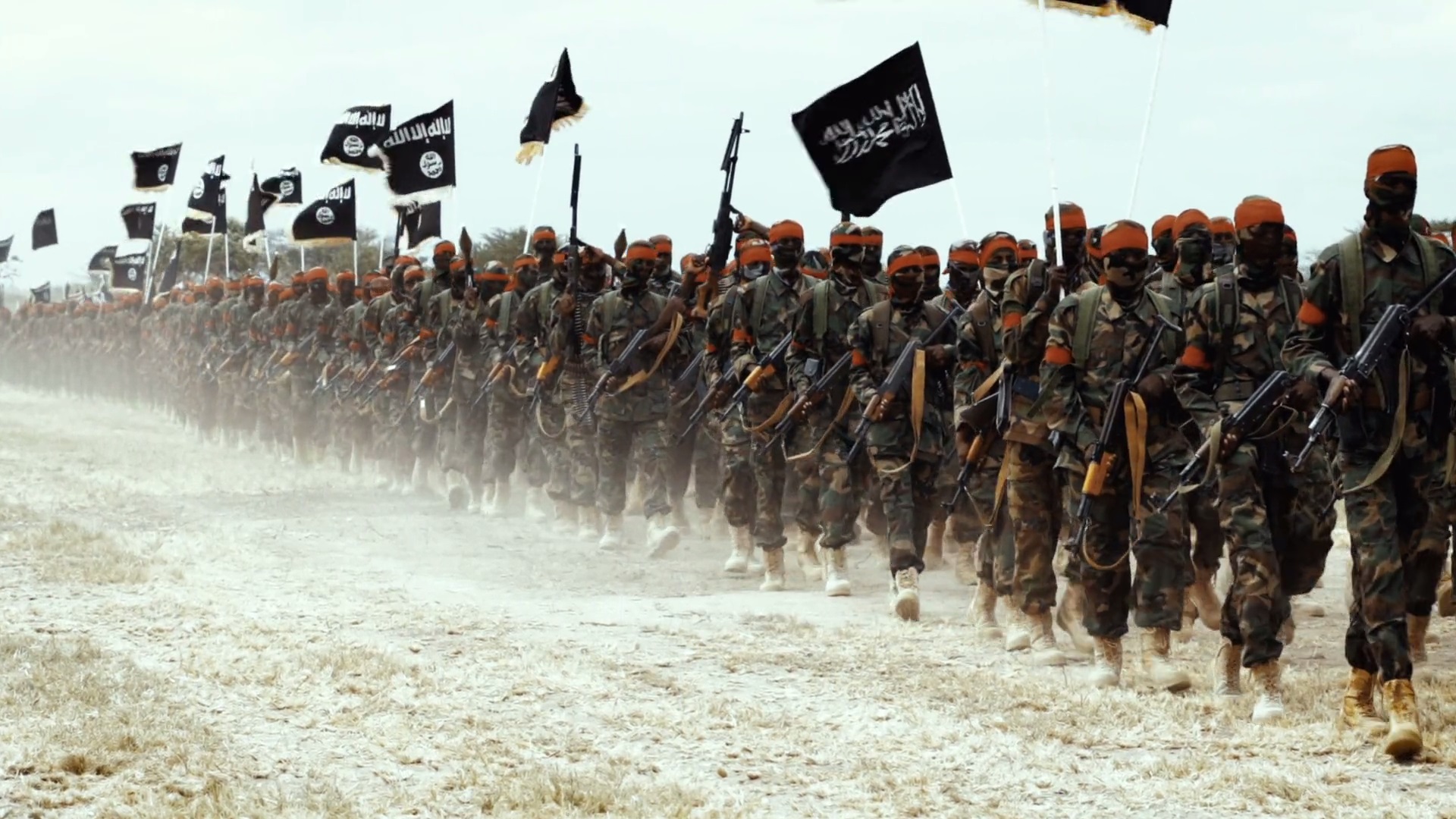
The Trump Administration has conducted 109 airstrikes in Somalia so far this year, continuing its record-breaking campaign against the country. According to the US Africa Command (AFRICOM), the latest strikes were carried out in the northeastern Puntland region. The operation targeted fighters linked to ISIS as well as militants from al-Shabaab.
Dave Decamp of Antiwar reports that AFRICOM carried out a series of airstrikes over 6 days. On November 26th, 27th, and 28th, airstrikes were launched in the Puntland region, 37 miles southeast of the Gulf Aden port city of Bossaso. Additional strikes were launched on December 1st, 2nd, and 3rd, which were all directed towards the ISIS-affiliated fighters in Somalia. The December 3rd launch was conducted separately against al-Shabaab militants near the village of Kobon, in the southern Jubaland region.
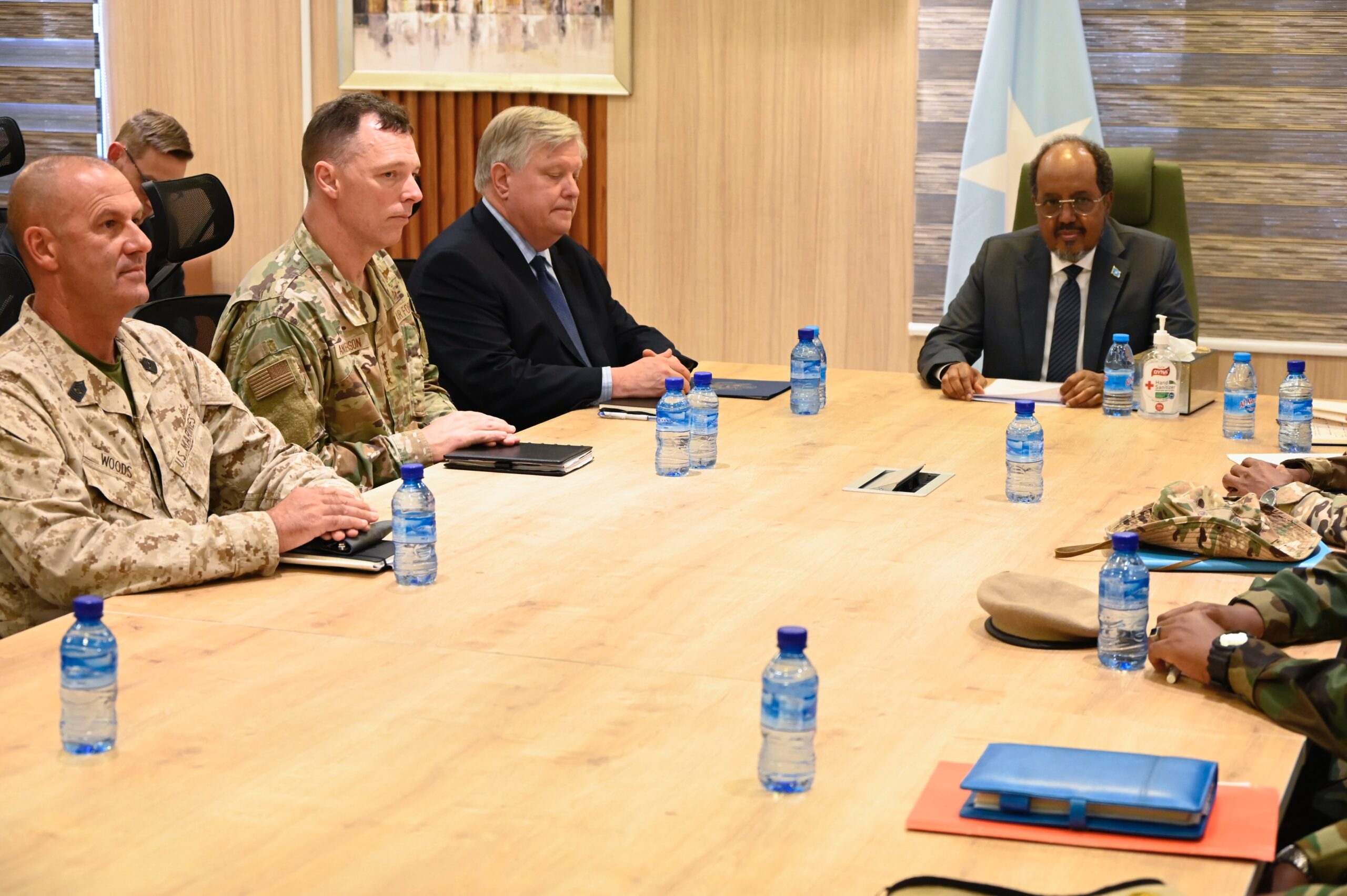
AFRICOM commander Gen. Dagvin Anderson’s recent visit to Somalia’s Puntland region included a call for “intensified” operations in the US-backed campaign against ISIS-affiliated fighters. The US has placed particular emphasis on supporting Puntland’s security because the region falls under the authority of the US-backed Federal Government in Mogadishu. DeCamp highlights a New York Times report noting a division within the State Department on how to address al-Shabaab, as even though the US has provided military assistance to Somalia for over 15 years, it’s still far from dismantling the militant group.
AFRICOM has confirmed that Gen. Anderson’s trip aimed to continue to apply pressure on ISIS, al-Shabaab, and other militants operating in Somalia.
As previously reported by WaL, media coverage of airstrikes in Somalia within the progression of this year has been none-existent. The US has been heavily involved in supporting the Federal Government in Mogadishu since Ethiopia’s US-supported intervention in 2006, and 2025 has now become the heaviest year of AFRICOM airstrikes in Somalia.
The US frames these operations as counterterrorism efforts carried out in coordination with local military forces, yet the absence of public explanation or long-term goals has not been addressed. The near-silence of mainstream media on this escalation reflects a troubling disconnect from the developments unfolding in Somalia.
By August WaL reported that there had already been more than 50 US airstrikes in Somalia in 2025, but nothing suggested it was degrading al-Shabaab in particular. The conflict with al-Shabaab has become the longest-running US engagements. US support efforts continue in partnership with the African Union Support and Stabilization Mission in Somalia (AUSSOM) and the Somalian military.
The combined forces use ground offenses and air support to retake territory like Bariire, along with other areas captured by al-Shabaab. Recently, al-Shabaab captured the town of Maxaas, an important settlement in central Somalia, by using car bombs and heavily armed fighters they overpowered the Somali military forces. Despite the intensification of airstrikes, AFRICOM continues to report no civilian casualties in its official statements.
A silent war
“Africa Command civilian harm assessment reports occasionally differ from other organizations,” stated AFRICOM.
A report from New American provides live statistics on US strikes in Somalia, including total strikes, civilian casualties, and overall deaths throughout the long-running conflict. According to the data, the number of strikes in 2025 is expected to reach 105, bringing the total number of US strikes in Somalia to 434 since the Bush Jr. Administration first initiated the campaign. The report estimates that between 33-135 civilians were killed in these operations, while the overall death toll ranges from 1,855 to 2,559.
The US may be condensing a reduced presence in Somalia while continuing to carry out air operations. As al-Shabaab and ISIS-affiliated fighters gain additional territory and power, the NATO-sponsored defense think tank in DC, the Atlantic Council, urged the US to maintain counterterrorism efforts by keeping the US embassy open, working with neighboring states, and improving intelligence information to prevent militant groups from becoming stronger. More broadly, the article explains the need for a clear and focused strategy to produce meaningful outcomes in Somalia’s conflict.
While the previous article calls for a sustained US presence in Somalia supported by a clear strategic framework, WaL has previously reported that neither the Combined Joint Force-Horn of Africa (CJTF-HOA) nor the later established AFRICOM has operated under a unified strategy throughout the 22-year conflict. Reporting from The Intercept indicates that the mission has lacked coherent long-term planning from the outset, undermining its effectiveness. According to internal findings cited in the leaked report on CJTF-HOA’s activities, the agencies involved “could not find documentation for a ‘whole of government’ US strategy that would compel the coordination of all [government] efforts in the region of the Horn,” highlighting a systemic absence of direction across the whole operation.
While the US maintains a supportive presence in Somalia in its campaign against militant groups, a very different conflict has emerged domestically between the Trump Administration and Somali immigrants. Following an attack on National Guard troops, Trump announced plans to halt immigration from what he describes as “third-world countries” and made inflammatory remarks referring to Somalis as “garbage”. His statements sparked widespread condemnation from Somali communities both in the US and abroad, including a response from Rep. Ilhan Omar (D – MN), a Somali-born immigrant, who condemned Trump’s comment.
“In every nation, there are some bad people, in every nation, but not all of them. Somalis, I do believe there are very good people, in generosity, helping others,” Dr. Abdulkadir Abdirahamn Adan, a dentist who set up a free ambulance service in Mogadishu, said to NPR regarding the President’s comments.
“The US has been engaged in Somalia for decades; they are an important bilateral partner, an important partner in helping the Somali federal government to stabilize its security, against the Islamist insurgency al-Shabab,” Soliman said.
Minneapolis and St. Paul, known as the Twin Cities, have long served as a strong cultural and political center for the Somali community, but the Trump administration’s intensified immigration crackdown has seen Immigration and Customs Enforcement (ICE) receive direction to focus specifically on the undocumented immigrants in the Twin Cities, leaving many residents on alert.
Most recently, the alleged fraud case involving the “Feeding Our Future” program has added further tension. The program has become the focus of a major federal investigation alleging that a network of individuals, many of them Somali immigrants, defrauded federal COVID-19 grants out of roughly $300 million . The scandal has intensified political pressure and appears to be fueling the Trump Administration’s broader operation against Somali immigrants in Minnesota.
“I don’t want them in our country, I’ll be honest with you,” Trump said in a Cabinet meeting, adding that they should “go back to where they came from” and “their country is no good for a reason”.
According to US census data, there are some 260,000 immigrants of Somali descent living in the US, and 84,000 in the Twin Cities area. The Somali diaspora in the US has grown from virtually zero before 1990 to an estimated 260,000 people of Somali descent by 2025, with the highest rates of immigration occurring during phases of US military involvement. WaL
We Humbly Ask For Your Support—Follow the link here to see all the ways, monetary and non-monetary.
PICTURED ABOVE: General Dagvin Anderson, AFRICOM commander, meeting Somali military leaders and President Hassan Sheikh in Mogadishu. PC: AFRICOM via X.