 0
0
 0
0

Consolidated data shows that Armenian economic activity grew 9.2% in 2025 off the back of a substantial change in geopolitical horizons. It was a year in which the government, led by the popular-unpopular Prime Minister Nikol Pashinyan, has taken bold and controversial actions to create what he recently described as “institutionalized peace” between his nation and its long-time nemesis Azerbaijan.
Last November, WaL reported that Russian wheat was imported into Armenia through Azerbaijan’s territory, something which had not been permitted since 1989. Just yesterday, this de-icing of regional trade ties continued as the PM assured Armenian businesses that the export of Armenian goods through Azerbaijan’s territory was now permitted.
“Our businesses should record that the railway export route through Azerbaijan is open,” Pashinyan told lawmakers in parliament, adding that the government received guarantees at the highest level to facilitate the movement.
Economic activity, as measured by the nation’s Statistical Committee sat at 5.7% in May, and continued to grow strongly throughout the rest of the year, while foreign trade, which had fallen 45% by June, managed to rebound strongly, finishing the year 29% lower than in 2024 as the peace process, which started in August, began to seriously improve economic forecasts. As for the economy by other metrics, the Finance Ministry projected growth of over 5% following robust quarter-by-quarter growth through the first 9 months of the year.
For the last 37 years, Armenia has been cut off from land trade through Azerbaijan to the east, which would include land routes through Iran, and shipping across the Caspian. For another 33 years, Armenia has been cut off from trade through Turkiye, to the southwest. Armenia has generally believed to have suffered acute shortages of essential goods, an energy crisis, unemployment, emigration, ecological damage, and widespread poverty as a result of these long-term blockades.
Prime Minister Pashinyan has attempted to forge a peace with these Turkish neighbors after over a century of ethnic hatreds for reasons that he has described as ones that necessitate leaving anger and historic land claims to rest. Having been part of the Soviet Union, and surrounded by hostile neighbors, Armenia has relied on Russia for many essential goods and services for decades. Pashinyan’s vision of “Modern Armenia” sees the country as a part of the EU, and with a much reduced reliance on Russia.
Armenian officials believed that military support from Russia had been chronically insufficient in the country’s last conflict over the disputed Nagorno-Karabakh region which lies between Armenia and Azerbaijan. At the same time, Pashinyan has sought to free his country’s reliance on Russia for fuel and petroleum products.
This decoupling was addressed in talks between Russian and Armenian officials during high level meetings in early February.
The Russian Foreign Ministry said in a statement that the two officials had “a frank and substantive exchange of views … on current issues in Russian-Armenian relations”.
“The risks of rapprochement with the West to the detriment of cooperation with traditional allies were explained,” it added.
Institutionalizing peace
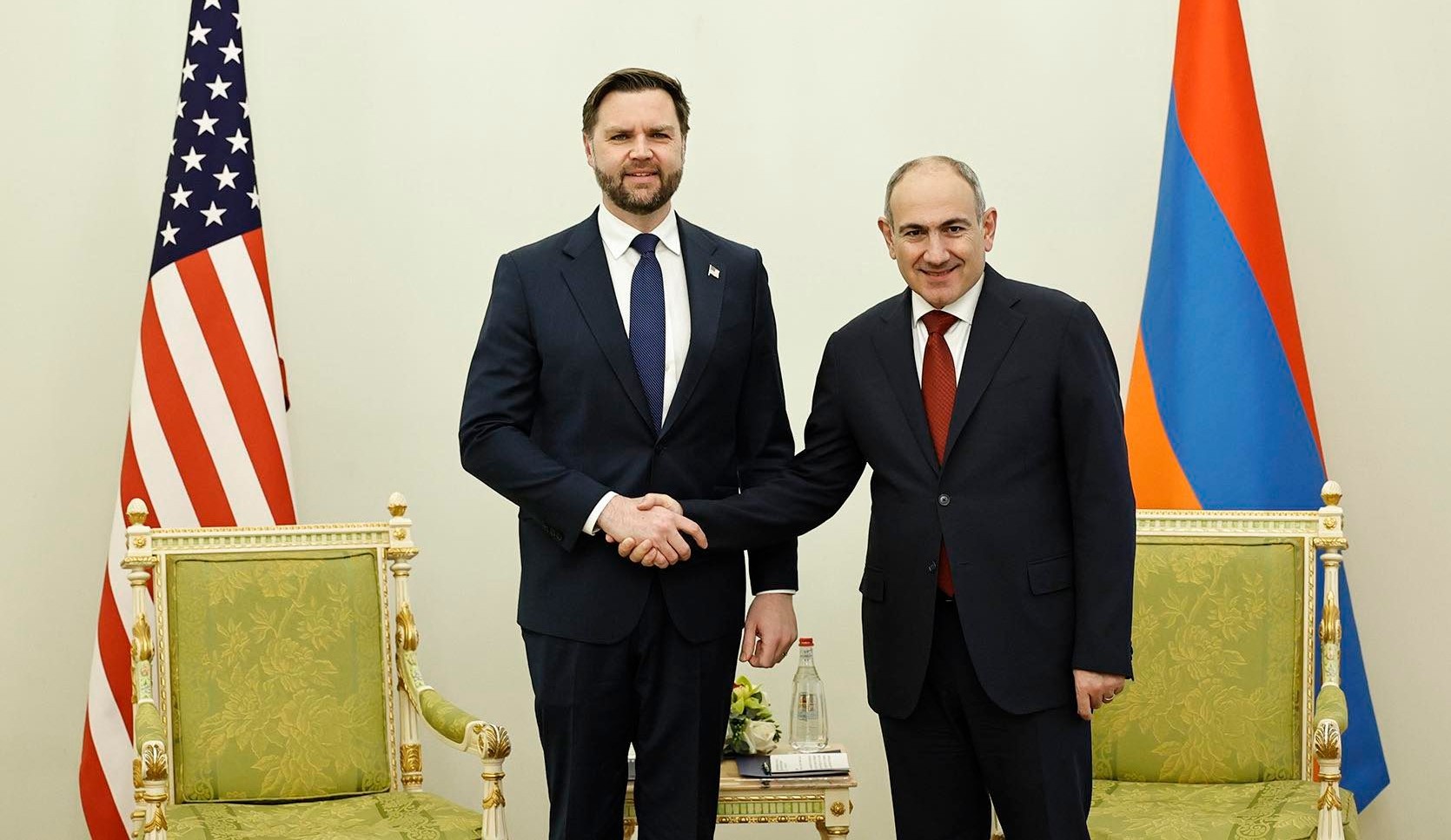
On February 10th, US Vice President JD Vance departed Armenia after becoming the highest ranking American authority to visit Armenia.
During his visit, several memoranda of understandings were signed, including one on the co-development of a national civilian nuclear power program that could see American-made, small modular nuclear reactors replace the current power unit at the country’s older Metsamor nuclear power plant.
Nuclear power is seen as an alternative to expensive Russian fuel imports, and would give more of the independence needed for the country to pursue its own economic and national interests. Not only that, but in 2022 Armenia signed a similar agreement for similar motivations with the Russian nuclear energy firm Rotasom, which never progressed beyond the signing ceremony.
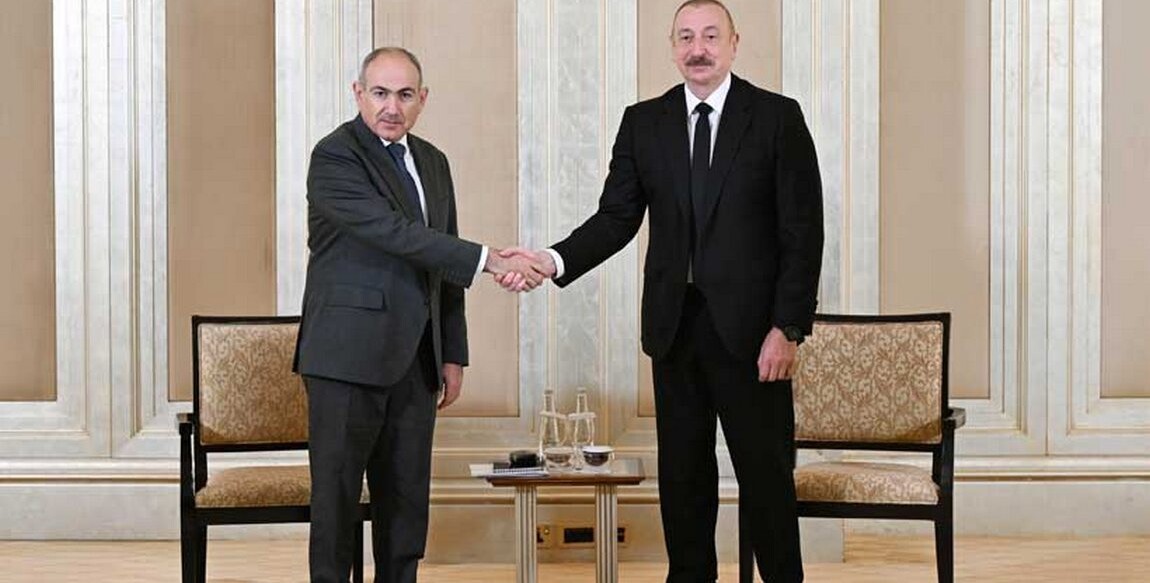
The stability that would afford such investment, which also includes hypothetical investments in data and AI technology as well as microchips, comes from the ending of one of the longest-running violent border disputes in history with Azerbaijan, an ending which Pashinyan recently declared to be permanent.
“Peace between Armenia and Azerbaijan has been established. What it needs now is institutionalization,” said the PM in one of his 60 minute press conferences that have become very common and something of a signature event. “There is no doubt that I, and my government, will move decisively and consistently along the path of institutionalizing peace. We have already steered our ship into a safe harbor. Now the task is to make the piers stronger, more stable, and, ultimately, properly built. Peace is already irreversible”.
The above statement was translated by Georgian news outlet JAM News. Some aren’t as sure. As WaL reported at length in a 2-part feature story last year, President Donald Trump was heavily involved in facilitating the peace negotiations. Using the White House as a forum and the heft of his nation as a guarantee, Trump’s foreign policy team negotiated away the largest outstanding dispute between Armenia and Azerbaijan involving a territory belonging to the latter embedded beyond the borders of the former. Called Nakhichevan, Azerbaijani strongman Ilham Aliyev had been aggressively demanding guardianship over a land corridor that would allow Azeris to pass unmolested through southern Armenia. Armenians of all political persuasions, even Pashinyan’s supporters, decried it as encroachment.
The Trump Administration agreed a framework on the corridor, called TRIPP, during Vance’s visit. American companies would hold a 74% stake in building the corridor, which would remain sovereign territory of Armenia, for 49 years. Azeris would be able to transit across the corridor, and after 49 years if relations had completely normalized, a 49% stake of the route would be ceded to Armenia. If issues remained, the US holds an option for an additional 50-year controlling stake.
Yet some analysts see in the proposed 99 years of stability only the next 2—namely the remainder of Trump’s term, and that a change in power could see a loss of interest in the project. It could in theory lose stability as soon as November.
“If the Republican Party keeps its majority in Congress, stability will continue,” political analyst Lilit Dallakyan told JAM. “For Armenia, this is a period of both great opportunities and serious challenges. We will see what happens in the second half of the year. The most active developments are expected precisely during that period”. WaL
We Humbly Ask For Your Support—Follow the link here to see all the ways, monetary and non-monetary.
PICTURED: Vice President JD Vance and Nikol Pashinyan shake hands upon the former’s arrival in Yerevan. PC press handout.