 0
0
 0
0

On October 3rd, the US carried out its fourth strike on a Venezuelan vessel off the country’s coast, making it the fourth attack in the continuous campaign against narcoterrorism. Like the previous attacks, the boat was alleged to be involved in drug smuggling through Caribbean waters to the US. The Trump Administration has justified these four strikes under Title 10 as military defense efforts without giving substantial evidence to prove those onboard were traffickers.
The most recent strike resulted in the death of four individuals on board, which has raised questions about the true nature of the mission and the intentions of the targeted boats.
Drug trafficking encounters are typically handled by the US Coast Guard and US maritime law enforcement, not the the US military. Reuters reviewed a disclosed notification from the Pentagon to Congress, which described the US as part of “a non-international conflict” with drug smugglers. The document shares the administration’s legal actions for attacking suspected drug traffickers. This has not been received strongly among military law lawyers, who insist on the need for more evidence before ordering targeted a killing on suspected drug terrorists.
“As we have said many times, the President acted in line with the law of armed conflict to protect our country from those trying to bring deadly poison to our shores,” said Anna Kelly, a spokesperson from the White House. “And he is delivering on this promise to take on the cartels and eliminate these national security from murdering more Americans”.
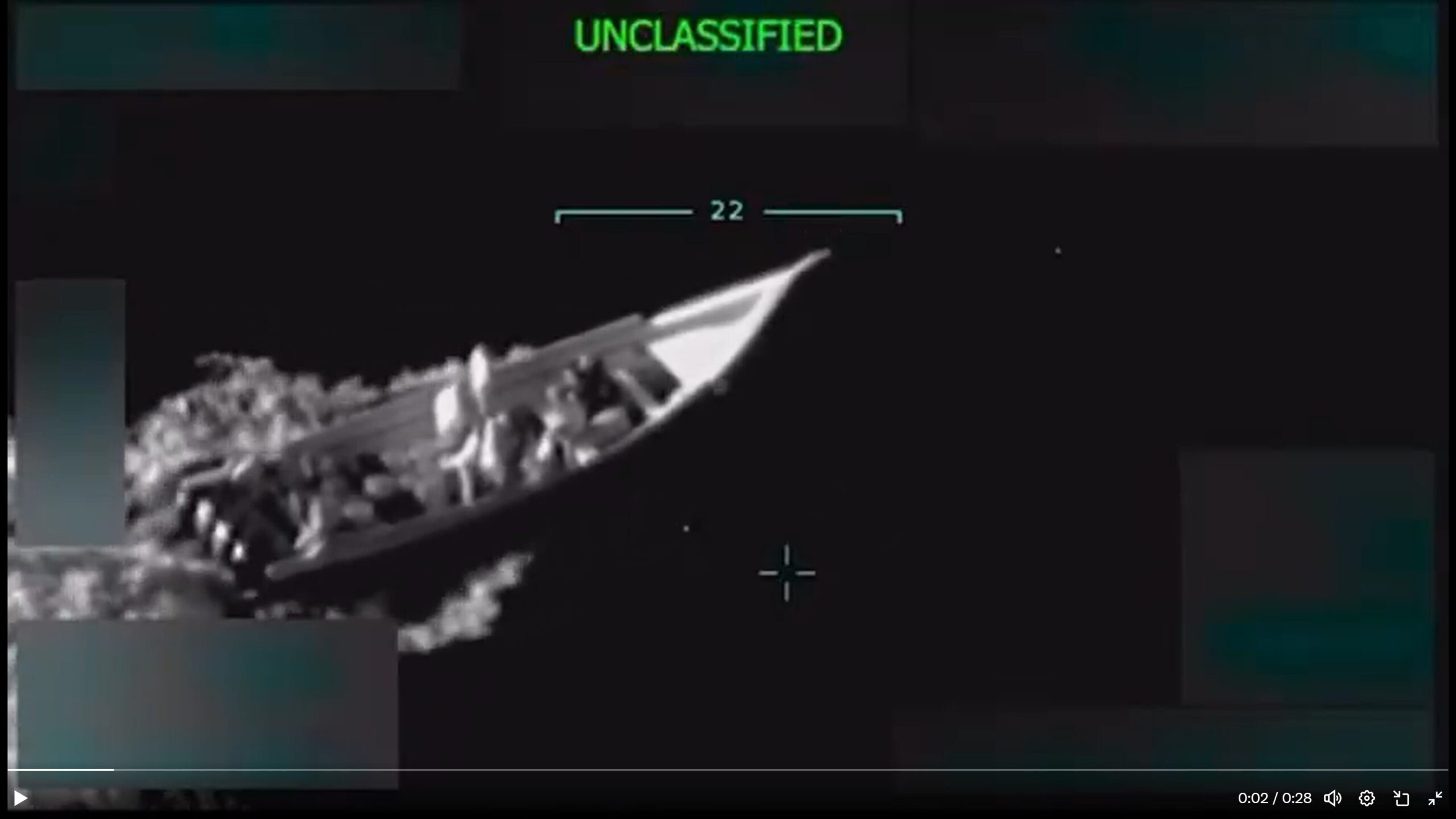
This last attack on the Venezuelan boat, in total, marks 21 killings of presumed drug smugglers by the US. In response, both Democratic and Republican parties have insisted that Trump provide sustainable evidence if he intends to keep performing these attacks. Pete Hegseth, the US Secretary of War, and President Trump shared a video on social media of an “unclassified” boat being attacked.
“Our intelligence, without a doubt, confirmed that this vessel was trafficking narcotics, the people onboard were narco-terrorists, and they were operating on a known narco-trafficking transit route,” Heseth posted on X. “These strikes will continue until the attacks on the American people are over!!!”.
“A boatload with enough drugs to kill 25 TO 50 THOUSAND PEOPLE was stopped, early this morning, off the Coast of Venezuela, from entering American territory,” said Trump on social media in response to the fourth attack.
Seeking egime change
WaL reported on the initial attack against the unidentified boat on the coast of Venezuela, killing 11 crew members. As Trump communicated on his social media, calling the members “narcoterrorists” coming to the US by traveling through the Caribbean Islands. Nicolas Maduro, president of Venezuela, has been accused of being the leader of the “narcoterrorist” gang called Tren de Aragua, and these past four attacks have been stated to be on that gang’s membership. There has been no further in-depth evidence provided to demonstrate the 11 crew members were, in fact, engaged as part of narcoterrorism, or what narcoterrorism means.
“Thus, designation of Tren de Aragua and a number of other Latin American criminal entities as FTOs in February foreshadowed this week’s attacks in the Caribbean, despite providing no actual legal authority for it,” said Brian Finucane, former legal advisor to the US State Dept, mentioned in a legal review.
Additionally, WaL examined potential alternative reason behind the consistent attacks on Venezuelan boats. According to the New York Times, the attacks have a bigger goal than just a war against illegal drugs, but to implement regime change against Maduro. The attempt to effect regime change is not a new concept against South American countries; in the past, the Trump and Biden administrations have acted vigorously to achieve this goal. While certain government officials have taken a strong stance against Maduro, like Secretary of State Marco Rubio during his tenure as a Florida senator, stating Maduro’s “days are numbered”.
“We’re not going to have a cartel operating or masquerading as a government, operating in our own hemispheres,” stated Rubio on Fox News and confirming Maduro’s perception from the US government as “a fugitive of American Justice”.
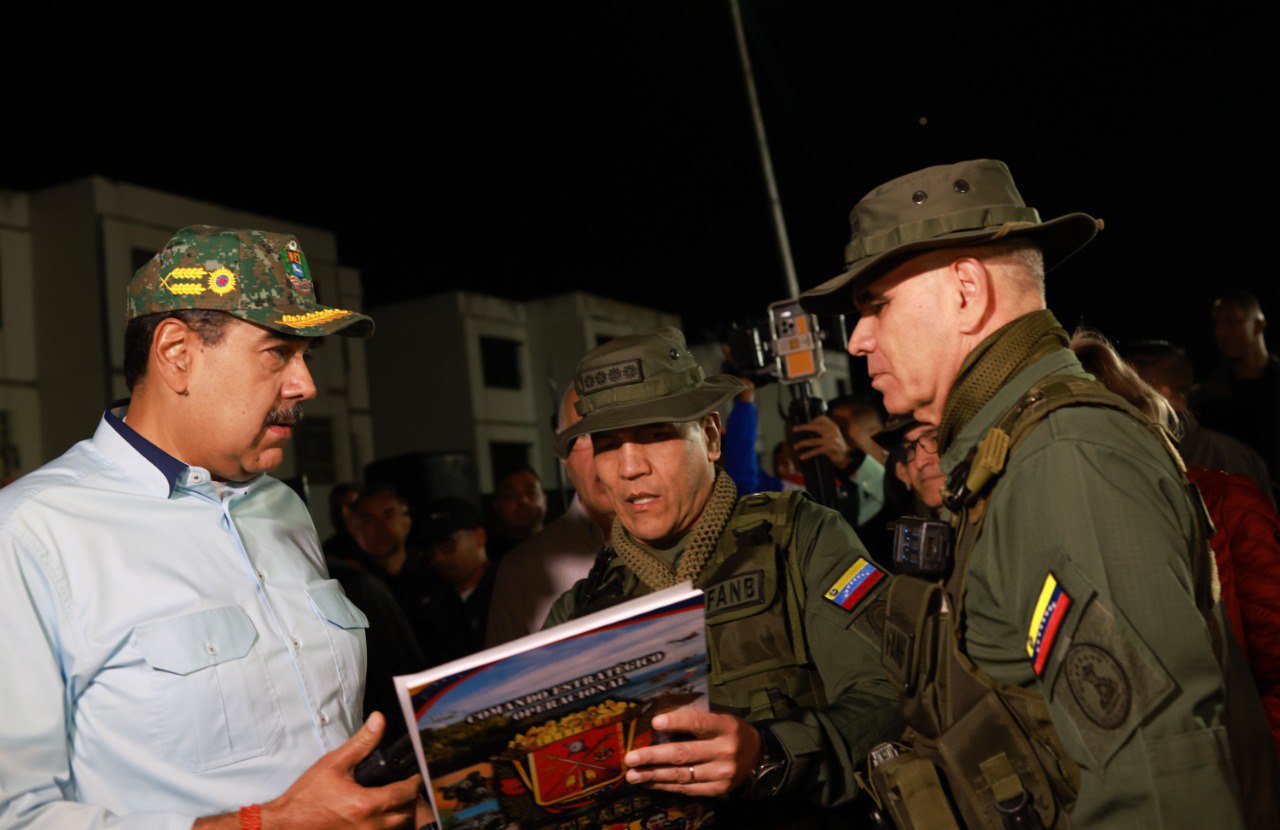
Venezuela seems well aware of this, and recently mobilized military and militia divisions through its the Independence 200 exercises—called a nationwide “civil protection and preparation of the people” against Trump’s attack on the drug cartels. Maduro allies, Mayor Carmen Meléndez of Caracas and Vice-President Delcy Rodríguez, object to the military force of regime change by proclaiming “we will never hand over our homeland”.
Phil Gunson, a Caracas analyst for International Crisis Group, recognizes that Trump’s bombing of Iran’s nuclear sites impacted the Venezuelan leaders. Maduro, in a recent letter, reached out to Trump, calling to “promote peace through constructive dialogue and mutual understanding”. On Maduro’s opposing side, Politicians María Corina Machado and Edmundo González supported the possible goal of regime change.
“I totally support his strategy… I’m in favor of the US dismantling this criminal structure,” Machado said to the Sunday Times.
The US, along with 50-some other countries, have refused to recognize Maduro as the legitimate winner of the 2019 and 2024 elections held in Venezuela. The US Department of State has identified Maduro as a leader of Cartel of the Suns, a Venezuelan drug trafficking operation that nobody seems to be able to proof exists. A bounty reward was recently placed upon Maduro by the US of $15 million, then it was increased to $25 million. As of August 7th, the reward sits at a staggering $50 million.
On Monday, October 6th, Venezuela warned of a possible planned attack on the US Embassy complex in Caracas using explosives, and dubbed it a “false flag,” the kind of attack that would give the US a pretense for striking directly into Venezuela. The National Assembly, controlled by Maduro supporters however, claimed the threats threat came from the followers of Maduro in response to the repeated attacks on the Venezuelan boats and the military deployment in the Caribbean. Since the 2019 election in Venezuela, the embassy in Caracas has been closed since the US cut off diplomatic connections to Maduro; its operation only includes facilities and security maintenance.
“Through a false-flag operation prepared by extremist sectors of the local right, there are attempts to plant lethal explosives in the US Embassy in Caracas,” said Mayor Rodríguez. WaL
We Humbly Ask For Your Support—Follow the link here to see all the ways, monetary and non-monetary.
PICTURED ABOVE: The third alleged narcoterrorism boat before it was destroyed by US air power. PC: Screengrab.