 0
0
 0
0

The materials and commodities sector of the economy has been abuzz with talk of shortages in finished industrial metals. This includes copper, zinc, nickel, silver, and just recently—and for the first time since 2021—tin (Sn).
Each plays a role in various industries predicted for growth. Nickel is key for making battery anodes, while silver is the most electrically-conductive metal known, and has been used substantially in solar panel manufacturing and will be used in Samsung’s soon-to-debut solid-state batteries for EVs and eventually devices too. Copper will be needed for wiring some 1 billion people up to electricity grids in developing countries, as well as massive replacements across already developed countries in addition to demand for solar panels and data centers, each one of which is estimated to require 5,000 tons of copper.
Copper is predicted to be in a supply deficit for years to come, WaL reported, and JP Morgan estimates that there will need to be $150 billion in copper-related investments all throughout the supply chain to correct the deficit just according to current demand, without accounting for future predicted expansion.
Even aluminum, a more common metal than these other three, is predicted to be entering a supply deficit. Tin is a recent addition, and like all of the other metals, has seen stagnated interest, and even neglect, among Western investors. 50% of global tin concentrate is used in solder—an obviously widespread demand source that is expected to grow with the manufacturing of technology applications and products including the coveted semiconductors.
Since the beginning of the year, tin has seen the sharpest price increase among these non-ferrous metals, rising 70% year-on-year, to $50,000 per tonne. In fact, over a 5-year period, tin has been the best-performing base metal.
“There is no doubt that the demand for data‑based technologies fuels the recent rise in tin prices,” says Simon Lacoume, sectorial economist for the credit risk management group Coface. “We expect average prices to hover around $45,000 per tonne (+40% YoY) over the first half of the year”.
According to data from 2024 from the International Tin Association, tin is used as much as lithium for EVs, twice as much as silver in renewables and technological hardware, and more than twice as much in robotics as any other non-ferrous metal, except copper. In fact, across all these energy-transition and 21st century technologies, tin is needed more overall than lithium, substantially more than cobalt, and more than twice as much as silver and nickel.
“A doubling from current levels (to around $100,000 per tonne) remains possible in extreme scenarios driven by prolonged supply disruptions and speculative fervor, though most consensus views favor more moderate upside supported by structural fundamentals,” wrote Ben McGregor, author of the Weekly Roundup at the Canadian Mining Report.
Production of tin
As it has happened in other mining sectors, most of the world’s tin production and finishing is now confined to a few operations in a few countries, led inevitably by China. Other prolific mining jurisdictions include Indonesia, Peru, Brazil, and Dem. Rep. of the Congo.
Recent entrepreneurial endeavors have put two of the world’s largest-known tin mines into production in Tasmania and Namibia as well, which will help prevent the deficit from intensifying in the short term.
Most of the world’s 370,000 or so tonnes of refined tin is produced in China by Yunnan Tin, while the second largest producer is currently Minsur, in Peru. Three other major tin producers are found in China. PT Timah, an Indonesian miner and smelter, was also major producer but has suffered substantial recent setbacks.
Believed to contain the second-largest tin reserves worldwide, recent sustained civil conflict in Myanmar has all but eliminated that source from global access. The Man Waw mining complex in the country’s Wa state has been out of action since June 2023, and in order to restart operations to nameplate capacity, significant dewatering of the underground mine’s lower levels needs to be carried out.
The ITA reported last week that Wa State Industrial and Mineral Resources Management Bureau (IMRB) released a document formalizing the process for sharing pumping costs across 11 mine portals. Operators would receive a 5% royalty on sold concentrate to cover the dewatering which is split across a number of firms currently preparing to restart the giant mining complex.
ITA speculated that exports could reach as much as 20,000 tonnes if current prices remain above 350,000 Chinese RMB per tonne, and galvanize the state to prioritize the deeper, higher grade mine shafts. Almost all of the tin produced in Myanmar is exported to China for finishing.
Instability could affect such a restart, as it could in DRC, where two the tin mine in North Kivu called Bisie can and has been disrupted by the conflicts between armed groups like M23. Indonesia recently experienced a dearth in interest in new mining projects at the same time that more stringent environmental standards and new regulations forbidding grey and black market mining came into effect.
All this has investors and speculators believing that tin production growth won’t keep up with the expected 3.5% increase in demand driven by growth in technological industries. Tin will, therefore, enter a supply deficit for the first time since 2021.
New projects are needed to meet this deficit, and as the story in nickel and copper shows, it’s not easy to find new sources, and even in wealthy countries they can be hard to put into production on rapid timelines. There are very few explorers and developers of new tin deposits around the world, and as existing reserves are used up, that supply will have to be found, and will presumably trade at a premium.
Largest mines in the world
In Peru, Minsur operates San Rafael, the world’s richest currently active tin mine, with reserves estimated at 14 million tonnes grading 5% Sn for a total of 700,000 metric tonnes of tin. Almost 24,000 tonnes of tin were produced in 2024. Minsur also operated, until 2024, the Pitinga Mine complex in Brazil, with reserves of 270,000 tonnes and production per annum of around 6,800.
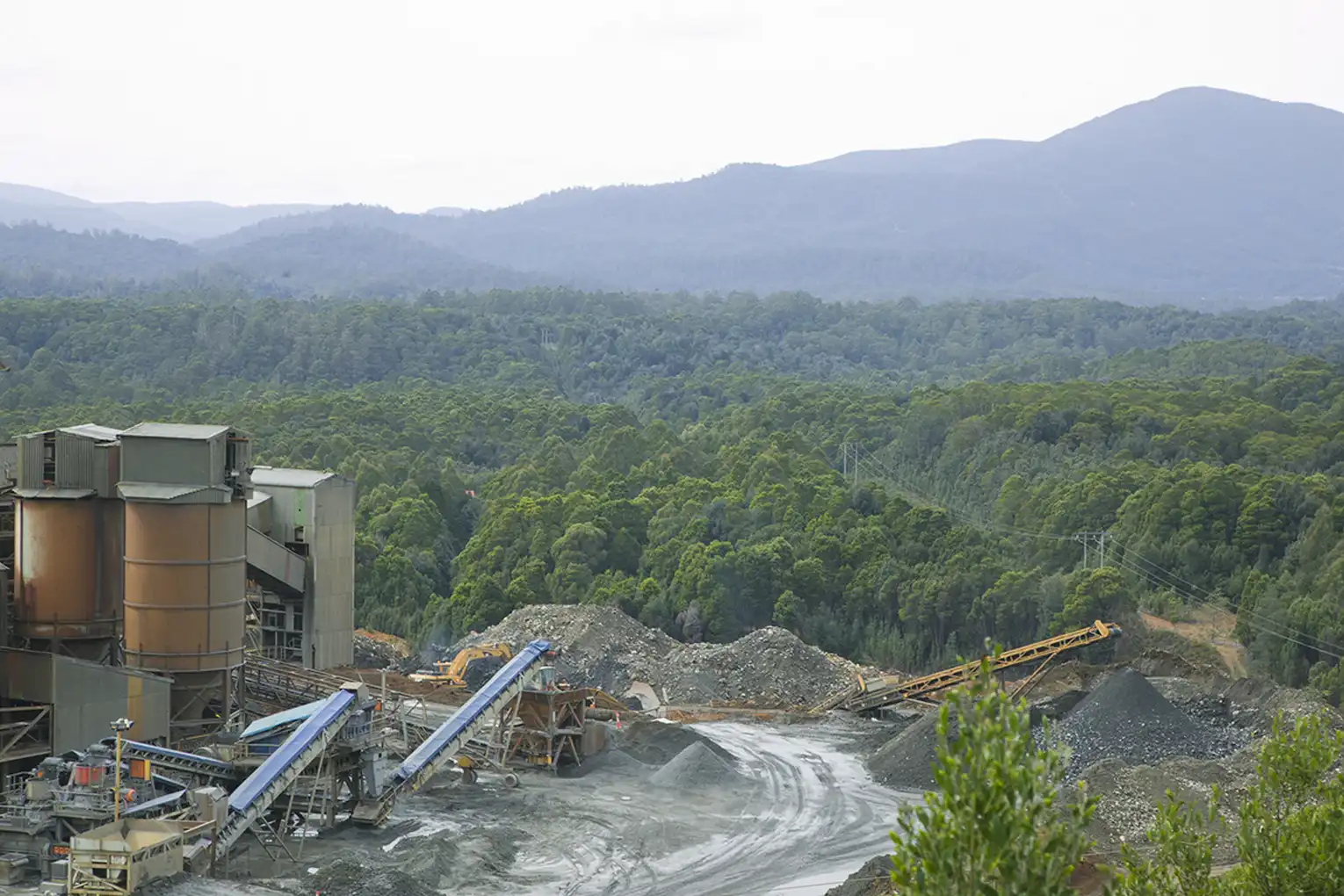
In Tasmania, the Renison Bell Mine, recently estimated to contain 18.5 million tonnes grading 1.57% Sn for a total of 290,000 tonnes of tin, began producing again in 2008 after it was bought by the Australian company Metals X, Australia’s largest tin producer, on a 50/50 investment split with Yunnan Tin.
The Malaysian Smelting Corporation is the world’s 5th largest tin-producing company, but their total mineral reserves on the Hulu Perak Project were logged in a 2024 report to shareholders at just 24,739 tonnes of tin.
95,539 tonnes of tin are believed to be contained in the Uis hard-rock tin mine located in the Erongo region of Namibia, owned now by Andrada Mining. It’s the world’s largest tin resource that’s recently come online, having entered phase 1 production in 2023, and nearly completed a phase 2 expansion to 1,500 tons of material per day.
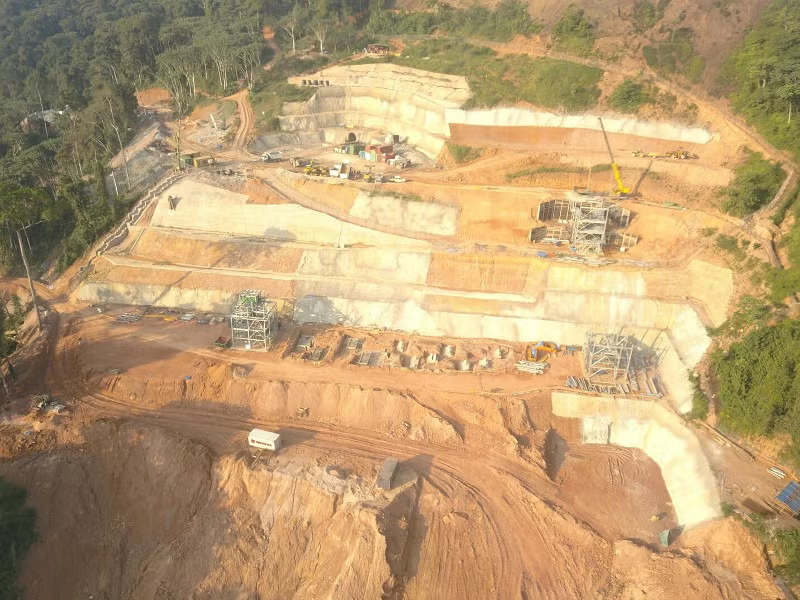
The Bisie Tin project in DRC is currently producing close to 17,000 tonnes of tin a year from total reserves of 167,000 tonnes. Operated by Alphamin Resources in collaboration with the national government, it produces around 7% of the world’s tin.
Bisie and Uis are overshadowed by the Australian miner Atlantic Tin and its Achmmach Project in Morocco, with a total mineral resource of 39.1 million tonnes at 0.55% Sn for 213,300 tonnes contained tin as of November 2024. Another Chinese tin miner Xingye Silver and Tin owns 80% of Atlantic Tin after a deal struck in 2025, after which the company was publicly delisted.
Cornish Tin holds 100% rights to the Great Wheal Vor project in Cornwall, UK, once described as being some of the highest-grade tin mines ever mined. Shuttered since the 1920s, the potential restart isn’t slated for another 5 years at least, and though total reserves haven’t been estimated properly, drilling grades average 1.6%, which would indeed make them among the highest in the world.
Another substantial jurisdiction is the Bolivian Tin Belt, but at the moment there are no Tier 1 assets producing in the country, and indeed all the mines operating along its length produce only as much as the Bisie Mine. An exploration-stage company Eloro Resources has a maiden resource estimate on that their land package showing around 133,000 tonnes of tin juxtaposed with a high-grade polymetallic Ag-Zn-Pb project.
The Mount Pleasant deposit in New Brunswick is probably the largest undeveloped tin source worldwide, with over 450,000 metric tonnes tin measured and indicated, and another 100,000 inferred. Bought by Adex Mining in 1995, progress towards development was halted in 2015. WaL
We Humbly Ask For Your Support—Follow the link here to see all the ways, monetary and non-monetary.
PICTURED ABOVE: The Renison Bell tin mine set in the forests of Tasmania. PC: Metals X.