 0
0
 0
0

As WaL reported on January 23rd, President Trump’s obsession with critical minerals spun-off into an obsession with Greenland. Understanding that obsession is a subjective term, it nevertheless captures the sense of head-scratching among his base, for whom a desire to own or control Greenland was never part of Trump’s 2024 Presidential campaign.
As Trump looked frantically around the Western Hemisphere for rare earth mineral deposits, Greenland came into his focus, although mining industry experts have rejected the notion and argued instead that the issue at stake on the Danish-controlled island is entirely strategic.
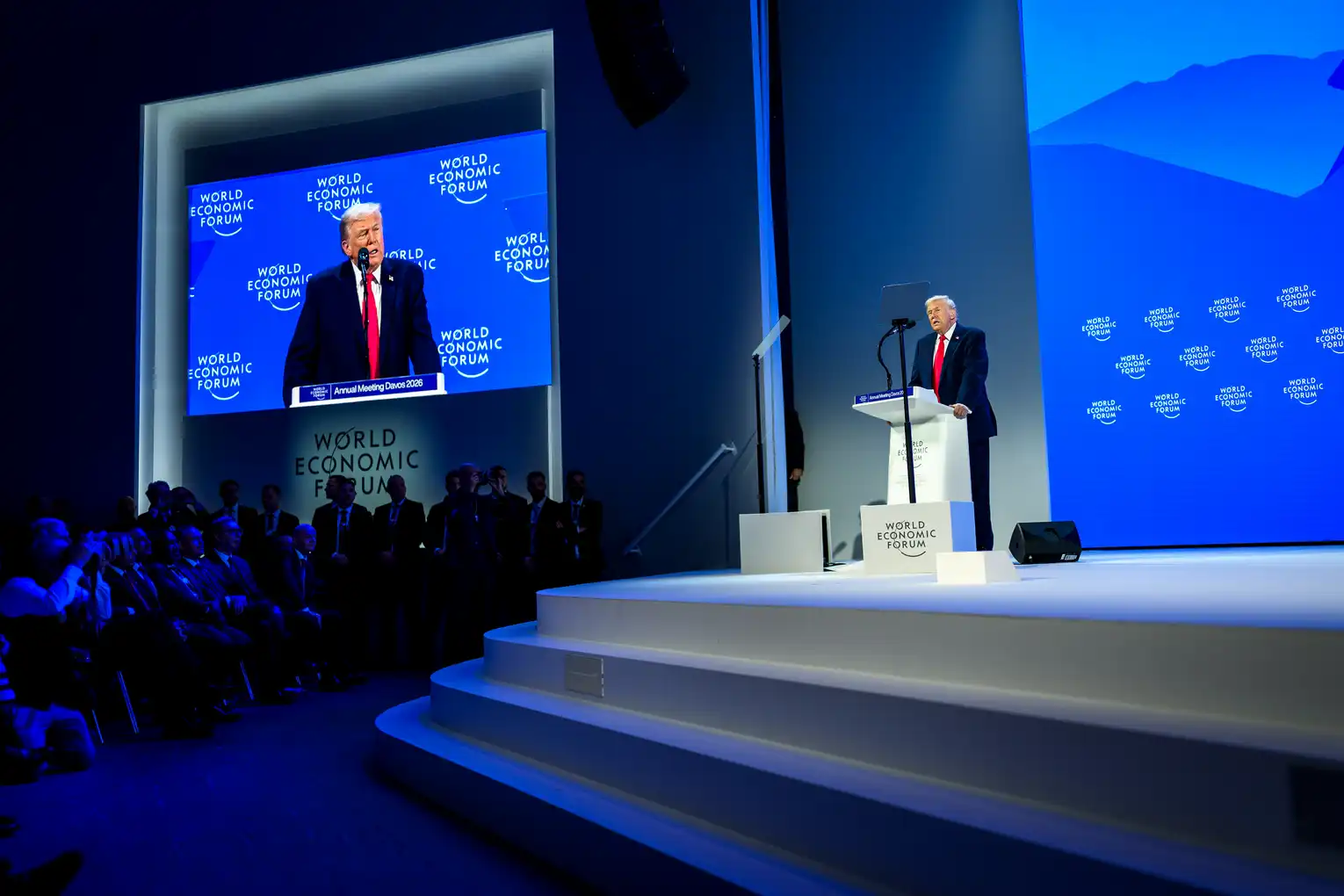
At a meeting of the World Economic Forum in Davos, Switzerland, President Trump and his team had apparently-successful discussions with NATO’s General Secretary Mark Rutte, along with Danish authorities, over his interest in Greenland. Not everything in the deal framework announced by Trump has made it into the media, but reports claim it involves both security policy and mining interests.
Among the national security interests are an Arctic base for Trump’s proposed Golden Dome missile defense system, and more conventional military bases. Mining interests are there too, with one particular standout being the right of first refusal for any international mining projects.
Mining interests on the island are few. As WaL reported, infrastructure, local talent, and favorable topography are all practically non-existent. Add in underlying difficulties in metallurgical methods and an unfavorable mining climate among local politicians and residents, and it’s no surprise the island’s largest mining operation went bankrupt.
The reason why the right of first refusal is a standout of the deal is that one of the largest Greenland rare earth element deposits, the Kvanefjeld project, was under development by an Australian company with Chinese backers. The Kvanefjeld project was supposed to be a big moment in rare earth production worldwide and for mining on Greenland. The company, Energy Transition Metals (ETM), claims that the net-present value of extraction at Kvanefjeld would be so high as to generation $22 billion just in mining royalties, taxes, and other benefits.
In 2016, according to company documents, Le Shan Shenghe Rare Earth Company Limited took a 6.5% stake in ETM as part of an agreement to combine technical expertise and intention “with a view to jointly develop the [Kvanefjeld project] to become a cornerstone supplier in the global rare earth industry”.
Le Shan Shenghe is a subsidiary of Shenghe Resources, a partly-state-owned materials holding company with $47 billion in market cap on the SSE (Shanghai Stock Exchange), and it was granted a “top-up” right that would allow at any point for it to ensure its ownership remained at 6.5%. By spring of 2017, Shenghe undertook some optimization and advisory work in the early stages of the agreement.
Out of left field
Is it as simple as Trump saw a relatively-small Chinese company looking to get a first-mover advantage in Greenland, and pulled out all the stops to prevent it from happening? Given that many, including POLITICO, now describe Trump’s Greenland saga as something that left America’s allies rattled, and created one of the largest events of tension between both sides of the Atlantic since the NATO alliance was formed, and given that control of Greenland was something that neither Trump campaigned on nor something his party or base was calling for, there may be more room for a left-field explanation than meets the eye.
At the same time, according to the same ETM statement, as the Kvanefjeld project met political headwinds during the application process for a mining exploitation license from the Government of Greenland, “Shenghe’s technical involvement ceased along with all optimization and advisory work”. While Shenghe still holds the 6.5% stake in ETM, it left its partner on the project high and dry while the Australian firm struggled to convince Greenland’s authorities that mining rare earths at Kvanefjeld wouldn’t release undue amounts naturally-occurring radioactive material from uranium deposits located on the greenfield site.
In 2021 the Inuit Ataqatigiit (IA) party was elected to form a government of the self-administered island of 55,000 people, with a platform of reinstating a zero-tolerance policy for uranium extraction that had previously been lifted by an earlier administration. According to ETM, the government then enacted a law to place an upper limit of 100 parts per-million uranium on mining projects, even where uranium is a by-product or is not recovered, something which ETM considered arbitrary and politically-motivated.
In 2023, ETM entered into legal proceedings against the government on that very basis, arguing that having previously given ETM’s local and wholly-owned subsidiary written notice of its right to an exploitation license at Kvanefjeld, the government and its representatives stated that it actually had no such right, but only after the new law was passed.
With the future of the Kvanefjeld project and its minerals mired in a legal battle, and the Chinese investors nowhere to be seen, it seems a shadow of a shadow of Beijing’s specter, and far too inconclusive to spook Washington into thinking that the Chinese could extend their global rare earth mineral dominance as far away as Greenland.
Perhaps more likely, it was fear that the Chinese might return that saw Trump threaten Europe with a trade war at least, and a military invasion at worst, over ownership of the island.
In the POLITICO report, US State Department cables revealed exclusively to the outlet outline how the Chinese government was at the time of the WEF meeting “eager” to take advantage of the rupture in relations over Greenland, seeing the chance to “amplify trans-Atlantic frictions,” wrote a US diplomat, in summary of Chinese thinking at the time. In this sense, a trade war over Greenland in the name of kicking a 6.5% stake in the mothballed Kvanefjeld project off the island could have proved a far more lucrative ROI for Beijing. WaL
We Humbly Ask For Your Support—Follow the link here to see all the ways, monetary and non-monetary.
PICTURED ABOVE: President Trump delivers his speech at the World Economic Forum at Davos. PC: White House, via Flickr.