 0
0
 0
0

Last July, Foreign Policy described President Trump as being “obsessed” with critical minerals—a byword for a host of commodities as common as copper and as rare as neodymium—which in previous decades were supplied without issue from China and other countries.
Largely during Trump’s time in office, relations with China have been degraded so substantially that it’s brought the People’s Republic to cutoff the US from supply of these minerals. The Trump Administration is doing as much as it has time to do, seemingly, to find additional supply anywhere it can.
This, some analysts suggest, is the meaning behind Trump’s latest, and by far most surprising obsession, taking control of the island of Greenland.
Even after clear-the-air talks between the State Department and European officials, Trump seems to be doubling down on his mafia rhetoric of make a deal or else, demanding Denmark either sell the US control of Greenland or the US will perhaps occupy it in some way. Though dressed up in national security concerns, the association with mineral rights is impossible to ignore, not least because the American company currently mining some of these so-called critical minerals, Critical Metals Corporation, is backed by a company that used to be run by Trump’s current Commerce Secretary Howard Lutnik, the New York Times reported.
On the other hand, one expert on Greenland’s prospective position as a mining giant in-waiting is that the demands made of Greenland are all security posturing, and that it’s so uneconomical to operate a mine on Greenland that no sensible mind would seek to develop mineral resources there on the tight timelines of a 4-year presidential term.
“The fixation on Greenland has always been more about geopolitical posturing — a military-strategic interest and stock-promotion narrative — than a realistic supply solution for the tech sector,” Tracy Hughes, founder and executive director of the Critical Minerals Institute, told AP. “The hype far outstrips the hard science and economics behind these critical minerals”.
Road to nowhere
As WaL reported previously, the Trump Administration has directed federal departments to take large multi-million dollar equity positions in several critical minerals companies, and that exploration for these and another class of minerals called “rare earths,” has been extremely lacking in the last few decades, in part because of stringent environmental restrictions and in part because capital was flowing into other sectors of the economy like tech and AI.
Greenland may have some of these minerals present, but there are fewer parts of the inhabited world more poorly-suited to development. As of 2025, Greenland had less than 100 miles of paved roads, despite being the world’s largest island. There are just 56,000 permanent inhabitants as the climate renders many areas of the island unfit for easy habitation, and because most of the population is concentrated on the southern coast, no electricity reaches the vast majority of the territory.
One of the largest miners to operate domestically, Nunaminerals, went bankrupt in 2015 after 17 years of operation.
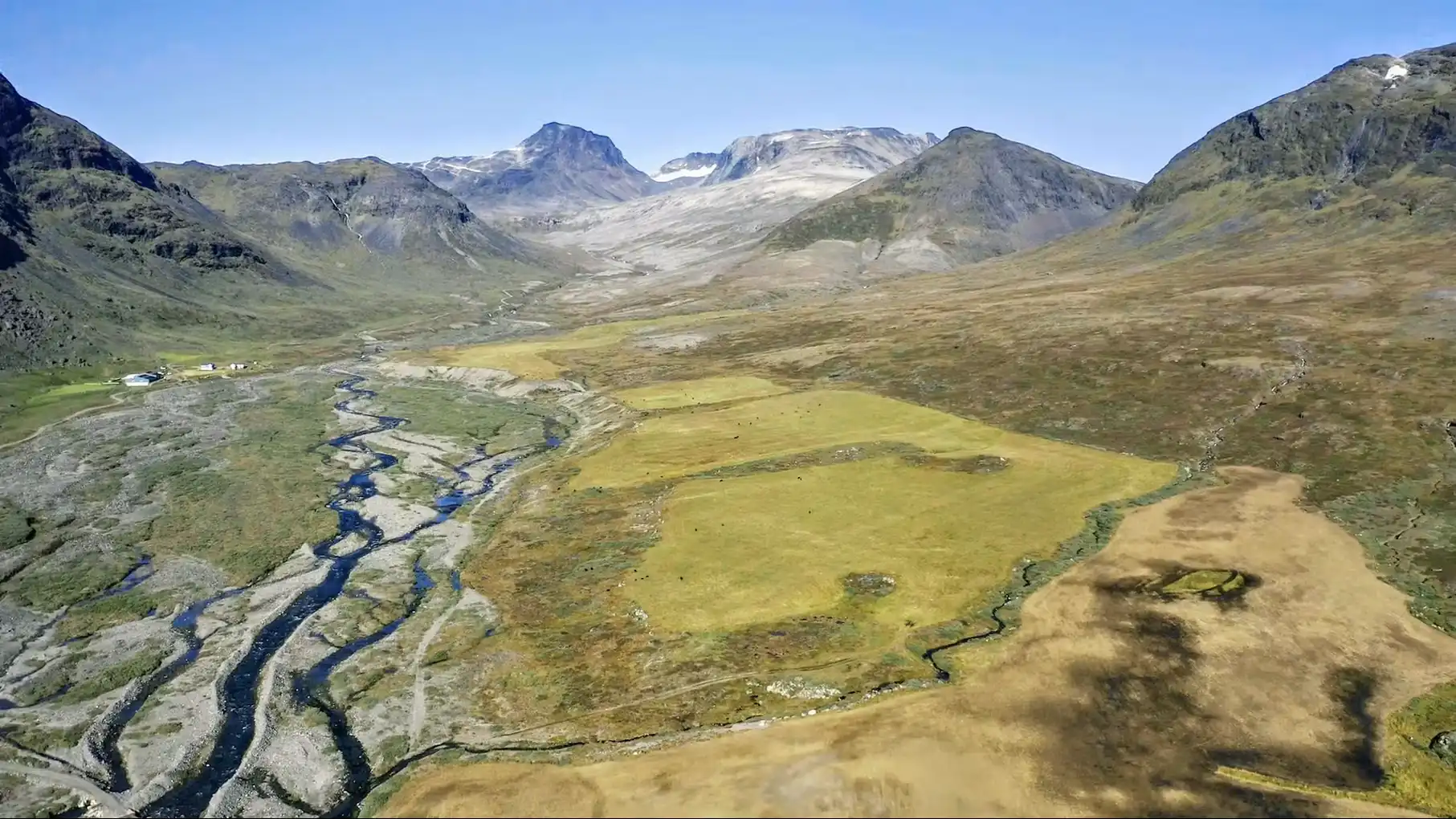
Additionally, domestic news reported last year, it’s not only the climate that is hostile to mining, but the people. In 2021, the public voted down the proposal to give permission to an Australian company with Chinese investors, Energy Transition Minerals, to build a mine in south Greenland. The company had been prospecting the area of Kvanefjeldet, said to be a potential Tier 1, world class rare earths deposit, since 2007, but the presence of radioactive uranium there caused the public to sour on the project, which now hold a 71% disapproval rating for a potential mining development.
Greenlandic law, says Jesper Willaing Zeuthen, associate professor at Aalborg University and researcher in Greenland, states that even if a company or individual were to buy a large package of land in Greenland, the minerals therebeneath belong to the state. Therefore, said Zeuthen, it would be easier for companies if the US owned the whole island so it could throw the law out.
But even if it could, mining is a high-risk, expensive business, and even if the US could acquire Greenland, and even if it could throw the law out and deal with the local political repercussions, there would still be the long, slow process of exploration, development, environmental permitting, and mine construction on an island with virtually no existing infrastructure to take advantage of. Most of the mineral claims are located in fjord-like ecosystems near water, which as well as being major ecotourist draws, represent extremely difficult environments to build on or into.
Lastly, there’s the question of metallurgical recovery of the critical minerals and rare earths, a complex, multi-step, sometimes time-consuming, often-times polluting process of extracting specific minerals from ore bodies, and AP reports that much of the Greenland ores are made up of eudialyte, for which there exists no economical process of metallurgical recovery.
Whether Trump and the companies that might move in behind a seizure of Greenland have the finances and political capital to undertake such a project, is doubtful, especially when the President faces strong opposition from his own party, and would face a likely total-reversal under the administration of his successor. WaL
We Humbly Ask For Your Support—Follow the link here to see all the ways, monetary and non-monetary.
PICTURED ABOVE: Kvanefjeld, where substantial rare earth deposits have been explored for. PC: provided to NY Heder by Greenland Minerals Ltd.