 0
0
 0
0

This is Part 4 of a 4-part story on the advent of critical minerals on markets and national security policy, you can read part 1 here, part 2 here, and part 3 here.
Reducto ad absurdum is a debate tactic with which one can expose the flaws in their opponent’s argument by scaling it up or down until it reaches the unbelievable to demonstrate an incoherence in the fundamental logic. For example, some protectionists argue that cheap Chinese imports damage the US economy by making American industry less competitive. If that were fundamentally a sound argument, than China could deliver a lethal blow to the economy if she simply gave the US consumers all those goods for free. Cue the laughter, then the ‘aha’ moment.
It’s very tempting to apply this, and indeed some economists already have, to the Trump Administration’s decision to take equity stakes in companies which it has deemed vital to US economic interests or national security, among them Intel Corp. and a quartet of companies related to critical minerals and rare earths.
Emily Stewart at Business Insider quotes a White House official as telling her, regarding the Administration’s equity stakes, “Obviously, the intent wasn’t for us to take an equity stake in Intel and then they just close down their Ohio foundry and ship it off to Taiwan,” Stewart continues, adding in her own words that Trump’s team hopes there’s an “overlap” between what’s best for companies and best for American economic national security.
MP Materials, one of the critical minerals companies the US has bought a stake in, has a gross profit margin of just 9% according to S&P Capital IQ. It has an average equity score—a consolidated view of the ratings from a number of independent research providers—of 1.6 out of 12. While the industry average for the trailing twelve months of earnings per share increased 102%, MP’s declined 41%. S&P Global Market Intelligence considered the stock of “low quality” with “poor financial health”.
WaL used the research tool from a popular discount broker to acquire this information, which represents merely the results collected according to the analytic judgements of financial research firms, and is not any statement about the company’s operations or management. The judgements do, though, speak to how some economists see the equity purchases as appearing: namely a bit scattergun, of obscure reasoning.
The official assured Stewart that “we’re not indiscriminately trying to take equity stakes in everyone, in everything,” that they “see it as a very powerful tool that we’re using very judiciously in very specific sectors for very specific reasons,” and that “the Trump administration doesn’t want to be in the business of running private companies from the Oval Office”.
As part of the MP Materials agreement, however, the company isn’t allowed to nominate any board members who are not US citizens without the Department of War’s consent and though the government will generally vote with the company’s board, there are guarantees in the agreement for “exceptions”.
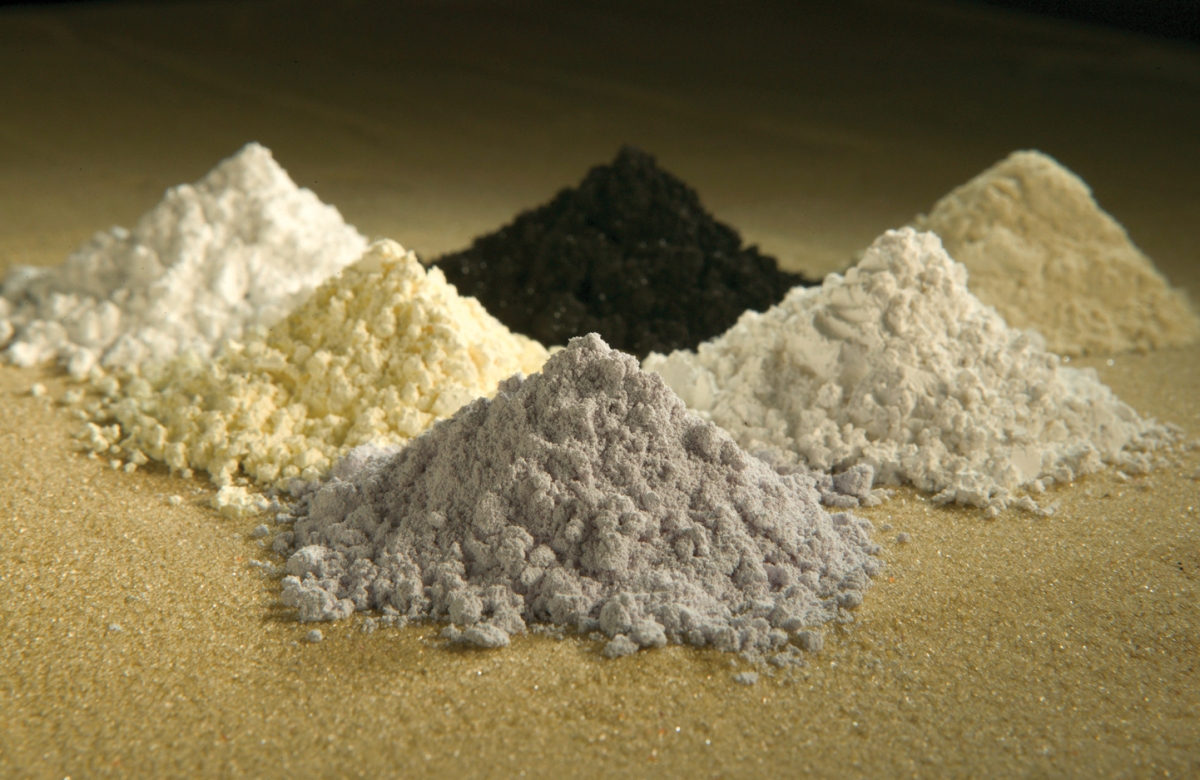
Returning to the debate tactic, if it’s in the US national interest to take positions in Intel, then Alphabet, Google’s parent company, would surely be in the national interest; and considering that Amazon Cloud services provides storage and computing on the cloud to the Intelligence Community, then surely Amazon should be included. And if cobalt, magnets, and neodymium are vital enough to lead the US to take stakes in four companies, why wouldn’t it be just as vital to take positions in all of them?
Does it have to be government money?
Whether or not it will or must always be this way, modern American capitalism was founded on the fundamental realities of a market economy as true north. Capital flows into firms and individuals most capable of utilizing it well, and when this is done on the market level, it acts to satisfy the largest number of wants with the fewest possible means.
Every action the state takes upon or within the market will distort these critical functions, and the positions in Intel, MP and other firms taken by the government are no exception. At baseline, it is choosing which firms it wants to succeed, irrespective of each’s ability to.
“What’s more,” Steward writes, “if the federal government is going about throwing around money, rather than businesses focusing on making the best products and services possible, they may turn their attention to currying favor with the president”.
This exact thing was reported to WaL in part 2 of this series on critical minerals by Rowan Parchi, a former Chief Capital Officer and financial analyst, who said that many junior mining companies going after battery metals, rare earths, or similar commodities were including in their presentations that “they’ve got government funding, they’re looking for government funding, they’re eligible for government funding…”
“That’s a part of every single junior minor’s conversation, and its definitely scary the degree to which that reliance is there now,” Parchi told WaL. “What’s happening now is private money only wants to go into those firms injected with the government infusion, that way their investment is protected by essentially unlimited government support. So that’s, for me, not healthy”.
“The government’s not proven itself ever to be a good allocator of capital or capable to pick the best projects. The important thing for them is that [the mining company] has a certain amount of reserves proven, and sure that’s one part of the equation but as a private investor that’s not all of what you look at. What’s also important are the economics in how to get this stuff to the customer. So I think there’s going to be a lot of money wasted”.
“If executives make the calculation that it’s much better to be on Trump’s good side than his bad side, they may fall in line preemptively. The competition isn’t for customers, market share, or innovation — it’s for the president’s affection,” Stewart wrote, in what was really an examination of American capitalism under Trump writ large, rather than in any particular sector, but her point stands just as well with the mining sector.
There certainly are opponents to this line of reasoning, from both within the mining industry and from without. One is Adam Muellerweiss, president of the Responsible Battery Coalition, which is currently raising awareness over shortages of critical minerals in American supply chains.
Playing to the President’s tastes, as Stewart suggested, Muellerweiss called in an article at Real Clear Policy for a “Trump-Monroe Doctrine to Secure Our Minerals”. Another member of the coalition, Major General (Ret.) William Crane, called for a “National Critical Minerals Strategy”. Both men indicate a more or less Chinese approach to countering Chinese control over so-called critical minerals.
Muellerweiss suggests that the idea of securing Greenland’s minerals would be “sound” strategy to counter China’s perceived dominance in mineral supply chains, though stops short of openly supporting the President’s then-current idea for “securing” Greenland, that would have involved either a buyout or military occupation. The island’s rock plays host to 25 so-called critical minerals, including antimony, a mineral used in the manufacturing of batteries, bullets, night vision goggles, and dozens of other military or military adjacent applications.
Crane called for a “a whole-of-government National Critical Mineral Strategy that includes fast-tracking of regulatory approvals for mining projects, such as construction permits and operating permits,” as well as the creation of price floors to prevent Chinese firms from selling critical minerals at prices too low for American businesses to compete with.
Neither of them specifically gave an opinion on the equity stakes in MP Materials, Vulcan Elements Inc. Trilogy Metals, and American Lithium Corp., but one gets the feeling they wouldn’t be opposed.
From within mining, the language is much the same, if not even more intense at times. Regarding price floors, KaLeigh Long, CEO of privately held Westwin, which is building the only US nickel refinery, has reportedly asked the Trump Administration to pressure Indonesia to limit its nickel output, “which has surged in the past two years to roughly 60% of global supply and dragged down nickel prices nearly 50% as a result,” Mining.com reports.
Becoming China to fight China
During the research for this series, WaL repeatedly came across references to the Chinese method of centrally-controlled capitalism as something America might have to emulate to break its dependence on China for these minerals. Justifications were few but varied. Some suggested it was necessary for national security concerns, others said that it was only necessary because China does it, and still others said it was only because the US was ‘so far behind,’ so to speak, and that Western free market capitalism can’t make such quick shifts. Plus there’s that tricky free will business that gets in the way of investing according national security concerns.
“Not just in the US but in a lot of other countries, getting a mine up and running, getting a smelter up and running is very expensive and even with some government support, if you don’t have the Chinese model of state-owned enterprises being able to throw tens of billions of loans to spool up supply, this is going to take a really long time,” said Rahul Sen Sharma, CEO of Indxx, which WaL interviewed for part 1 of this series, without suggesting the Chinese model needed to be replicated. “This is a multi-decade story and will be a multi-decade effort to really try to change the landscape”.
Shively, the CEO of Pebble Mine, the largest known undeveloped copper deposit in the world, had a similar take.
“We, as a nation, have neglected our mineral industry, notably from a strategic position, for too long. We have allowed other nations to promote their mineral industry and allowed China to build significant infrastructure related to mineral processing,” he wrote to WaL in a statement on the last 40 years of mining investment in America. “In order to successfully embrace more domestic mining, we must have regulatory stability with clear timelines and agency expectations, we must have a long view of what it takes—not just from one administration to the next—we must foster an environment to encourage mineral processing, and we must support mineral exploration”.
Both voices from the Responsible Battery Coalition invoked the danger of relying on a rival such as China for something like antimony which makes car batteries and bullets.
“We consider it a national emergency,” said a third member, Steve Christensen, the coalition’s executive director, to Reuters. “We were completely caught off guard collectively, as an industry,” he said referring to the antimony export ban.
“The loss of these strategic materials to China would drive up prices for Americans and enable the Chinese Communist Party to hold our economy hostage,” wrote Muellerweiss, referring to South America’s mineral reserves this time. “This is not an idle threat but a strategy already in motion. On December 3rd, China announced a blanket ban on exporting antimony to the United States, cutting us off from our main supply. The price of antimony jumped by 40% within 24 hours”.
It’s extraordinary for the average American to think that in the face of Joe Biden’s triple promise of military intervention in the event of an attack against Taiwan, over Donald Trump’s two trade wars against China, the 2022 CHIPS Act’s semiconductor export ban, the antagonism shown to American subsidiaries of Chinese companies like TikTok, and the Chinese spy balloon nonsense, the Chinese Communist Party hadn’t cut us off far, far earlier, or for that matter, ever sold us such a military-sensitive commodity in the first place.
If it was the CCP’s strategy to deprive us of critical minerals like antimony, why have they been selling us antimony for the last 25 years and more?
“It’s like in order to fight China we’re becoming like China,” comments Parchi. “China has got so many problems, internally, to think that they could actually mount some kind of global expansion campaign is really strange. Over the next couple of decades, the major undertaking they’ll have is just holding the Communist Party in power in that country”.
Reuters described the December 3rd export ban as “retaliatory after Washington further restricted exports of advanced semiconductors to Chinese companies”. It seems fair to ask why, if antimony is so critical to US national security, American presidents and congresses were advised or permitted to take such an antagonistic stance towards China before such a minerals supply was secured. If all the minerals designated critical and the rare earth elements as well are as important as their public and private sector advocates say they are, it should also be fair to ask why the men and women whose antagonism towards China has placed the national industry in such a weak position should be the ones to determine how to extricate us from it.
How would the market would solve this “mineral gap?”
Key to the nuclear arms build-up in the 1950s between the US and the Soviet Union were U2 spy plane images that seemed to indicate the Soviet Union had far more nuclear-capable missiles than it actually had. The so-called “missile gap” became a common invocation in RAND Corporation and other defense studies that urged for a whole-of-government national strategy for nuclear armament expansion.
William F. Buckley, sometimes regarded as the founder of the American conservative movement, said at the time that the US would have to construct a “totalitarian bureaucracy on these shores,” to defend herself against the totalitarian bureaucracy abroad, and though it’s not like Buckley had any political position of power, its remarkable to note that’s exactly what happened.
At the time and beyond, the same discourse to the one which now surrounds critical minerals abounded: namely, must we who consider market forces to be the true north of our economic compass sacrifice the same in order to save it from world socialism? This fait accompli was in actual fact a farse, as by the time the Soviet Union collapsed, its decades of centrally-planned mismanagement meant it could hardly run a farm much less a world socialist economy.
It should have been the end of the argument forever, but China’s new brand of state-controlled market capitalism has resurrected it. Must the US abandon the creative power and magic of the market economy to counter this new threat? How would a market solve the “mineral gap?”
To answer that question involves separating two phenomena: what government wants from the market from what producers and consumers want from the market. The former’s outcomes are tangible in that they appear on newspaper pages, while the latter’s are, as a rule, ‘more for less’. A perfect example is Long, the CEO of Westwin quoted earlier, who invokes her firm’s own difficulties in competing with nickel from Indonesia. The latter has what in economics is called a comparative advantage. Rich nickel reserves and already-finished exploration, paired perhaps with lower labor costs and fewer regulations surrounding things like safety and reclamation, have allowed the country—a key US trading partner—to supply the global market with nickel at prices that will keep Indonesian firms earning, but which may bankrupt Westwin.
Long suggests a quota on Indonesian nickel as a guaranteed “cure in the nickel price,” by which she means the price of nickel will increase. Here is a key divergence between state interests and market interests. As a rule, to increase production, prices for inputs like nickel need to be lower. If they are low, the finished good will cost less, and mean a lower price for the consumer. Lower prices for goods means more money can be saved, invested, and the wealth of nations can increase. This won’t, however, satisfy state interests, which are in this case a supply of nickel that can be bought domestically.
There is therefore an inherent challenge in “guiding” market activity towards something as specific as nickel or antimony. Another example of this is CEO Shively’s notion that “we allowed” China, or any nation for that matter, to develop a robust mineral processing and/or mining industry. Neither Washington nor Wall Street allowed, or could by power and nature allow other world markets to develop mineral economies. This zero-sum thinking—that China’s development is our lack of development—is a classic state mentality that doesn’t hold in markets.
Indonesian firms explored and developed a nickel resource that could help bring down the cost of consumer goods and increase the value of shareholders—this was neither allowed nor not allowed to happen by Washington, and the notion that cheap nickel is bad could only be true if—regarding the first paragraph of this story—free nickel would be disastrous.
Even if their goal is to see more government money in the critical minerals and rare earth sector, groups like the Responsible Battery Coalition are doing arguably valuable work in alerting the market to an area of shortage. Antimony prices, as Muellerweiss wrote, quadrupled following China’s export ban. From their perspective that’s significantly bad, but that price isn’t only what the Pentagon is charged for when it orders bullets, it’s a valuable signal that there is an urgently unsatisfied market demand for a good.
From a national security standpoint, the buyer, which is the Pentagon, is entirely subsidized by the government, which means if antimony becomes a subsidized good, there will be no market mechanisms left to ensure the greatest supply for the greatest demand. That doesn’t mean there’s nothing the state can do to increase capitalism’s ability to bring antimony to market. It could streamline permitting processes, relax environmental standards or expedite review processes, and auction off public lands with known mineral reserves.
However, if there’s a commodity that is subsidized on both the supply and demand sides, there is a real risk that competition—a primary, free market-driver of success and abundance—will atrophy.
Two of the three voices for the Responsible Battery Coalition suggest that China treats its overseas trading partners poorly, invoking the specter of debt traps, child labor, and imperialist behavior. Yet much like no one allowed Indonesia to develop its nickel resources, nothing forced the Dem. Republic of the Congo to export so much of its cobalt reserves to China, and if the partnership with the Chinese is thusly “aggressive,” as Muellerweiss called it, the Congo’s miners would surely sprint toward other, more balanced relationships if they were but to appear.
They might appear in the case when the price of cobalt, which through Chinese industry had been too low to spark much of an interest from American mining entrepreneurs, begins to increase substantially, bringing a group of American or Western investors and entrepreneurs together with the idea to offer the Congolese miners a better arrangement.
It’s clear, now more than ever, that investors are keyed in on metals and mining, with the MSCI Metals and Mining Index up 90% over 2025 and 2026 already beginning with much of the same momentum in precious and industrial metals seen the year before. Even just in the duration of this series, from writing the first part to the last, the government took out another equity stake—this time a $1.2 billion loan from the Commerce Department paired with a $227 million outright position in USA Rare Earths, with its share price jumping 20% during Monday’s trading.
It’s by a country mile the largest stake taken so far, and indicative that promises made by the Trump Administration will likely be promises kept. What that means for the future of mining investment at large—whether it will help to catch up the sector from its 40-year lag behind most other major American industries, or whether it’s simply the puppet issue of the current Administration, and that investors will lose the taste for it when his term expires, like prospecting for gold, silver, or copper, is unclear at this early stage. WaL
An investigation in 4 parts requires substantial hours of research and work—Considering Following the link here to see all the ways, monetary and non-monetary, you can support this work and more like it.
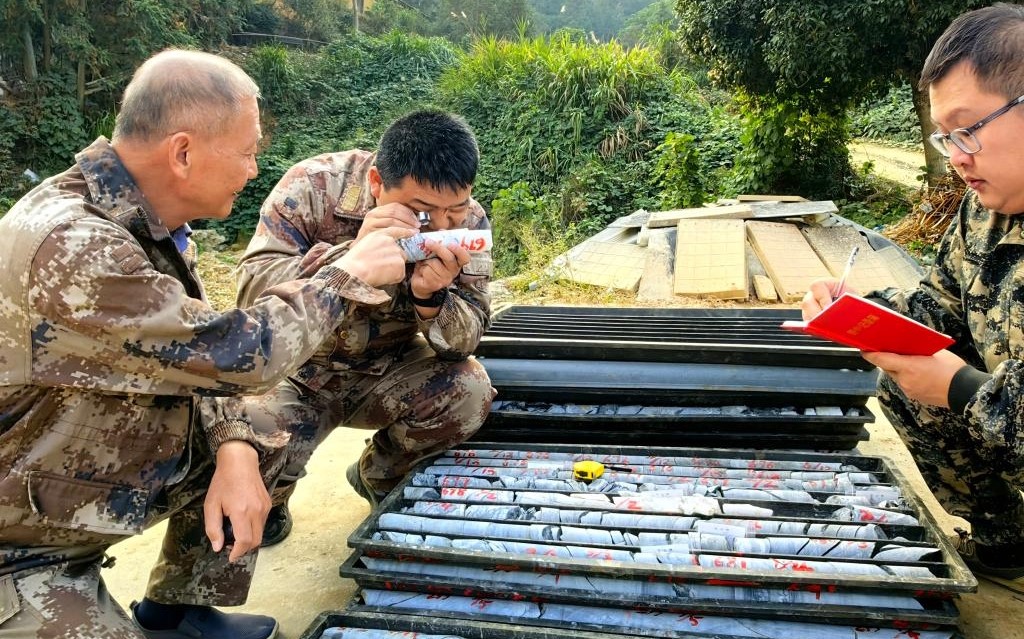
PICTURED ABOVE: Technicians of Hunan Province Geological Disaster Survey and Monitoring Institute check rock samples at the Wangu gold field in Pingjiang County, Central China’s Hunan Province PC: Xinhua.