0
0
 0
0

Banned since the early 90s, the testing of nuclear weapons may or may not now be coming back into vogue.
*May, though, is the keyword, since like so many of Donald Trump’s policy decisions, comments, and announcements, it was made through a social media post or comment to a passing reporter; in this case, during the President’s meeting with Premier Xi Jinping in South Korea.
“Because of other countries testing programs, I have instructed the Department of War to start testing our Nuclear Weapons on an equal basis,” Trump said on Truth Social. “That process will begin immediately”.
NBC reports that it reached out for clarification on whether that means nuclear weapons or their carrier systems, but did not receive an answer.
Trump later told reporters aboard Air Force One that his order “had to do with others,” adding that “they seem to all be nuclear testing”.
“We don’t do testing. We’ve halted it years, many years ago. But with others doing testing, I think it’s appropriate that we do also”.
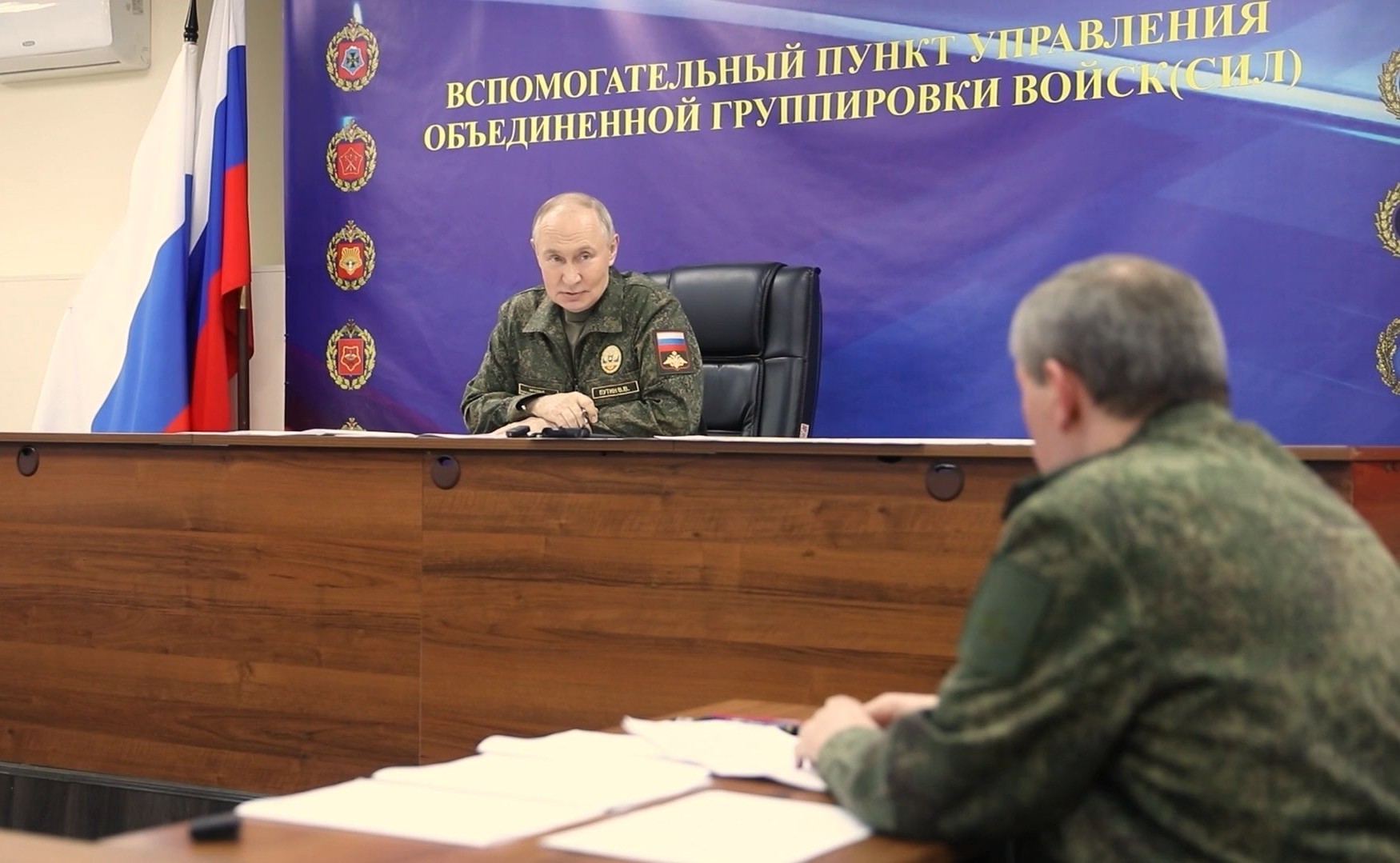
This almost certainly refers to delivery systems, not the nuclear weapons they’re capable of carrying. Russian President Vladimir Putin briefed the nation on Sunday that the military had successfully tested a nuclear-powered cruise missile which was first announced in 2018 as part of a totally refreshed nuclear arsenal.
Called the Burevestnik, Mr. Putin described the missile as “a unique weapon that no other country possesses,” claiming it has “unlimited range”. The nation’s top military leader, General Valery Gerasimov, said the missile traveled just short of 15 hours and covered 14,000 kilometers.
“During the flight, the missile completed all prescribed vertical and horizontal maneuvers, showcasing a high capability to evade missile-defense and air-defense systems,” Gerasimov said.
Then, on Wednesday, Mr. Putin announced the successful test of a nuclear-powered torpedo called the Poseidon, of which little is known, but which is specialized in targeting coastal cities and rendering them uninhabitable.
“For the first time, we managed not only to launch it with a launch engine from a carrier submarine, but also to launch the nuclear power unit on which this device passed a certain amount of time,” Putin said. “There is nothing like this. This is a huge success”.
A farewell to arms (control)
Two years ago this month, the Russian parliament passed a bill to revoke its ratification of the Comprehensive Test Ban Treaty (CTBT) adopted in 1996. It was the first international treaty to ban all nuclear tests, and was both signed and ratified by the European nuclear powers of the Russian Federation, UK, and France, but which never entered into force on the global stage beyond the honor system because of the decision not to ratify it domestically by the signatories China, North Korea, Egypt, India, Iran, Israel, Pakistan and most critically as far as the Russians are concerned, the United States.
In fact, at the time Mr. Putin said that the nation’s position should “mirror the manner of the United States,” and should therefore sign but reject ratification. As a signatory to the treaty, Russia still retains the responsibility not to engage in any behavior that would defeat the treaty’s object and purpose.
In 1992, then-President George H. W. Bush announced a domestic moratorium on the testing of nuclear weapons, but because neither he nor his successors ratified the signing of the CTBT, no steps are now needed for Trump to order a resumption of testing, which the DoD and DoE have always maintained the capacity to do at a federal underground site in Nevada.
During his first term, President Trump withdrew the United States from two important nuclear arms control agreements, including the Intermediate Nuclear Forces Treaty, and the Treaty on Open Skies. He seemed quite prepared to withdraw from the last remaining arms control agreement between the US and Russia, known as New START, but having lost in the November 2020 Election, Joe Biden and Putin quickly agreed to extend it for a year past its expiry date to give time for broader negotiations.
Mr. Putin has since announced that his government will adhere to the New START treaty for one more year after the treaty’s expiration on February 5th, 2026.
In addition to taking the US out of safeguards agreements, Trump has added more Europeans into NATO’s nuclear sharing agreement. It was announced in June by Prime Minister Keir Starmer that the UK would be hosting the shared stock of NATO nuclear weapons, taking the total number of potentially-nuclear armed NATO nations to 6.
Moscow Times, reporting on the debut of the Burevestnik, spoke with experts and analysts who questioned the missile’s practicality. Pavel Podvig, director of the Russian Nuclear Forces Project, told The Times that its unveiling in 2018 was due to geopolitical developments, just as the testing this week might have linked with Trump’s announcements of further sanctions on Russian oil companies.
“It was framed as a response to US efforts to build missile defense. In the view of the Russian president—and I think the Russian leadership in general—the US missile defense effort was intended to deny Russia its retaliatory capability,” Podvig said. “The mission [of the Burevestnik] is to give the Russian president the ability to say: ‘we have systems that simply aren’t affected by your missile defense’”.
A ‘missile curtain’
Rick Rozoff, a writer covering NATO-Russian relations for more than 30 years, told WaL that those missile defense systems, which are located as close to Russia as Poland and Romania, are part of a “missile curtain” made up of the Raytheon-made Standard Missile-3 systems, and that the only assurance the Kremlin or Russian people have that they aren’t or can’t be armed with nuclear warheads is because the US says they aren’t or won’t be. But state media reports that Russian weapons inspectors have never been allowed to visit the sites.
“To the best of my knowledge there’s been no attempt to offer Russia an inspections regime,” Rozoff told WaL in 2021. “It’s simply a matter of taking somebody on good faith”.
However, Rozoff pointed out that the ability to deter or prevent a nuclear strike at some point becomes an offensive weapon, because even if the SM-3s are never made to carry a nuclear armament, their purported ability to disable outgoing weapons from Russia could potentially allow enough cover for a NATO first strike, breaking the old stalemate of Mutually-Assured Destruction.
Furthermore, the capacity of these SM-3s to be mounted on naval warships, and the number of such warships produced could easily, and perhaps purposefully, create a dangerous sense of security in terms of missile defense around NATO and the US
“The US currently has 62 of the Arleigh Burke-class destroyers and 22 of the Ticonderoga-class frigates, so altogether 84 of these ships that can fire [SM-3s], and more ordered,” says Rozoff. “That’s just the US, that doesn’t include NATO or the East Asia allies, so you’re talking about as many as 100 warships”.
“The US destroyers can carry up to 55 Tomahawk cruise missiles, if it’s a comparable amount, then you’re talking about as astronomical amount of interceptor missiles that could fend off any retaliation after a perspective US/NATO first strike”. WaL
PICTURED ABOVE: Preparation of the Burevestnik cruise missile for testing PC: Russian Defense Ministry CC 0.0.