 0
0
 0
0

On October 1st, the Caribbean Community (CARICOM) nations implemented the Free Movement Agreement among the member states of Barbados, Belize, Dominica, and St. Vincent, and the Grenadines.
The Free Movement agreement allows citizens of these 4 countries to live, work, and travel freely among each other without the need for a work permit or specific visa with the hope it will help with worker retention, promote economic opportunities domestically, and encourage cultural unity across the Caribbean.
One of the most pressing regional challenges is the shortage of skilled workers, especially in healthcare and education, as these professionals are drawn abroad by better wages and working conditions. CARICOM was founded in 1973 as a regional forum for the 15 member states of the Caribbean to benefit from a shared single market. The new free movement agreement represents progress towards that goal, although not all member states have joined the initiative.
Additional aims are to simplify trade and travel by removing unnecessary barriers, recognizing driver’s licenses and insurance across countries, and creating smoother systems for business and mobility. Overall, the initiative is seen as representing a major step toward a more connected and resilient Caribbean community.
“Companies are only as good as their people—the ‘EU style’ free skilled worker movement is a powerful economic development tool because it addresses worker shortages, particularly in sensitive industries like healthcare, education, tourism, agriculture, skilled trades, and high tech.” said John Boyd, founder of the corporate site selection firm The Boyd Co., which has been helping clients locate sites across the Caribbean and North America for 50 years.
The initiative was made under the CARICOM’s Enhanced Cooperation Protocol, which allows the different countries to adopt the new policies ahead of each other. This framework gives each country the flexibility to move forward with regional integration without the unanimous approval from all 15 CARICOM members. This result allowed the 4 participating nations to freely adapt the Free Movement agreement.
The agreement on free movement comes as skilled workers are leaving their nations in search of better opportunities in North America and Europe. This ongoing emigration to the United Kingdom, the United States, and Canada has created critical shortages in the major industries of healthcare and education. Barbados’ Prime Minister, Mia Mottley, addressed these but also additional challenges, including an aging population and declining birth rates, which further strain the region’s workforce. By improving regional labor mobility, the Caribbean allows workers to expand their careers in a more competitive and connected environment.
“All of our countries have a vested interest in cutting down on the numbers of our people who migrate to North America and Europe, especially since the majority of the migrants tend to be… highly educated and trained young people,” Mottely told The Guardian, adding these skilled workers are “precisely the citizen that we need to keep at home so that they could produce and contribute to national development”.
CARIConcerns
The Caribbean Community outlet reports that significant preparation took place for the free movement agreement to function well, and the 4 member states committed to working through every detail of the system.
The free movement policy replaces the previous system, which limited the workers’ stay to 6 months unless additional verification of documents was secured. Now, with the 4 nations, workers can move, stay, or re-enter, while retaining the right to access medical care, and primary/secondary education for their children.
“We welcome our Caribbean family. We do not welcome criminality,” she said in an address to the nation on the radio and television. “Those who work will pay income tax. I spoke about them registering with the Barbados Revenue Authority. Those who are employed will contribute to the national insurance scheme and the resilience and regeneration fund”.
According to The Guardian, some concerned voices fear the weight of a spike in social services burdens if large numbers of immigrants moved rapidly between the participating countries. However, a similar free movement arrangement implemented by the Organization of Eastern Caribbean States, a regional union within CARICOM, reported that it saw “there was no overrunning of any particular country”.
The outlet heard from several men on the street, and opinions on the agreement seem varied. Some are still worried it will lead to shortages of labor, as rather than leaving a small town in Barbados for England, a doctor might leave a small town in Barbados for Belize—the net result is the same.
“Free movement allows us to fill gaps in critical areas, while giving our citizens greater access to opportunities across the Region. It is a win-win for all,” said Prime Minister of Dominica Rossevelt Skerrit. “Embrace this change with an open mind as it will bring huge opportunities for your families”.
“Another area that this program will boost is trade,” Boyd adds, “enabling ports like Kingston (Jamaica), Freeport (The Bahamas), Port of Spain (Trinidad), etc., to recruit skilled labor—like crane operators, freight and logistics coordinators, customs brokers, etc.—across the participating CARICOM states”.
“More efficiencies in Caribbean trade and port operations can also be a significant boost to the US economy and supply chain by promoting near-shoring and energy exports,” Boyd told WaL.
While the four participating nations have moved forward with the Free Movement Agreement, the remaining CARICOM members continue operating under existing rules within the Caribbean Single Market and Economy. Several leaders have expressed interest in joining the agreement soon. Jamaica’s Prime Minister, Andrew Holness, shares the government’s commitment to adopting full free movement once they are able to accomplish the preparation process. Prime Minister Mia Mottley encourages actions from the rest of the CARICOM members to create a stronger unity. WaL
We Humbly Ask For Your Support—Follow the link here to see all the ways, monetary and non-monetary.
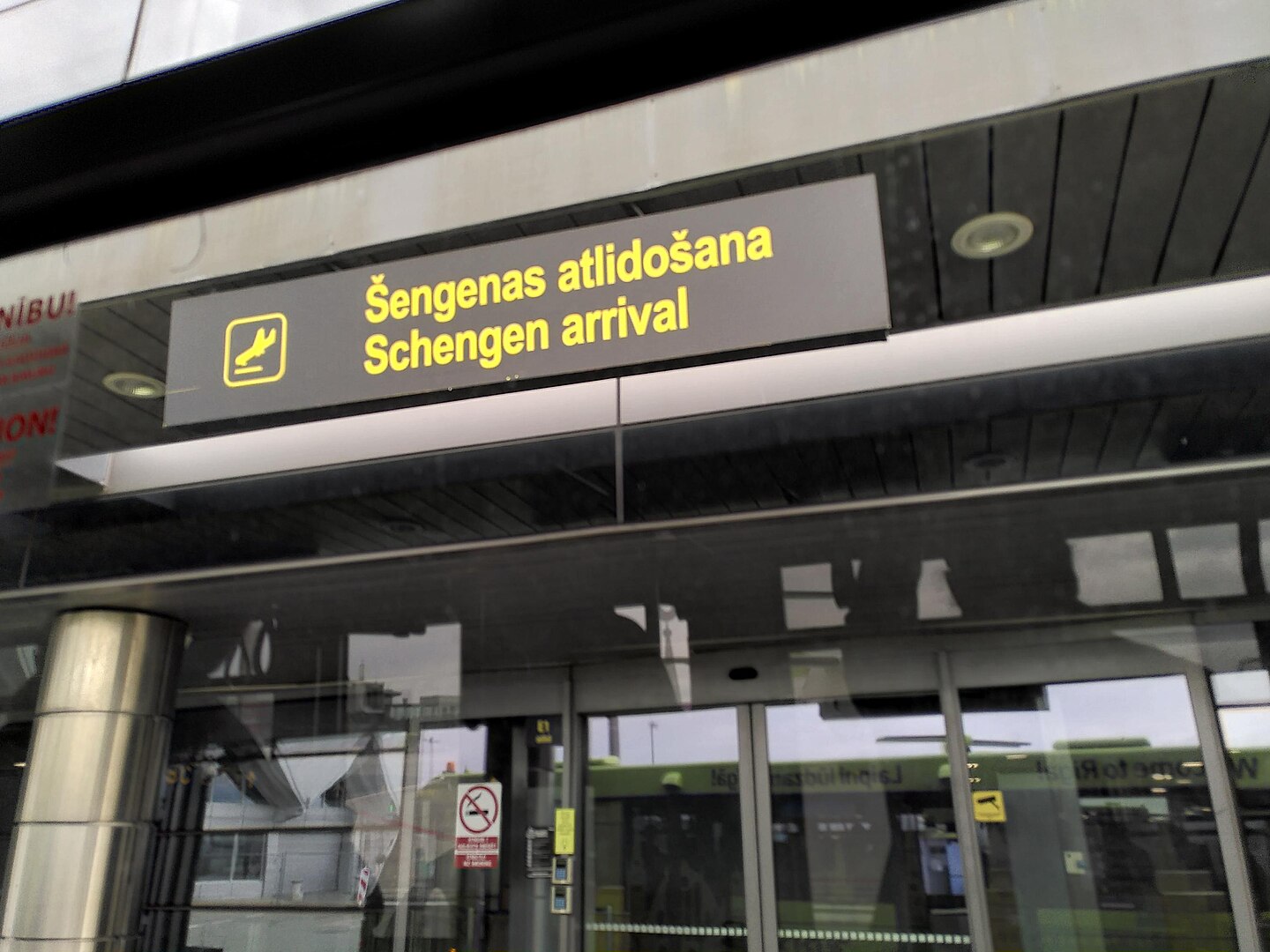
PICTURED ABOVE: The Schengen arrival gate at Rīga Airport (RIX) PC: Kaihsu Tai, CC BY-SA 4.0.