 0
0
 0
0

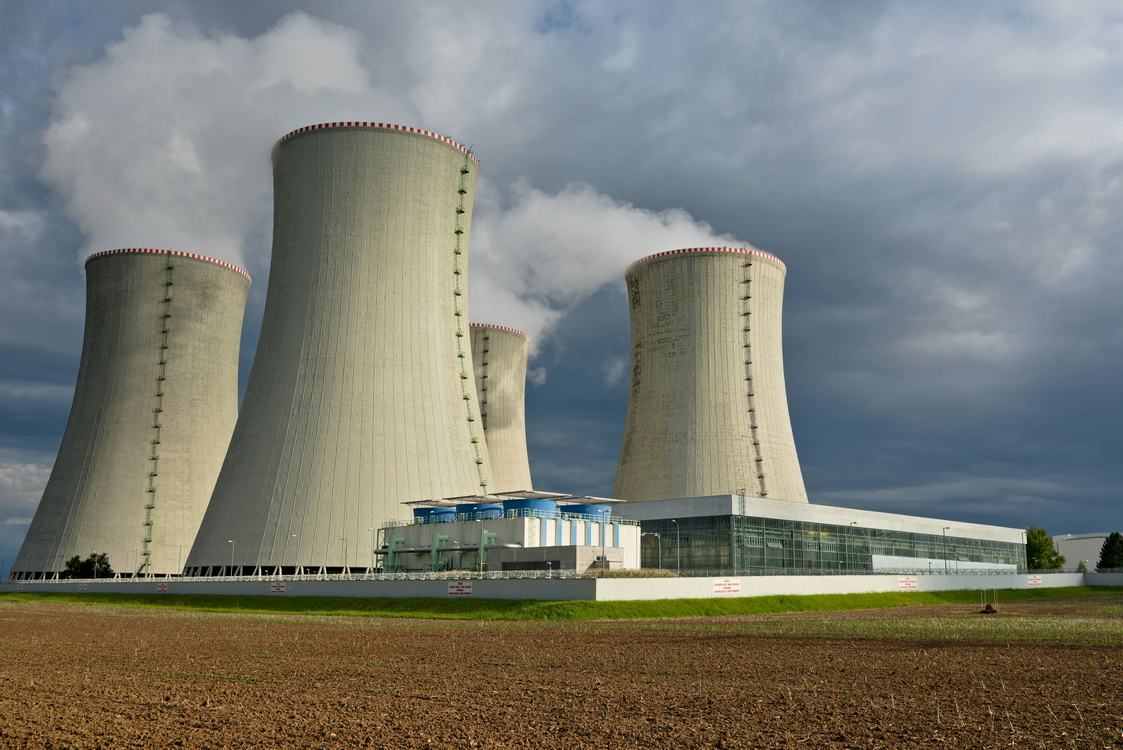
Scientists at Stanford University in the US have attempted to provide a cost estimate of all the CO2 emitted by the US working under the assumptions that it caused the climate to change in ways that caused damages and losses.
They estimated that some $10 trillion in worldwide damages have been caused by CO2 emitted in the US, and that one-third of this occurred in the US.
It’s another study that’s tried to put price tags on aspects of climate change, an exercise that WaL previously reported as producing rather small sums compared to other shocks like wars, financial crises, and global trade disruptions.
Because most of the world’s population is responsible for a small share of total CO2 emissions, the last 6 years have seen political and legal efforts that seek to link these emissions to damages, and these damages to the emitter nations. However, the Stanford team writes, there has been a lack of clarity on how exactly to define these losses and damages.
Lead author Marshall Burke and his colleagues used GDP as a measure of economic output, then used climate models that translate changes in emissions to changes in global warming to create a method of estimating how warming temperatures are linked to falling economic output.
The team then used very small discount rates of between 2 and 5% to estimate the historical and 100-year damages from emissions generated from 1990 to 2020. This model calculates US emissions since 1990 are estimated to have caused $10 trillion in damages around the world, European Union countries to have caused $6.4 trillion in damages around the world, and Chinese emissions to have caused $8.7 trillion.
They estimated that $3 trillion alone was caused by Saudi Aramco, and $1.6 trillion from ExxonMobil.
One metric ton of CO2 emitted in 1990 caused $180 in cumulative global damages by 2020 but will cause an additional $1,840 worth of damage by 2100. They present the case then that a single long-haul flight per year over the past decade leads to about $25,000 in future damages by 2100.
Cost of doing business
The authors estimated the relationship between rising temperature and economic output using satellite data and World Bank GDP numbers, then represented that by a dollar value of lost GDP. WaL has found that lost GDP from financial crises and wars, as well as the trade disruptions from COVID-19 are substantially higher than estimates on the cost of the worst predicted effects of climate change
That report covered a landmark analysis published by The Economist Intelligence Unit’s (EIU) Climate Change Resilience Index which found that climate change could directly cost the world economy $7.9 trillion by 2050, shaving off 3% of GDP growth globally by that date.
Since 1990, global GDP has grown by about $100 to $110 trillion in inflation-adjusted dollars. The US, which according to Burke et al.’s model supposedly inflicted $3 trillion of damage on itself, grew over that same period between $18 – $20 trillion, the EU between $10 and $12 trillion, China between $32 and $35 trillion, and India, which according to the model suffered $500 billion in loss and damages from climate related warming caused by US emissions, between $11 and $13 trillion.
The totals are all inflation-adjusted dollar values of GDP percentages.
It can be seen by comparing these numbers just how much human economic activity can outpace the loss and damages from climate change. A key component, as seen more sharply now than ever, considering the current energy crisis brought on by the US-Israeli aggression against Iran, is that cheap energy is a vital component to economic activity.
Between 1990 and 2010 energy prices remained historically low. Two separate oil crises in the 1970s caused energy prices to remain elevated throughout the decade, which carried into the 1980s—a period also marked by persistent price inflation. This cheap energy caused substantial economic expansion that benefitted the societies in most of the world.
This is where to anyone who understands economics, the idea of attaching a price tag to something as ephemeral as historically emitted carbon dioxide and call it damages seems absurd. It’s one thing to measure the US emissions between two points in time, and maybe even to break down the share associated with the largest oil producer, but what was that oil used for? Aside from the obvious answer that it was used by tens of millions of individual people to power and heat their homes and drive their cars, it was used to power economic growth which improved the world, even if according to Burke, damage was also done.
To use one of tens of thousands of examples, how many emissions went in to developing all the versions of Microsoft’s Windows operating system? During Burke’s study period, there were over 5 billion computers sold worldwide that had a Windows system installed—how much productivity did that bring in a country that might try to sue for climate damages?
That example would have to be repeated thousands of times for every worthwhile product or service ever sold across the Global South and Oceania where countries that generally sue for climate damage are found.
“If you warm people up a little bit, we see very clear historical evidence, you grow a little bit less quickly,” Burke told the Guardian, explaining the rationale of using warming as a metric for GDP loss. “If you accumulate those effects over 30 years, you just get a really large change by the end of 30 years. It’s like death by a thousand cuts. And you have people being harmed who did not cause the problem, and that feels just fundamentally unfair”.
Many hot areas of the world have dramatically improved their GDP over that period by using some combination of the internet, resource extraction, cheap web services, cheap imports, and cheap energy. These include none other than the Gulf monarchies, Qatar, Saudi Arabia, and UAE.
Additionally, two of the fastest growing economies in the US are found in arid and hot climates: Arizona and Nevada. Chile, Western Australia state, and Israel have grown substantially since 1990, totaling $1.6 trillion in GDP growth together, despite their climates.
The study by Burke and his colleagues attempts to calculate the future damage of past emissions out to 2100, and finds that when combined with existing emissions, damages quickly grow by an order of magnitude. However, his model uses merely satellite data for warming and GDP growth from the World Bank, in other words, completely discounting nations from building climate resilience through cheaper air conditioning, better insulation, seawalls and other infrastructure.
Indeed the idea of a payment extracted from the US or China according to his model would see nations awarded moneys for damages they’ve not sustained and could in fact prevent. Discounting innovation is why society never reached “peak oil,” and why we’re able to feed far more people with far less land than we could, say, in 1990. It’s the single-best reason to disregard long economic projections.
Here again, a study has attempted to put a dollar sign on the losses caused by global warming, and it doesn’t compare to the dollar signs put up by economic activity fueled by cheap energy. WaL
We Humbly Ask For Your Support—Follow the link here to see all the ways, monetary and non-monetary.
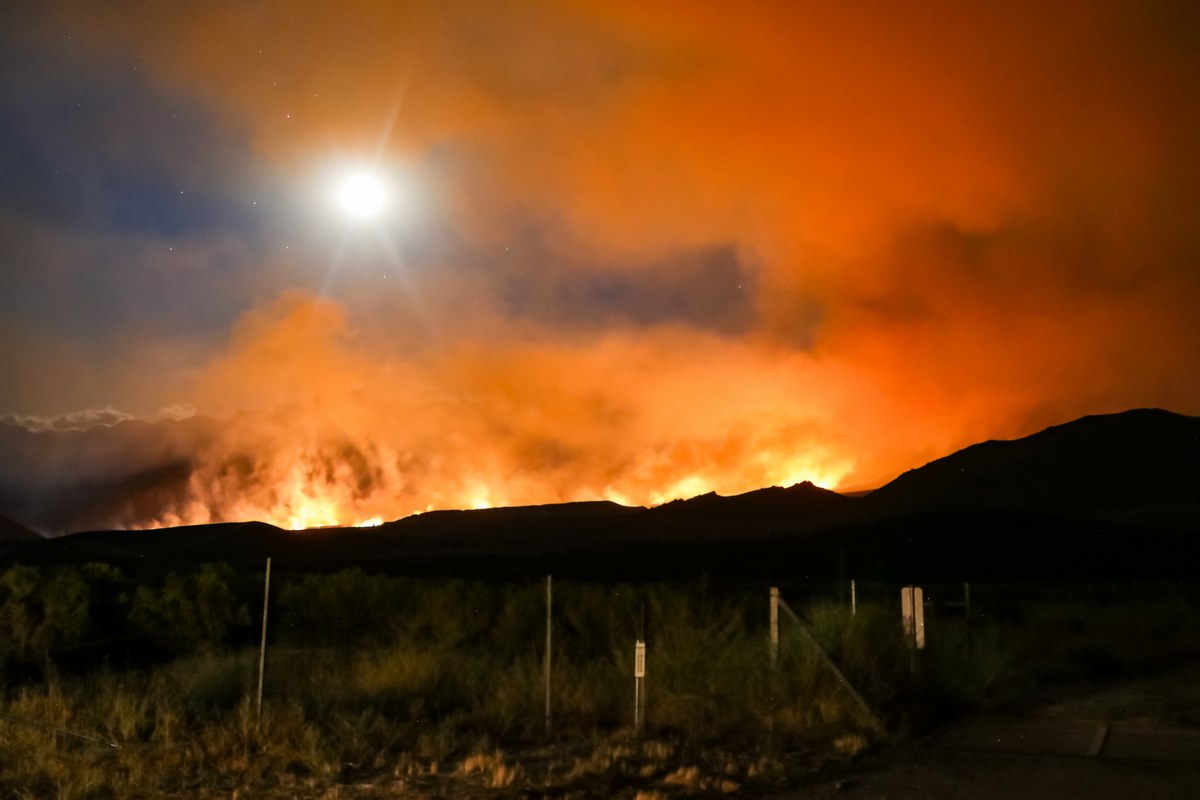
PICTURED ABOVE: California has suffered from several wildfires over the last half-decade that have been attributed to climate change. PC: Ross Stone, Unsplash