 0
0
 0
0

End of the Empire is a once-monthly feature on all news relating to the transition from the unipolar world of the US Empire to a multipolar world.
On the last day of February, the Trump Administration decided to reframe the 12 Day War as the 8 Month Intermission and launch another surprise attack on Iran with a level of force that rivaled George W. Bush Jr.’s “Shock and Awe” bombing campaign during the Battle of Baghdad in 2003.
US Central Command began their attack by murdering 165 schoolgirls, and assassinating a head-of-state with the full-throated support of most of Europe at their back, further bankrupting whatever idea of international law remained in the world after Israel’s genocide in Gaza.
Who can say what Senator Lindsay Graham, who despite having no authority in Trump’s Cabinet was dispatched to Riyadh to convince Saudi Crown Prince Mohammed bin-Salman to “get onboard” with the operation, or Prime Minister Benjamin Netanyahu, who visited the White House 3 times since the end of the 12 Day War, said that convinced the Donald to go farther than any of the Terror War-era presidents before him were willing to.
Whatever it was, it got the Neoconservatives and their Zionist allies in Tel Aviv the war they’ve always wanted. Their guiding hand behind the striking reversal of Trump’s own campaign platform was made clear remarkably quickly. On February 28th, Trump announced an attack against Iran to counter an “imminent threat” while on March 1st, the Pentagon stated unequivocally that no such threat existed. Then, Secretary of State Marco Rubio admitted on live television—when the blood of the 165 murdered schoolgirls had hardly dried—that the Administration was aware Tel Aviv was preparing to attack Iran while the country was engaged in negotiations with Washington over its civilian nuclear program, and that such an attack would prompt a response against American positions in the region.
Rather than demand Israel curtail her murderous impulses, the vast majority of Americans must have reasoned, it seems quite clear that Trump allowed Netanyahu to pull the US into another aggressive war of choice far from home.
But unlike Libya, Syria, Iraq, or Yemen, this is the Big One: country number 7 on General Wesley Clark’s “7 countries in 5 years memo,” the one that for decades saw the worst elements of American foreign policy chafe against the rigid realism held by members of the military and intelligence brass who knew better. Iran was an entirely different proposition to even Iraq. It has thrice the population, 5x the landmass, and 5,000% more mountains. She can strike any number of a dozen prominent US military installations, could decimate global oil and gas production, and call on dozens of local proxy militia groups to waylay US forces. Iran, generals long admitted, controlled “escalation dominance” the concept in military strategy of who controls how big and hot a conflict becomes.
For the Bushes, Obama, Biden, and Trump during his first term, it was a red line that seemed to mark where these administrations’ support for Israel—rock solid as it might have been elsewhere—ended. 47 years after the Islamic Revolution, Israel finally got the big one, and her military is prosecuting it by unleashing all the pent-up frustration from years of being unable to do so.
A world of hurt
There are dozens of scenarios the US could find herself in if this war rages on at current pace into the summer, and not all can be effectively imagined here. The oil market has turned to a turmoil market, as traffic through the Strait of Hormuz has almost completely stopped, and oil production and refining capacity in the US’ Gulf allies has been repeatedly struck.
WaL has kept a close eye on the timidity in the bond markets towards anything that looks like the US won’t be able to repay its current debt without massive money printing, but the flight to safe haven assets resulting from the launch of the war saw the US 10-year Treasury spike over 250 basis points.
Since February 27th, it’s closed every trading day higher, pushing the cost of US borrowing higher and higher—and boy is the government borrowing. Already, the US has been spending $1 billion a day on military operations, and reports suggest Trump, who already requested a record-high military budget of $1.5 trillion, will be returning to Congress for a $50 billion supplemental request.
At the same time, higher and more persistent than expected price inflation continues to weigh on an economy that has been driven exclusively by billions in AI investment by a handful of hyperscaling tech companies. February’s awful jobs report—which saw the US lose 92,000 almost-entirely private sector positions, shows a struggling economy that was suffering under Trump’s tariff shock and will now go on suffering under the cost of his adventurism in oil, which soared past $100 a barrel over the weekend.
Expensive fuel costs weigh on an economy in many ways, siphoning off consumer’s discretionary spending, increasing producer prices which need to be recouped by higher prices on shelves, higher food costs from transportation and fertilizer inputs, and so on and so forth. The President has said that higher prices are a cheap price to pay to rid the world of the Iranian terrorist regime which has in fact bombed no schools so far.
With his popularity already languishing at historic lows, and Congressional elections slated for November, the GOP is set to almost certainly suffer a loss of control in one or both houses on Capitol Hill.
The Iran Quagmire
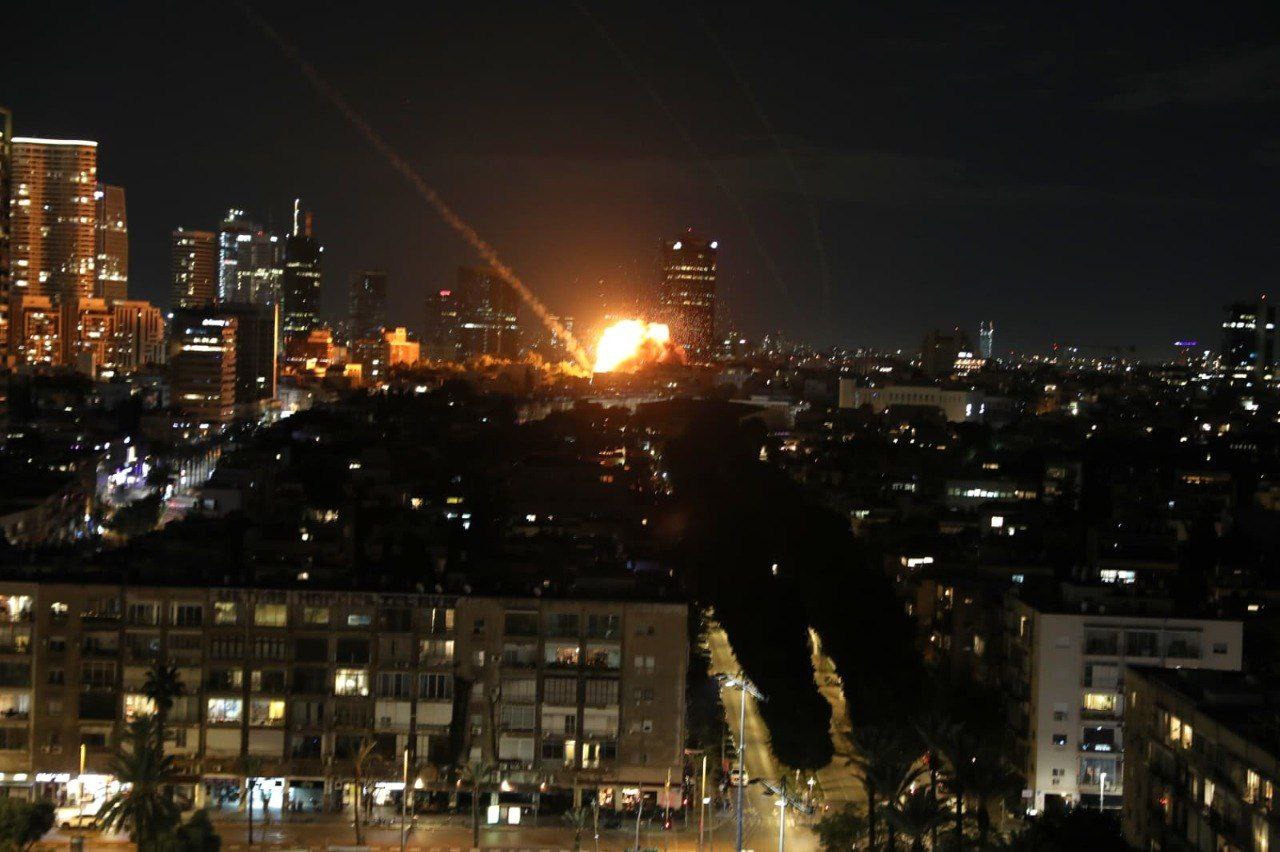
Militarily, while the CENTCOM continues to provide Call of Duty-style updates on how many things they’ve blown up, the Iranian regime has successfully achieved a variety of its aims. According to several live trackers across the world’s largest news networks, Israeli wounded from Iranian drones and ballistic missile strikes have passed 1,000. Oil and gas production and infrastructure across Qatar, Bahrain, UAE, Kuwait, and Saudi Arabia has been heavily impacted, and shipping through the Straight of Hormuz has ended, with maritime insurers unwilling to cover the cost of an attempt to sail through it.
Sure, Secretary of Defense Pete Hegseth might interrupt and mention how many things they’ve blown up, but the shoot-out before the 8 Month Intermission would have demonstrated to Iran that conventional military engagement is pointless, and that their ballistic missiles could penetrate Israel’s missile defense. Iran needs only survive, while Trump and Hegseth have to “accomplish all of America’s goals” which seem to be growing in number and depth. At the war’s onset, Trump stated that the entire Iranian navy had to be destroyed. On March 2nd, CENTCOM said they had destroyed every ship Iran had in the Gulf of Oman.
Since then, it has tripled the number of Iranian ships it has supposedly destroyed, including a ship as large as a World War II aircraft carrier, indicating that the navy either wasn’t destroyed by March 2nd, or they thought that it had been. Does that uncertainty exist when they try to estimate how many missiles and launcher systems Iran possesses?
One might suppose that enough time has passed since Iraq and Afghanistan to allow the American military establishment to forget that America always blows everything up in the first few weeks of a conflict: that’s not the hard part. The hard part is controlling what happens next, and demonstrating the restraint to avoid getting embroiled in fine details such as who rules or rebuilds the country.
Time after time, Trump and his administration had claimed that the war will not go on “forever,” yet this rather straightforward messaging was undermined by the President himself just four days into the supposed 2-4 week operation when he posted on Truth Social that America had enough weapons to fight the war, literally, he said, “forever”. Another early statement—that there were specific, achievable goals that America sought, such as the destruction of the navy, missile and nuclear energy programs of the regime—also seemed to be upended in a Truth Social post in which Trump demanded “unconditional surrender” in all capital letters like a GI Joe baddie.
Each day that passes, it seems Iraq and its majority Shi’ite population is being drawn further and further into the conflict, as previously-Iran backed militia groups and other, less-known entities, and Kurdish forces battle with each other and with America, all while oil production—a huge portion of the economy—has ceased.
In front of all of this, Trump has expressed “serious interest” in the idea of sending US troops into Iran. That was from NBC, citing US officials. US forces have already suffered 8 dead and 18 wounded in the operation, something Trump admitted would likely continue, and he also admitted that he wasn’t afraid of “putting boots on the ground”.
At the moment, Iran is having a really difficult time making her enemies feel the kind of pain she has felt under US-Israeli bombardment. Deployment of 200,000 US soldiers and support staff into the country would suddenly give a very easy release valve for that frustration, and would lead to the exact cycle of retaliatory violence that kept the US at war in Iraq when it too was envisioned by former Sect. of Defense Donald Rumsfeld as a “weeks not months” exercise.
However the war progresses, it spells disaster for the US at home and abroad. Her European allies instantly began to suffer all the more as net oil importers from the interruption in oil and nat. gas, while her Gulf allies are watching a long-cultivated image of economic and residential stability—bordering on paradisical—fall through their fingers like the sand of their beaches as fast as the figures are falling off of their oil revenues.
Iran need only survive, which it is doing to a sterling degree having recently diversified its ballistic missile attacks against Israel to slightly better effect than repeatedly targeting Tel Aviv. WaL
We Humbly Ask For Your Support—Follow the link here to see all the ways, monetary and non-monetary.
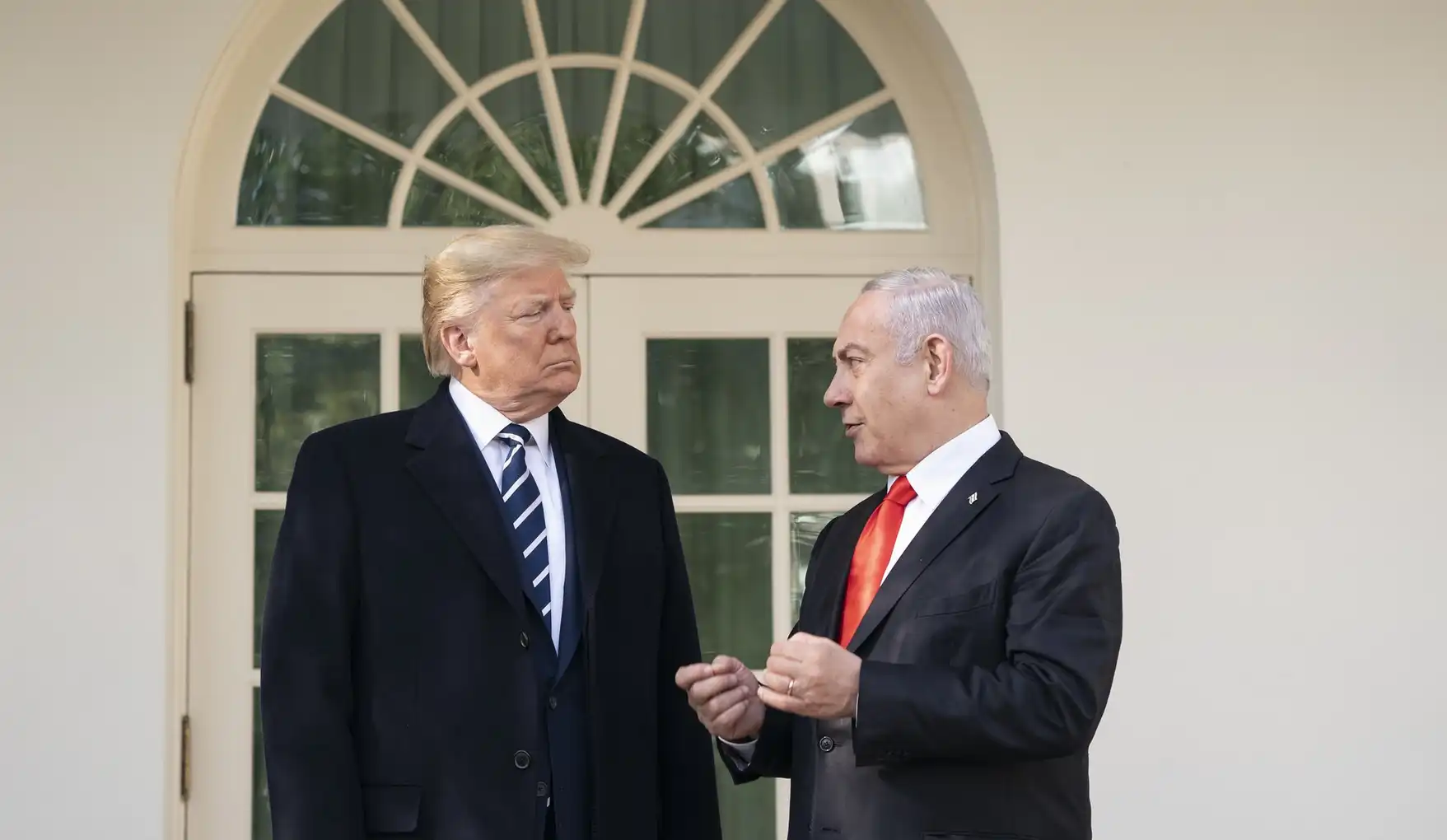
PICTURED ABOVE: President Trump meets with Benjamin Netanyahu in April, 2026. PC: The White House via Flickr.