 2
2
 0
0

This is Part 1 of a 2-part series on the so-called Sell America Trade.
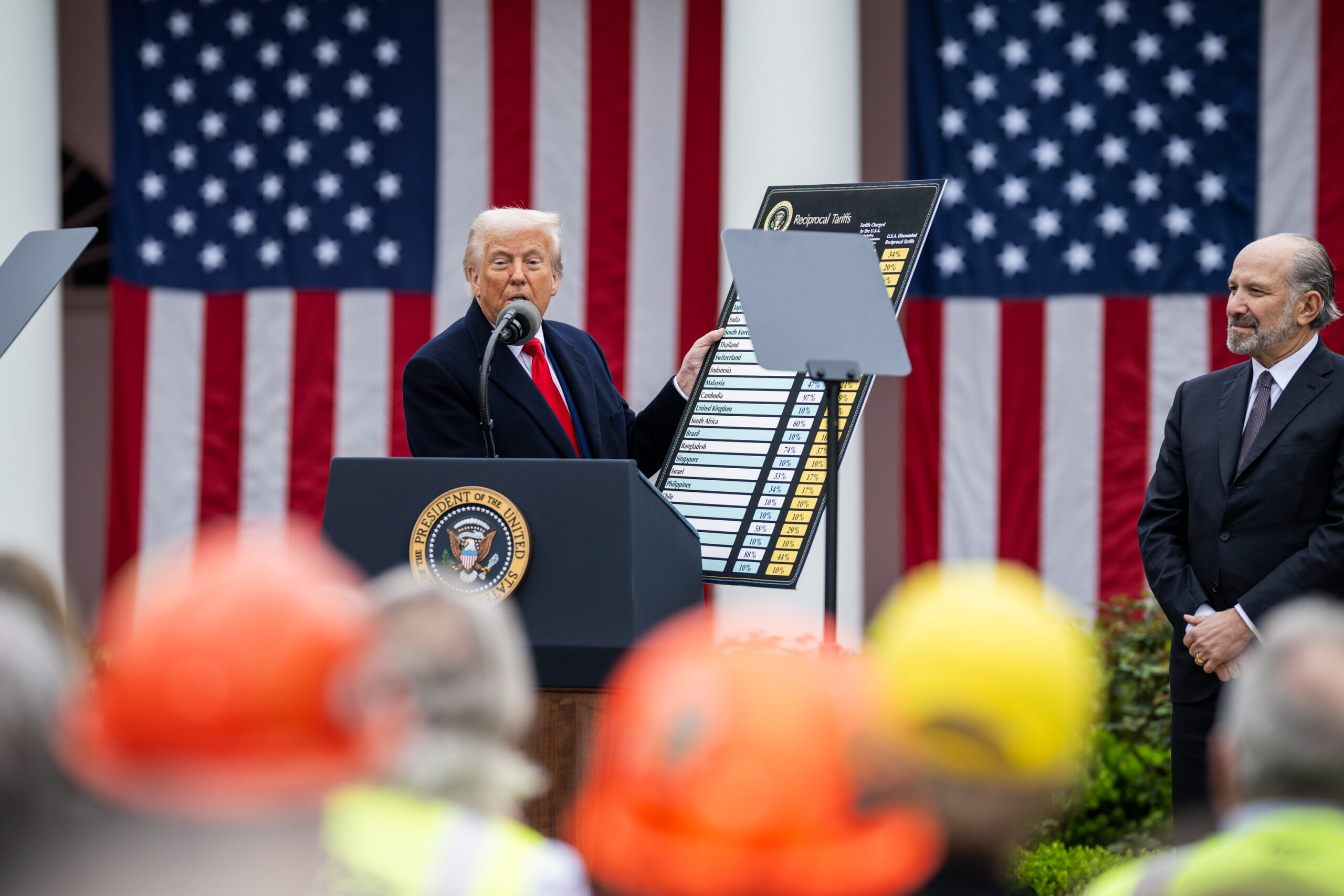
When President Donald Trump announced the new tariff schedules for all major US trading partners last April, something rare occurred that’s indicative of how some investors around the world are planning the next two to three years of capital allocation.
The US dollar, US equities, and US bonds, all declined together, “exactly the opposite of the ‘flight-to-quality’ playbook investors typically expect in risk-off conditions,” wrote Jim Nelson, Chief Financial Officer at Euro-Pacific Asset Management.
This was the start of what has only accelerated recently with Trump’s speech at the World Economic Forum, the heated rhetoric around Greenland, and a collapse in the Japanese bond market: the “Sell America” trade.
“The bond market’s message was unmistakable: if policy uncertainty rises enough, even Treasuries can lose their safe-haven bid at the margin,” Nelson wrote in a Jan 21st newsletter.
Compressing a truly mammoth amount of context into a single paragraph, the US has been able to accomplish two things by selling its federal debt in the form of Treasuries to the world: live well in excess of the nation’s means, and transition almost entirely to a consumption-driven economy. As long as the US dollar was the world’s reserve currency, needed to price assets, settle international trade, and buy oil from OPEC, the US Treasury has been the preferred world reserve asset. Treasury bond auctions have raised trillions for the government, which it spent on lavish domestic welfare programs and warfare abroad until the national debt surpassed 100% of GDP, and continued to climb to the point where interest payments alone total $1 trillion per annum.
History out of the way, this status quo is unravelling—argue some investors—as the structural problems in the US economy combined with not extreme, but clearly uncontrollable price inflation, the government’s inability to stop deficit spending, and an erratic presidency, have finally brought many world markets to seek real and long-term alternatives to the USA.
This is manifesting in different ways, one of which has been the success in emerging equity markets compared to Wall Street. With around 15% growth in 2025, the S&P 500 had perhaps a better year than might have been expected when the “Liberation Day” tariffs were announced. But it returned just half of what the MSCI Emerging Market Fund (EEM) and a third of the Euro-Pacific International Value Fund (EPVIX). This marked the first year since 2020 that emerging market equities outperformed developed markets, with winners like the South Korean flagship index, Kospi, rising 76%.
Another manifestation has been the eye-watering performance (tear-jerking depending on your portfolio composition) of precious metals like gold and silver, and related equities, as well as copper, as they leveraged their reputation as safe havens, record buying by world central banks, and a convergent increase in demand from their industrial use, to grow over 100% last year.
Yet more evidence of the “Sell America” trade in full swing is the fall in US Treasuries as a share of global reserve assets to both 40%, and below gold, for the first time in decades.

Japan’s bond burst
If there’s one nation whose ability to control government spending is even more frightening to investors around the world, it’s Japan. Having spent decades devaluing the yen and keeping interest rates negative while running up a 200% national debt-to-GDP ratio, the $7 trillion Japanese bond market recently appeared to reach a breaking point.
Newly-elected Prime Minister Sanae Takaichi announced a plan in early December to suspend an 8% sales tax and hold snap elections in February in order to seek what she called a “mandate for major policy change”. The response was swift and impactful. Long-dated Japanese government bonds (JGBs) endured a disorderly selloff, with yields on the 30-year and 40-year rising more than 25 basis points in a single session.
Additionally, the 40-year JGB surpassed a 4% yield for the first time since they were introduced in 2007, while last Tuesday, a 20-year government bond auction failed to garner sufficient interest from investors, a red flag that exposed a lack of confidence.
Reporting on the event, Bloomberg claimed that investors wondering how the Bank of Japan might get its house back in order believed the national pension fund, one of the world’s largest, could step in to buy-up some of the unwanted debt. This, Bloomberg noted, would almost invariably lead to the pension fund buying fewer US treasuries, or even selling some to raise capital. In 2023, the Japanese national pension held 43% US Treasuries in its foreign bond holdings.
In bond markets, yields can rise when buyers feel the future security of the currency, either for monetary, trade, or geopolitical reasons, is less secure. When yields rise, two things become unpleasant. The first, and especially in the case of longer term bonds, is that existing bonds locked in at lower yields lose value—obviously a 30-year Treasury at 2.5% is less valuable than one yielding 4.75%. Commensurate with that fall in value is the fall in value of portfolios that contain those bonds, for example in pension funds or banks that typically use long-dated bonds as reserve assets.
The second unpleasant thing is that rising yields mean governments must pay out more in interest rates on the money they borrow. For nations mired in debt, this can be a major headache and lead to weakness in exchange rates. Typically not a problem for wealthy industrialized nations, Japan and the US have always been able to find some method of killing the anxiety over repayment prospects.
Takaichi’s proposal to remove the 8% sales tax would cost the government around 5 trillion yen, or $32 billion annually, and JGB holders/borrowers are now clearly skeptical about the government’s ability to continue to finance its spending plans, which would increase under Takaichi’s proposals.
The US Government will soon face a similar acid test.
Where’s the breaking point?
As WaL previously reported, approximately $10 trillion in US Treasury debt is set to mature in 2026, which by the end of the year will represent about one-fourth of the total outstanding government debt. This maturing debt will need to be refinanced through new issuance, creating a significant refinancing challenge.
No matter the hubris of king dollar, Trump’s only current nominated member of the Federal Reserve’s Open Market Committee (FOMC) has said he sees the case for 1.5% lower interest rates this year, and Commerce Secretary Howard Lutnik has stated the need for just the same. A major motivation for that “case” will be the need to refinance this $10 trillion of debt at the lowest interest rate possible.
But there’s an obstacle to that plan: price inflation—currently 3% by the Fed’s preferred PCE index. Rates anywhere under 3% at that level of inflation would therefore end up being negative, and while that might have been acceptable to investors 15 years ago, there’s a chance that like the Japanese, Americans considering where to put their money will simply fail to believe that with a national debt set to reach $40 trillion this year, the government will ever pay them back other than with devalued money.
“That matters because the Treasury market is not owned solely by domestic investors: foreign creditors own roughly a third of marketable US Treasuries,” Nelson writes. “Rising JGB yields shrink the relative appeal of buying Treasuries on a currency-hedged basis and raise the opportunity cost of keeping capital abroad”.
China is another point of interest in America’s imminent debt refinancing challenge. A second run at the White House has only bullied the President’s earlier appetite for a trade war with the world’s largest manufacturer. The balance of trade has so far fallen precipitously between the two, which even if it were to mean an increase in American manufacturing as Trump predicts, has also led to a situation where China, one of the world’s largest holders of US Treasuries, is accumulating substantially fewer dollars.
Fewer dollars necessarily means fewer Treasury purchases and an outsized chance that Chinese banks will skip the opportunity to refinance any maturing notes this year.
Lastly, there’s the massive spiritual footprint that Trump has left on both Canada and the EU in the last 60 days over demands to turn over Greenland to the US, and threats of 100% tariffs on all Canadian imports should that country’s PM, Mark Carney, sign any kind of free trade agreement with China. By his own admission, Carney had simply visited Beijing to clear up some issues, as he put it, that were outstanding, and remove some trade barriers that were based on misunderstandings.
The EU had earlier this month prepared some $90 billion in retaliatory trade restrictions against America over President Trump’s own threats to put tariffs on EU countries that try and prevent his Administration taking control of Greenland, but announced last week they were putting the measures on hold for 6 months, but with the absolute intent to take them off hold should Trump return to his earlier belligerence. It then signed the “mother of all trade deals” with India, something the EU had been trying to do for 20 years, which will open up over $32 billion in trade opportunities every year between the powers, and, chiefly, divert dependence from America.
Quite simply, everywhere around the world one cares to look, investors and nations have more and more opportunities not to invest in the US, and good reasons—in their eyes, often enough—not to. WaL
Multi-part series require substantial hours of research and work—Considering Following the link here to see all the ways, monetary and non-monetary, you can support this work and more like it.
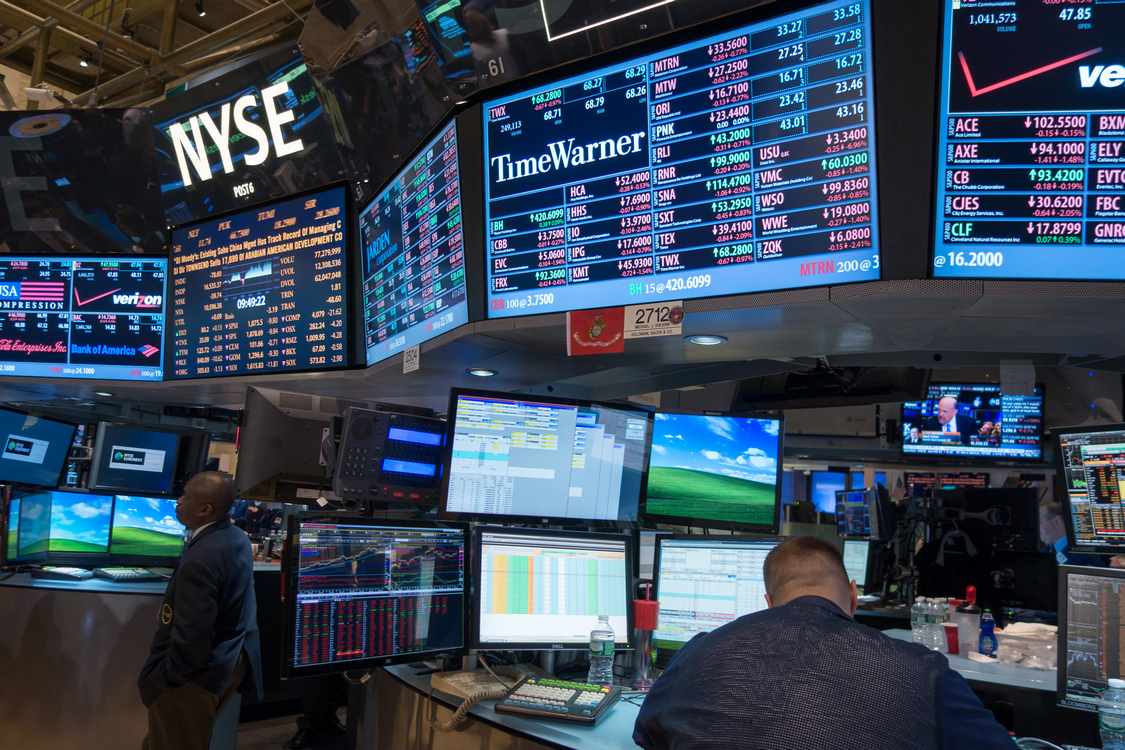
PICTURED ABOVE: Trading Floor at the New York Stock Exchange in 2014. PC: Scott Beale / Laughing Squid. CC 2.0.