 0
0
 0
0

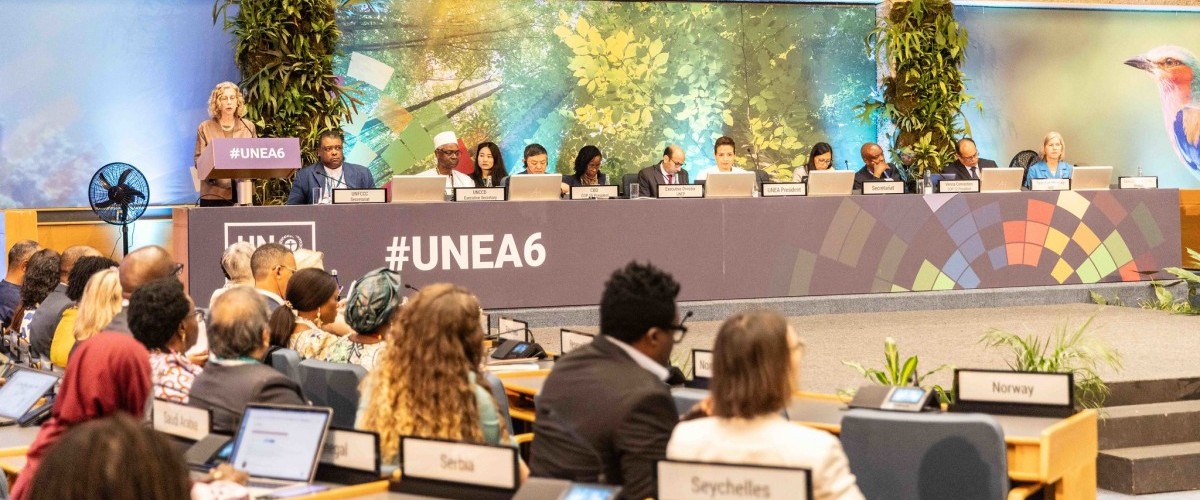
Diplomats from nearly every nation have gathered in Kenya this week as the United Nations Environment Assembly (UNEA), the world’s highest environmental decision-making body, opens its sixth session against a backdrop of worsening climate impacts, pollution crises, and geopolitical strain.
The meeting, hosted at the headquarters of the UN Environment Programme (UNEP), is framed by a strong message from organizers, one that announces that cooperation is weakening just as planetary risks accelerate.
Between record droughts, microplastic contamination and collapsing biodiversity, UNEA leaders warn that the planet’s stability is faltering faster than the institutions tasked with protecting it. Opening remarks urged countries to act “united in a world fractured,”. This is a phrase that shows global divisions visible from the war in Gaza and Russia–Ukraine tensions and trade rivalries shaping green technology supply chains. Yet under UN rules, every UNEA resolution still requires consensus, meaning the most ambitious proposals risk being watered down or blocked entirely.
For European nations navigating the aftermath of COP30 and negotiating post-summit climate funding, the Nairobi meeting reinforces a familiar reality: green financing must accelerate rather than stall. Ministers are expected to debate pollution control, gaps in global plastic treaty implementation, funding for climate resilience in vulnerable states, and nature protection. Behind every discussion lies the same fear: that international cooperation is fraying just as environmental shocks intensify.
Though approached as an important gathering, UNEA-6 doubles as a staging phase. The seventh Environment Assembly (UNEA-7) has already been scheduled for 8–12 December 2025, again in Nairobi, under the theme “Advancing sustainable solutions for a resilient planet.” That future session will revisit negotiations that stall this year and test whether diplomacy can match the scale of biodiversity loss, climate disruption and pollution.
Before it begins, diplomats will meet for the Open-ended Committee of Permanent Representatives (OECPR-7) from 1 to 5 December 2025, a technical forum where draft resolutions are shaped, softened or stripped.
For EU policymakers, UNEA-6 arrives at a sensitive moment. European capitals face the twin pressures of maintaining green industrial policy and climate financing while navigating slow growth at home, all while rising instability in Africa, the Mediterranean, and Arctic regions underscores how climate damage is already a geopolitical force. Observers say Nairobi reinforces the message France brought to COP30: without multilateral agreements and predictable finance, climate ambition becomes rhetorical rather than real. WaL
We Humbly Ask For Your Support—Follow the link here to see all the ways, monetary and non-monetary.
PICTURED ABOVE: UNEA-6, 2024. PC: UN Environment Assembly.